Make room for the home you want and the life you love.
Wondering how a mortgage payment could fit into your life? Start with a clear picture of your money today and a practical plan for your next chapter.
You don’t have to figure it out alone. We’ll look beyond a purchase price to understand your full housing expense, what feels comfortable, and the steps that can help bridge the gap.
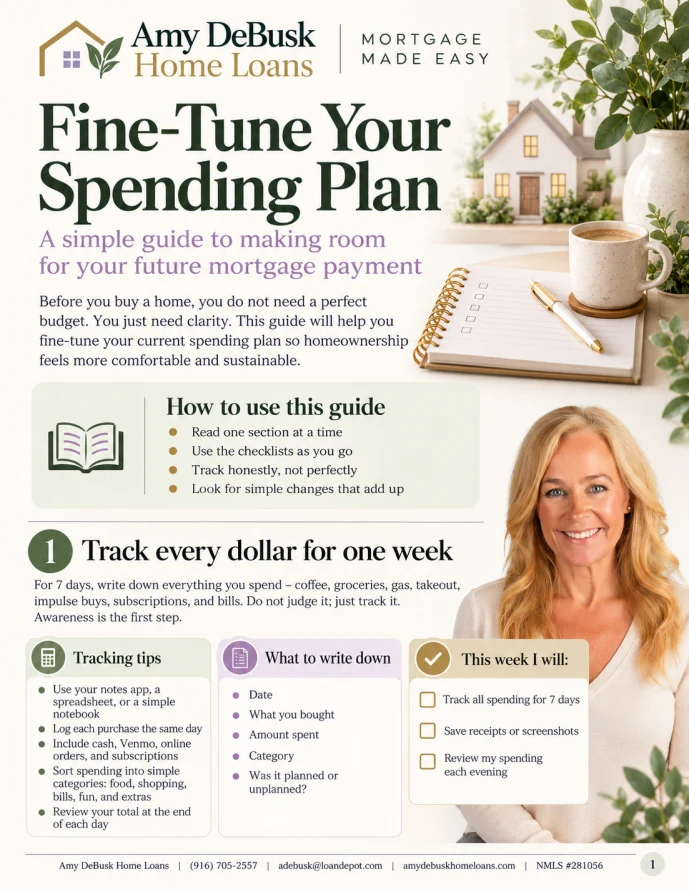
Before choosing a home price, get to know where your money goes. Track everything you spend for one week, then review the last 90 days of bank and credit card statements. Look for subscriptions you no longer use, recurring charges, and spending you would rather redirect toward your home.
My Fine-Tune Your Spending Plan guide gives you checklists and space to turn those discoveries into a practical action plan. Choose a few changes that feel manageable, such as reviewing a monthly bill or adding a 24-hour pause before an unplanned purchase.
A spending plan gives your money a purpose. Begin with your dependable take-home income, then make room for everyday essentials, debt payments, savings, and the things your family values. Include expenses that arrive only a few times a year by setting aside a monthly amount for them.
The amount a lender may approve and the payment that feels comfortable to you answer different questions. Your household plan includes priorities such as childcare, transportation, retirement contributions, and a cushion for surprises. Bring those priorities into the conversation before choosing a price range.
Start with this guide
Fine-Tune Your Spending Plan
Track one week of spending, review the last 90 days, and use the checklists to spot subscriptions, impulse purchases, and recurring bills you could adjust. Finish with an action plan and a clearer picture of the monthly savings you may have found.
Your mortgage principal and interest are only part of the picture. Include property taxes, homeowners insurance, any mortgage insurance, and HOA dues where applicable. Then plan separately for utilities, maintenance, and repairs. Avoid counting taxes or insurance twice if they are already included in your payment estimate.
A fixed-rate mortgage keeps scheduled principal and interest predictable, but taxes, insurance, and other ownership costs can change. The CFPB home spending guide explains the expenses to consider.
Compare today with your next home
Compare equivalent monthly totals, including utilities and maintenance allowances. This illustration is a planning tool, not a loan qualification calculation. Figures stay on this page and are not submitted.
Use changes available now, rather than hoped-for raises, refinancing, tax refunds, or rent from a future roommate.
Step 3 · Explore your options
Build your bridge one practical step at a time
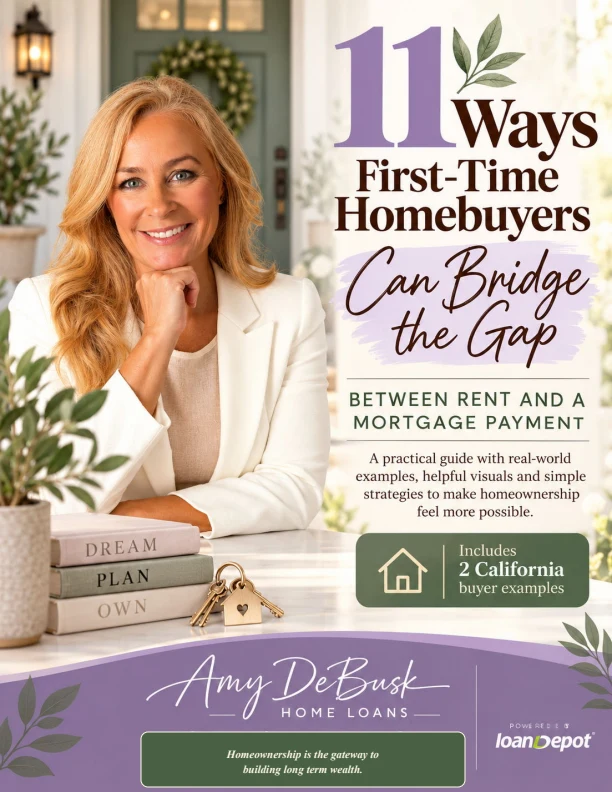
Once you know the difference between today’s housing expense and your future one, you can choose ways to close that gap. Start with the ideas below, then explore the 11 Ways First-Time Homebuyers Can Bridge the Gap guide.
Review recurring expenses. Look for services you no longer use or costs that could change after moving. Choose adjustments you can maintain.
Review debt with a plan. Reducing a monthly payment can create room, but using all your savings to pay off debt may leave too little for closing or emergencies. Let’s compare the tradeoffs first.
Explore help with upfront costs.Down payment assistance may help eligible buyers. Review its repayment terms and the resulting monthly payment alongside the upfront benefit.
Consider buying together.Buying a home with family can create shared opportunities. Agree on contributions, ownership, responsibilities, and how a change in plans would be handled.
Compare homes and loan options. Property taxes, insurance, HOA dues, and maintenance needs can make similarly priced homes feel different financially. Explore loan options with the full expense in mind.
Separate cash flow from long-term benefits
Principal repayment can build equity, but equity is not cash available to pay next month’s bills. Tax benefits depend on your circumstances; ask a tax professional before including any benefit in your spending plan. Future refinancing or appreciation should not be necessary to make today’s payment work.
Likewise, weigh any change to retirement saving against employer matching and long-term goals. If cost sharing is part of your plan, consider vacancies and confirm local rules and loan requirements. We can explore possibilities while keeping your starting plan grounded in resources you can rely on.
Then explore your possibilities
11 Ways First-Time Homebuyers Can Bridge the Gap
Explore payment planning, cash-flow ideas, shared housing possibilities, and a worksheet for your next conversation with Amy.
The guide includes illustrative buyer examples. Review the assumptions with Amy and any tax questions with your tax professional before applying them to your own plan.
Ultimate Tips to Bridge the Gap Between Rent & Your New Mortgage Payment
Explore more ideas for reviewing recurring expenses, shopping thoughtfully, and creating extra income as you prepare for your new home. Use the guide as a conversation starter: check current service pricing and discuss retirement contribution changes with your financial professional. Cancel subscriptions directly with the provider rather than relying on a replacement bank card to stop them.
If your planned housing expense is higher than today’s, consider setting aside the difference while you prepare to buy. This gives you a chance to experience the new spending pattern and build savings at the same time. If it feels tight, use that information to adjust the target, timing, or plan.
Keep your down payment and closing-cost savings separate from your emergency cushion. Moving expenses, utility setup, and early repairs deserve space in the plan too. Saving the payment difference is preparation, not a substitute for reviewing loan qualification.
Start with a month, review how it feels, and fine-tune as you go. Bring your numbers and questions to your complimentary 30-minute discovery call so we can connect your spending plan with your homebuying options.
Another way to build your home fund
A little extra income can move your home goals forward
Sometimes, making room for a home means looking beyond what you can cut from your spending. A side hustle could be the extra boost that helps you build your savings sooner. It might be a few weekend hours, a service you enjoy offering, or a skill you already have. Choose something that fits your schedule and leaves room for the people and priorities you love.
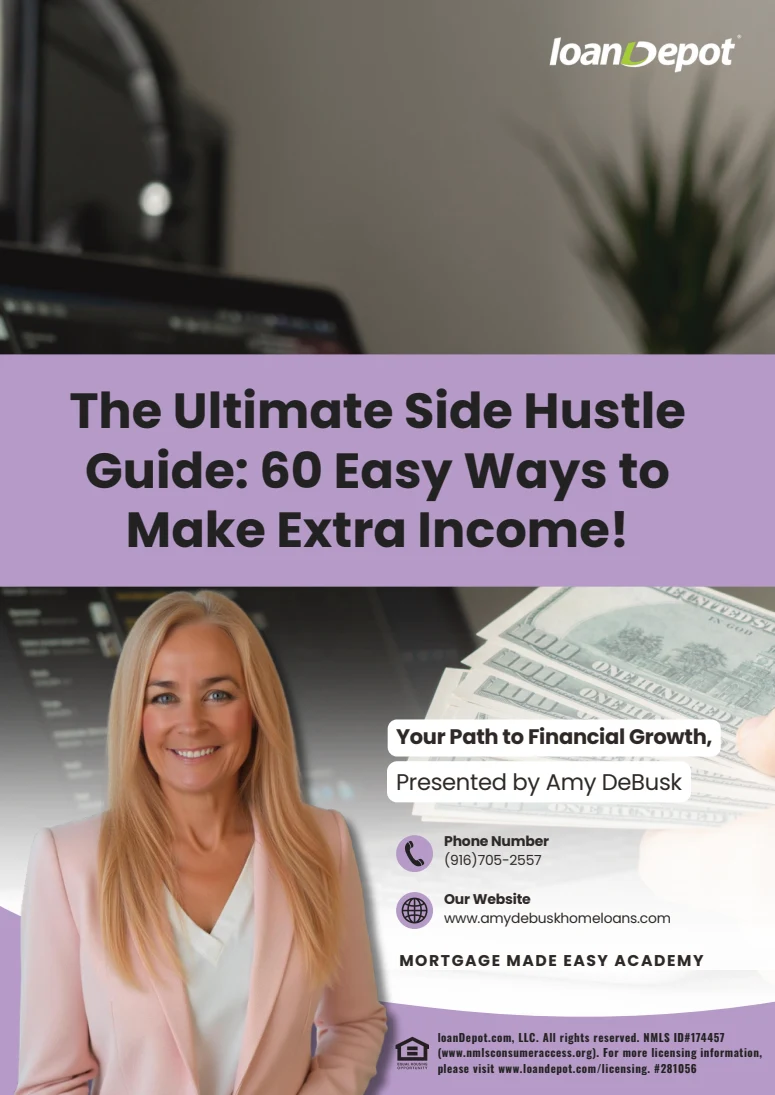
Pet sitting, proofreading, organizing homes, or freelance work are a few ideas in my Ultimate Side Hustle Guide: 60 Easy Ways to Make Extra Income. Start with one idea, keep your upfront costs manageable, and give the money a purpose: your down payment, closing costs, moving expenses, or a cushion for your first months at home.
Money you save and income used to qualify are different
A new side hustle can help you build cash savings even before its earnings can be counted toward mortgage qualification. Lenders typically look for a documented two-year history of side-business or second-job income, along with evidence that it is stable and likely to continue. Some loan guidelines allow a shorter history when specific requirements are met. Two years of earnings alone does not determine whether all of that income can be used.
We can review your work history, tax returns, and loan options together. In the meantime, keep records of your earnings, expenses, and bank deposits so we can document the money you plan to use toward your home. For background, see Fannie Mae’s self-employment income guidance.
Give your extra earnings a simple plan
Look at what you keep. Allow for supplies, mileage, platform fees, and taxes before deciding how much goes into savings.
Set a home-fund target. For example, saving $300 each month after expenses and tax set-asides adds $1,800 in six months. That is a savings illustration, not an earnings promise.
Keep the mortgage comfortable. Use a new side hustle to strengthen your savings plan while we build your purchase plan around income that qualifies and a payment you can sustain.
You do not have to try all 60 ideas. One that works for your life can be a meaningful next step.
The Ultimate Side Hustle Guide: 60 Easy Ways to Make Extra Income!
Explore weekend, online, local-service, and resale ideas. Choose an option that suits your skills, time, and startup budget, then track what you actually earn after costs. Earnings examples in the guide are illustrative; your results will depend on the work and your market.
From your first spending plan to the money you bring to closing, here are practical answers to common homebuying questions.
How do I figure out how much house I can comfortably afford?
Start with the monthly payment that fits your life, then work toward a home price. Look at your dependable take-home pay, everyday spending, debt payments, and savings goals. Include priorities such as childcare, travel, and retirement so your new home has room in the life you want to live.
Bring that monthly target to our conversation. We can compare loan options and property expenses to see what price range supports it. The spending plan guide helps you prepare, and the mortgage calculator lets you explore estimates.
Should I use my gross income or take-home pay to plan my mortgage payment?
Use take-home pay for your household spending plan because that is the money available after payroll deductions. Lenders generally calculate qualifying ratios using gross qualifying income, which may differ from your salary or the deposits you receive, particularly with self-employment or variable earnings.
These are two useful views of the same decision. Qualification tells us how your application fits a loan's requirements; your spending plan tells us how the payment fits daily life. You do not need to spend the maximum amount you qualify for. Learn how Fannie Mae defines debt-to-income ratios.
What costs should I include beyond mortgage principal and interest?
Include property taxes, homeowners insurance, any required mortgage insurance, and HOA dues. Also allow for utilities, maintenance, and repairs. If taxes and insurance are already included in your quoted mortgage payment through escrow, count them once.
Ask for an estimate for the actual property you are considering. Two homes with the same price can have different insurance premiums, taxes, or HOA costs. A home with an older roof may also need a different repair cushion. The CFPB housing-cost checklist is a helpful reference.
How can I prepare when a mortgage payment will be higher than my rent?
Compare your current total housing expense with the expected total expense of owning, using the same types of costs on both sides. Our payment-gap tool helps you see the difference. If the increase is $600 a month, for example, try moving $600 into savings while you are still renting.
That practice can show which adjustments feel sustainable while building your home fund. If it feels too tight, we can revisit the price range, timing, or loan options. Use the bridging-the-gap guides to explore ideas, then choose the ones that fit your household.
Do I need a 20% down payment to buy a home?
No. A 20% down payment is not a universal requirement. There are low-down-payment loan options, and some eligible buyers can use loans with no down payment. The right choice depends on your eligibility, savings, and the property. Start by exploring conventional, FHA, VA, and USDA loans.
A smaller down payment can preserve cash, while a larger one reduces the amount borrowed and may affect mortgage insurance and pricing. We can compare the monthly payment and upfront costs together. The CFPB explains the down-payment tradeoffs.
How much money will I need for closing costs and moving?
Your down payment is one part of your upfront plan. Closing costs can include lender and settlement charges, prepaid items, and money needed to establish an escrow account. Your Loan Estimate shows estimated cash to close, accounting for the down payment, costs, deposits, and applicable credits. Review the final figures on your Closing Disclosure.
Keep a separate moving list: movers or a truck, utility setup, essential furnishings, and immediate repairs. Bring that list to our planning conversation so your home fund covers more than closing day. See the CFPB Closing Disclosure explainer for the cash-to-close breakdown.
Can down payment assistance make buying a home more affordable?
Yes, assistance can help eligible buyers overcome the upfront savings hurdle. It may cover part of the down payment or closing costs, depending on the program. Explore our down payment assistance options and CalHFA assistance page to begin the conversation.
We will also compare the complete monthly payment and repayment terms. Assistance can take different forms, including a second loan, and it does not automatically mean a lower monthly payment. Ask when repayment is due and what happens if you sell or refinance. The CFPB outlines sources of down-payment help.
Can I buy a home if I have student loans, a car payment, or credit card debt?
Yes, having existing debt does not automatically prevent you from buying a home. Lenders evaluate the required monthly obligations alongside your qualifying income and proposed housing payment. Student-loan treatment varies by loan type and repayment status, so bring current statements rather than assuming a paused or zero payment will be treated the same everywhere.
Before using savings to pay off a balance, let us compare how that choice affects both qualification and cash left for your purchase. We can identify which changes would be most useful to your plan. Fannie Mae's monthly debt guidance illustrates why the details matter.
Can side-hustle income help me buy a home?
It can help you build savings for a down payment, closing costs, or a cushion after moving. Set aside money for expenses and taxes first, then give the amount you keep a clear savings goal. Our 60 side-hustle ideas and downloadable guide can help you find a starting point.
Using those earnings to qualify for a mortgage is a separate review. Lenders typically want a documented two-year history, although certain guidelines allow less when specific conditions are met. Keep tax returns, expense records, and deposit documentation. We can review what counts for your loan; Fannie Mae's self-employment guidance explains its history requirements.
Should I put all my savings into the down payment?
A larger down payment can be helpful, but keeping money available after closing matters too. Plan for emergencies and the early costs of settling into your home. Any reserves required for loan approval are a separate consideration from the cushion that feels right for your household.
We can compare two scenarios: putting more down and keeping more in savings. Look at the payment difference alongside upcoming expenses and your comfort level. Use your spending plan to choose deliberately, rather than assuming the largest possible down payment is always the best fit.
Can my monthly payment increase with a fixed-rate mortgage?
Yes, the total amount you pay can change even when your scheduled principal and interest remain fixed. Property taxes and insurance premiums may rise or fall. If they are collected through escrow, an adjustment or shortage can change your mortgage bill. HOA dues can also change, whether paid separately or included in your housing budget.
Build some flexibility into your plan and review insurance renewals, tax notices, and escrow statements. That helps you understand changes early. The CFPB explains common reasons payments change.
What should I bring to a discovery call if I am not ready to buy yet?
You can start wherever you are. Bring your approximate take-home income, current rent and other housing costs, monthly debt payments, available savings, and the payment you would like to work toward. Your completed spending-plan checklist is helpful, but it does not have to be perfect.
Tell me about your timing, the kind of home you want, and what feels like the biggest gap today. We can turn those questions into next steps and identify documents needed for a closer loan review. Book your complimentary 30-minute discovery call and we will work on the plan together.