
Keep Comfortable Air Inside
Insulation and air-sealing improvements may help address drafts and heat loss. Energy-efficient windows or doors may be considered when the assessment supports their cost-effectiveness.
FHA Energy Efficient Mortgages
Picture a cozier winter, a cooler summer, and a home that uses energy more efficiently. An FHA Energy Efficient Mortgage may let you include approved energy-saving improvements in your home purchase or refinance. Let's explore what could make a difference for your home.

One home loan, a plan for better efficiency
An FHA Energy Efficient Mortgage, or EEM, combines an eligible FHA home loan with financing for a cost-effective package of energy improvements. You repay the improvement costs as part of your mortgage. It is financing, not a grant or a promise of a lower utility bill.
You can explore an EEM when purchasing a primary home or completing an eligible rate-and-term refinance. FHA's standard home-loan requirements still apply. Start with our FHA loan overview if you are getting familiar with the basics.
The assessment helps us build a plan around your home rather than a list of upgrades that might not qualify. Actual savings depend on the home, installation, energy prices, and how you use it.
Insulation and air-sealing improvements may help address drafts and heat loss. Energy-efficient windows or doors may be considered when the assessment supports their cost-effectiveness.
Eligible heating, cooling, and other energy-saving equipment may be part of the plan. The assessor evaluates the home as a system and identifies which changes make sense together.
The approved package can include materials, professional labor, inspections, and the energy assessment. Certain solar or wind technologies may also qualify after review. An EEM does not automatically finance every upgrade a contractor recommends.
Planning a kitchen remodel, structural repairs, or a larger renovation? Explore FHA 203(k) renovation financing. Interested specifically in solar with down payment assistance? Our Solar + Down Payment Assistance program is a separate option with its own requirements.
Understand the numbers before choosing the work
The maximum energy package is the smaller of the cost-effective package identified by the assessment or 5% of the lowest of these three amounts:
This is not automatically 5% of your purchase price. We'll calculate the limit for your transaction using FHA's EEM calculator. The approved energy package may be added above the applicable FHA base mortgage limit. See HUD's EEM calculation guidance.
Under the EEM rules, you qualify for the initial mortgage plus upfront mortgage insurance before the approved energy package is added. That can make room for qualifying improvements, but you still repay the larger final mortgage. We'll review the final payment and the assessment's savings estimates together.
The home must be your primary residence. Eligible property types can include one-to-four-unit homes, FHA-approved condos, and qualifying manufactured homes. Property-specific rules apply.
For eligible purchases, loanDepot guidelines allow up to 96.5% financing at credit scores of 580 or above. Certain purchases with scores of 520-579 are limited to 90% financing and have additional restrictions. Single-width manufactured homes require at least 620 under these guidelines. A score alone does not establish eligibility.
Income, debts, credit history, the property, and underwriting all matter. There is no single debt-to-income maximum for every EEM file; automated or manual underwriting rules apply. Single-width manufactured homes have a 50% maximum under these guidelines.
FHA upfront and annual mortgage insurance still apply. Closing costs and any costs outside the approved package also need a plan. Ask us to compare the final loan balance, payment, and cash needed before you commit.
Bring a listing or your home's address to our conversation. Our pre-approval guide and refinance overview can help you prepare.
We'll compare the costs with your goals and how long you expect to own the home. You deserve a plan that feels comfortable after move-in, too.
Keep learning with Amy
Hear Amy walk through FHA and VA EEM options, then bring your questions about the home and improvements you have in mind.

The FHA EEM adds an approved energy package to your eligible FHA mortgage. You repay it through the home loan; it is not a grant or cash rebate.
An eligible rate-and-term refinance may include an FHA EEM package. The refinance, property, and improvements must meet the applicable requirements. This program does not provide cash back for you to spend freely.
Yes. A qualified assessor must identify recommended improvements and document estimated savings and cost-effectiveness. A contractor's estimate alone does not replace the required home energy report.
The improvements must be part of the approved, cost-effective energy package and fit the financing limit. We'll review the assessment and project before you commit to equipment or a contractor.
Adding financed improvements increases the final loan balance and generally increases the mortgage payment compared with the same loan without them. The assessment estimates energy savings, but those savings are not guaranteed. We'll help you evaluate both sides.
The lender's EEM escrow rules do not allow payment for work or labor performed by the borrower. Plan the approved work and completion arrangements with our team before closing.
It may be combined with an eligible FHA 203(k) transaction, subject to both programs' requirements. The energy package remains subject to its assessment, cost-effectiveness test, financing cap, and completion rules.
No. An FHA EEM finances approved energy improvements and is not itself down payment assistance. The Solar + Down Payment Assistance program has separate terms, eligibility, and solar requirements. For a planning estimate before that conversation, use the solar calculator.
A guide to keep by your side
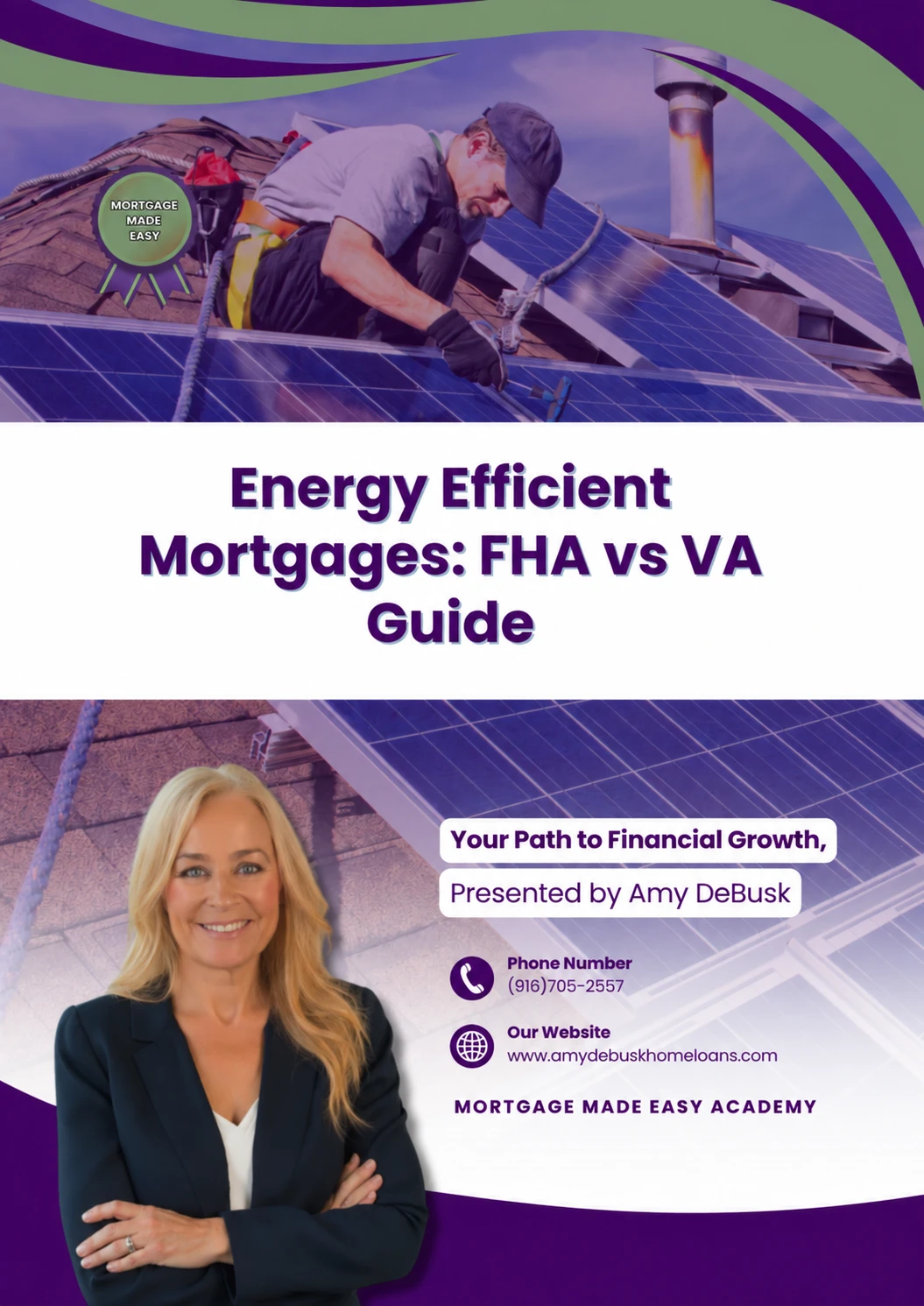
Download Amy's guide to compare the two programs, learn about energy improvements, and prepare your questions. Save it for later or share it with someone planning their next home.
Free PDF · 10 pages
Download Your EEM GuideThe guide covers FHA and VA. This page explains the FHA offering; VA follows separate rules. Program details can change, so confirm current requirements with Amy before choosing your loan or improvements.
Amy DeBusk | Mortgage Made Easy
You may have a house in mind, a drafty room you'd like to improve, or just a few questions. Start there. Amy and our team will help you understand the options, costs, and next steps.
Start With a ConversationOr call or text (916) 705-2557. Visit our First-Time Home Buyer Hub for more guidance.
Based on loanDepot FHA EEM guidelines dated May 8, 2026 and HUD program guidance, reviewed September 27, 2026. Requirements and availability may change. All loans and improvements are subject to approval.