

The Situation: A First Time Buyer With Big Concerns
A young family came in with the same worries most first time buyers have.
- Can we actually afford this
- Are we going to overpay
- Are we getting a good deal
They found a home listed at $425,000 in a great neighborhood. Instead of trying to negotiate everything upfront, they made a clean, strong offer.
Full price. No seller credit request. Standard terms.
And it worked. Their offer was accepted.
That ties directly back to Part 1 of this series about how to get your offer accepted. A clean, simple offer often wins.
But here is where things get interesting.
Home Prices Update: What the Market Looks Like Right Now
Before we go further into the story, let's zoom out for a second.
Understanding the current market helps explain why strategy matters so much. This is also where interest rates and affordability play a major role in how aggressive buyers can be.
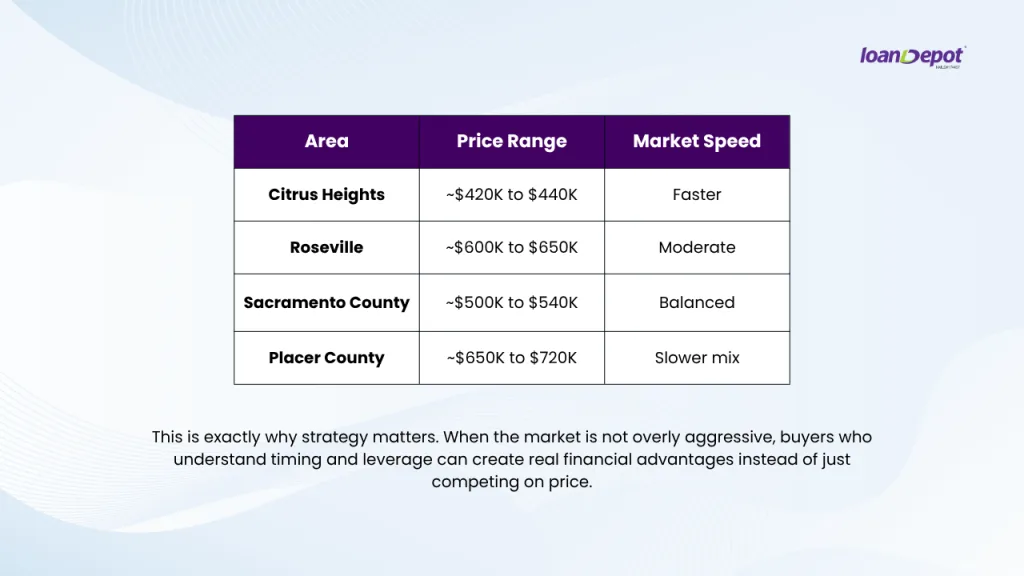
Citrus Heights
- Median home price: ~$420,000 to $440,000
- Days on market: ~18 to 25 days
This is where our story takes place. Homes are still moving quickly, but buyers have a bit more negotiating room than peak market conditions.
Roseville
- Median home price: ~$600,000 to $650,000
- Days on market: ~20 to 30 days
Higher price point, strong demand, but sellers are starting to be more flexible depending on condition.
Sacramento County
- Median home price: ~$500,000 to $540,000
- Days on market: ~22 to 32 days
Balanced conditions overall. Not as aggressive as previous years, which opens the door for negotiation strategies like the one in this story.
Placer County
- Median home price: ~$650,000 to $720,000
- Days on market: ~25 to 35 days
More spread between turnkey homes and homes needing work. Properties with issues tend to sit longer, which creates opportunity.
What Happened Next Changed Everything
Once under contract, the buyers did exactly what smart buyers should do.
They ordered inspections.
- A general home inspection
- A roof inspection
The results showed some concerns. The roof still had life left, but not forever. There were also signs of wear and minor repairs needed.
This is where round two of negotiation begins.
Using those inspection reports, their agent went back to the seller and asked for:
- $15,000 price reduction
- $10,000 seller credit
And the seller agreed.
The Result: A Massive Win
Here is what that meant for the buyer:
- Purchase price dropped from $425,000 to $410,000
- Monthly payment reduced by about $80
- $10,000 in closing costs covered
- Cash available to replace the roof
Total impact? Over $25,000 in value.
That is the difference between just buying a home and buying smart.
Why This Strategy Works
When inspection reports reveal issues, the seller now has new information about their home.
If they refuse to negotiate and the deal falls apart, they are required to disclose those issues to the next buyer.
That changes everything.
Now the seller cannot simply relist without consequences. The problem follows them.
That is why negotiation after inspections can be so powerful.
The 3 Areas of Negotiation in a Real Estate Contract
Most buyers walk into a deal thinking negotiation starts and ends with the price.
It doesn't.
In reality, there are three separate levers you can pull and the strongest buyers know how to use all of them.
1. Price
Yes, price matters. It is the most visible part of the deal.
But timing is everything.
You can negotiate price upfront to stay competitive, or circle back after inspections when you have leverage backed by actual findings.
In this case, the buyers didn't come in low and risk losing the home. They made a strong initial offer, secured the contract, then used real inspection data to justify a price reduction.
That strategy kept them competitive and protected their investment.
2. Terms
Terms are where deals are quietly won or lost.
This includes:
- Closing timeline
- Inspection contingencies
- Financing conditions
- Who pays which fees
Strong terms can make your offer stand out even if your price is not the highest. On the flip side, flexible terms give you room to renegotiate once you are under contract.
Smart buyers don't just think about getting the deal accepted. They think about how the structure of the deal can work in their favor later.
3. Credits and Concessions
This is the most overlooked opportunity and often the most powerful.
Instead of pushing only for a lower price, buyers can negotiate seller credits that directly reduce out of pocket costs.
These can be used for:
- Closing costs
- Interest rate buydowns
- Repairs
In this situation, a $10,000 credit gave the buyers immediate financial breathing room and more flexibility with how they used their cash.
The Consumer Financial Protection Bureau encourages homebuyers to carefully review their purchase contract, understand their closing costs, and ask questions about every term before signing. Taking the time to understand the details of your agreement can help you make informed decisions throughout the transaction.
Why This Matters More Than You Think
Negotiation is not just about getting a "good deal." It is about knowing when and how to use each lever to your advantage.
And that is exactly where having the right team makes a difference.
A skilled realtor does more than submit offers. They help you structure a winning deal, spot negotiation opportunities others miss, and guide you through the moments where strategy matters most.
We work with premier realtors who know how to win in competitive markets while still protecting your long term financial goals.
If you are thinking about buying and want a smarter game plan from the start, schedule a free discovery call here: talkingwithamy.com
No pressure, just a strategy conversation to help you move forward with confidence.
Connecting This Back to Part 1
In Part 1, we talked about how to get your offer accepted.
This story shows what happens after that.
Winning the house does not mean overpaying.
It means positioning yourself to negotiate smarter later.
The strategy looks like this:
- Make a strong, clean offer
- Get accepted
- Use inspections as leverage
- Renegotiate based on facts
That is exactly what happened here.
Final Takeaway
If you are a first time buyer, here is what really matters.
Getting your offer accepted is only the beginning. Negotiation continues in multiple stages, and your strategy should shift depending on the market. In many cases, the biggest savings do not happen upfront, they happen after the inspection when you have real leverage.
This family did not just buy a home. They understood how to use the process to their advantage and walked away with a significantly better deal because of it.
❓FAQS How Smart Negotiation Saved This First Time Buyer $25,000+
❓1. What credit score do you need for a conventional loan with 3% down?
Most lenders require at least a 620 credit score, but if you're putting just 3% down, a score closer to 680 to 700+ usually puts you in a much stronger position.
Higher scores can mean better rates and lower monthly payments, while lower scores may come with higher costs.
For a deeper breakdown of how your score affects your loan options, you can check out our credit guide.
❓2. How much do I need for a down payment as a first time buyer?
Many buyers are surprised to learn you don't need 20% down.
There are conventional options starting at 3% down and FHA loans at 3.5%. Some buyers may even qualify for assistance programs that help reduce upfront costs.
If you're just getting started, our first time buyer hub walks through the full process step by step.
❓3. Can I get seller credits to help with closing costs?
Yes, and this is one of the biggest opportunities many buyers miss.
In this example, the buyers negotiated $10,000 in seller credits after inspections, which helped cover closing costs and gave them more flexibility with their cash.
Credits can often be used toward closing costs, interest rate buydowns, or repairs depending on the situation.
❓4. When should I negotiate when buying a home?
Negotiation doesn't stop once your offer is accepted.
There are multiple points in the process where strategy matters, especially after inspections. That's often when buyers have the strongest leverage because issues are backed by actual reports.
❓5. What are closing costs and how much should I expect?
Closing costs typically fall between 2% and 5% of the purchase price.
That includes things like lender fees, title, escrow, taxes, and insurance. On a $400,000 home, that could range from about $8,000 to $20,000.
In many cases, part of this can be offset through seller credits.
❓6. Is it better to make a lower offer or a strong full price offer?
In a competitive market, a clean, strong offer can be more effective than starting low.
In the story from this blog, the buyers offered full price to secure the home, then negotiated over $25,000 in value after inspections.
It's less about the starting number and more about the overall strategy.
❓7. What happens after my offer is accepted?
After your offer is accepted, you move into escrow. This includes inspections, appraisal, and final loan approval.
It's also the stage where new information comes to light, which can open the door for additional negotiation.
❓8. How do I know if I'm overpaying for a home?
Price is only one part of the picture.
If you're able to negotiate repairs, reduce the price, or secure seller credits, the overall deal can still work strongly in your favor even if you offered full price upfront.
The goal is not just to win the house, but to structure the deal in a way that makes sense financially long term.
Start Here if You're a First Time Buyer
If you're early in the process or still figuring out how everything works, this is a great place to begin.
Our first time home buyer hub walks through everything step by step, from credit and pre approval to making an offer and what happens after you get under contract. It's designed to help you avoid common mistakes and feel more confident at every stage.
You can check out our first time home buyer hub
If you prefer to learn visually, we also have a full first time buyer YouTube playlist that breaks down each step in a simple, easy to follow way. It's a great way to see how the process actually works in real scenarios.
All Mortgage Made Easy articles · Book a Complimentary Discovery Call