Have you ever found a fixer-upper with great potential but wondered how you could afford both the home and the renovations?
An FHA 203(k) loan, often called a rehab loan or renovation loan, was designed for exactly that situation. It allows eligible buyers to purchase a home that needs repairs and finance the renovation costs into one mortgage.
If you're researching FHA 203(k) loans, you're probably seeing conflicting information online. That's because FHA updated the program in late 2024, changing the old Streamline 203(k) to the Limited 203(k) and the Full 203(k) to the Standard 203(k).
I'm Amy DeBusk I am a Branch Manager and Mortgage Advisor and for the past 25 years, I specialize in niche loan products like the FHA 203k. I am going to answer the five most common questions buyers ask about FHA 203(k) rehab loans and how they work.
FHA 203(k) Loans: The 5 Questions Everyone Asks
Let's start with the questions I hear most often from buyers looking at fixer-uppers.
1. What Is An FHA 203(k) Loan?
An FHA 203(k) loan is a government-backed mortgage that allows you to buy a home that needs repairs and finance both the purchase price and renovation costs into one loan.
Instead of buying a home and then trying to come up with cash for repairs later, the renovation funds are built directly into the mortgage.
Think of it as a home loan and a rehab loan combined into one.
A rehab loan simply means a loan designed to finance repairs, renovations, improvements, or upgrades to a property.
If you've ever watched HGTV and thought, "I wish I could buy a fixer-upper and turn it into my dream home," this is one of the most common ways buyers accomplish that goal.
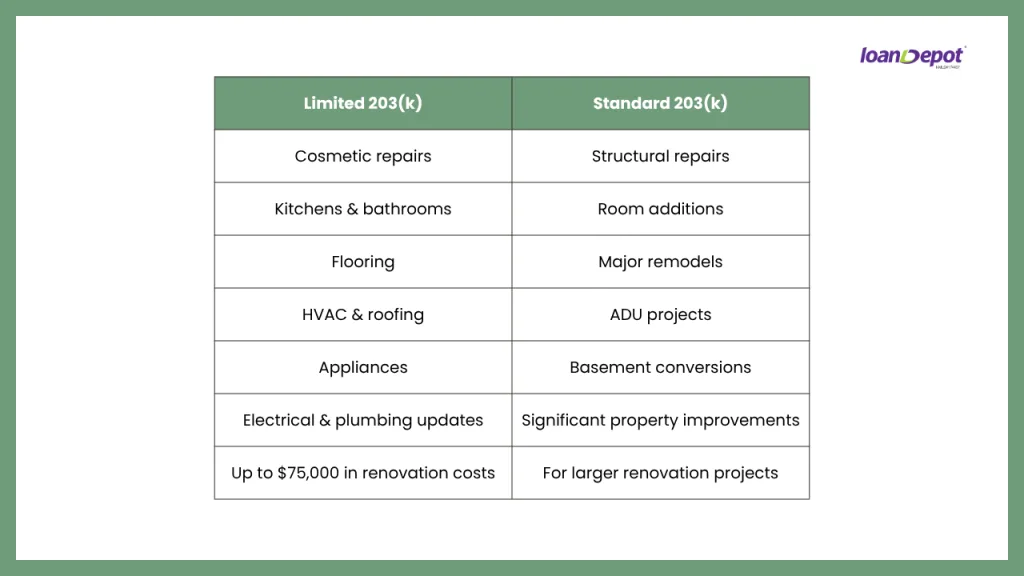
2. What Is The Difference Between A Limited 203(k) And A Standard 203(k)?
This is where a lot of confusion comes from.
In late 2024, FHA updated and simplified the program.
The old "Streamline 203(k)" was renamed the "Limited 203(k)."
The old "Full 203(k)" is now called the "Standard 203(k)."
The loan itself did not disappear. The names simply changed.
3. Can I Buy A Fixer-Upper With Only 3.5% Down?
In many cases, yes.
One of the biggest advantages of an FHA 203(k) loan is that eligible buyers may be able to purchase a home and finance the renovations with a down payment around 3.5 percent when they qualify under current FHA rules.
For many first-time buyers, this creates opportunities that would otherwise be out of reach.
Instead of competing for fully remodeled homes, you may be able to purchase a home with potential and create equity through improvements.
4. Can I Do The Repairs Myself?
Generally, no.
This is one of the biggest misconceptions about FHA rehab loans.
The FHA 203(k) program is not designed as a do-it-yourself renovation program.
In most cases, the work must be completed by qualified contractors.
The contractor must meet lender requirements and be approved through the renovation lending process.
The reason is simple.
FHA wants to ensure the work is completed properly, permits are obtained when required, inspections are completed, and the finished home meets safety and property standards.
If you're planning to personally swing the hammer every weekend and renovate the property yourself, an FHA 203(k) loan is probably not the right financing solution.
5. How Does The Appraisal Work?
This may be the most important question of all.
With a traditional mortgage, the appraiser looks at the home as it exists today.
With an FHA 203(k) loan, the appraiser evaluates what the property will be worth after the renovations are completed.
This future value is called the After Repair Value, or ARV.
The contractor's plans, bids, specifications, and scope of work become incredibly important because the appraiser uses those details to estimate the future value of the property.
Here is something many buyers don't realize:
- Spending money does not automatically increase value.
- The improvements must make sense for the neighborhood.
- The improvements must be supported by comparable sales.
And the finished property must be something buyers in that market would actually pay more money to own.
That is why having an experienced FHA 203(k) lender, contractor, and real estate team can make all the difference.
Thinking About Buying a Fixer-Upper?
If you're wondering whether an FHA 203(k) loan could help you purchase a home, finance renovations, or create equity through improvements, let's talk.
Every property is different, every renovation plan is unique, and not every fixer-upper is a good candidate for a rehab loan. During a free 30-minute discovery call, we'll discuss your goals, review your situation, answer your questions, and help you determine whether an FHA 203(k) loan is the right strategy for you.
- 📅 Schedule Your Free 30-Minute Discovery Call: https://talkingwithamy.com
- 📞 Call or Text: (916) 705-2557
I've been helping homebuyers navigate the mortgage process for more than 25 years, and I'd be honored to help you explore your options.
Your dream home may need a little work today, but with the right financing strategy, it could become everything you envision tomorrow.
Real Buyer Example: Why the Scope of Work Matters
Several years ago, I helped a client purchase a fixer-upper in Sacramento using an FHA 203(k) rehab loan. The buyers found the home, hired a contractor, and submitted their renovation plans. Everything appeared to be moving smoothly until the appraisal came back lower than expected.
The issue wasn't the property itself. The appraiser did not support the After Repair Value (ARV) needed for the loan. After reviewing the report, we discovered two primary concerns. First, the scope of work did not justify the increase in value being requested. Second, the comparable sales in the neighborhood did not support the projected value of the completed home.
Rather than giving up, the buyers and contractor went back to the drawing board. They redesigned portions of the renovation plan, created a more detailed scope of work, and provided improved cost breakdowns that better demonstrated how the renovations would increase the home's functionality, appeal, and market value. We then submitted the updated plans and requested a reconsideration from the appraiser.
The good news is that the revised plans painted a much stronger picture of the finished product. The appraisal was reconsidered, the After Repair Value came in where it needed to be, and the loan successfully closed.
The Lesson
One of the biggest misconceptions about FHA 203(k) loans is that spending money automatically creates value. It doesn't. The improvements must make sense for the neighborhood, be supported by comparable sales, and result in a home that buyers in that market would actually pay more money to own. The goal is not simply to renovate a property. The goal is to create value. That is why the scope of work matters so much and why having an experienced FHA 203(k) lender, contractor, real estate agent, and appraiser can make all the difference in the success of the project.
Example FHA 203(k) Opportunity: Auburn Fixer-Upper
Let's look at a real-world example of how an FHA 203(k) loan might work.
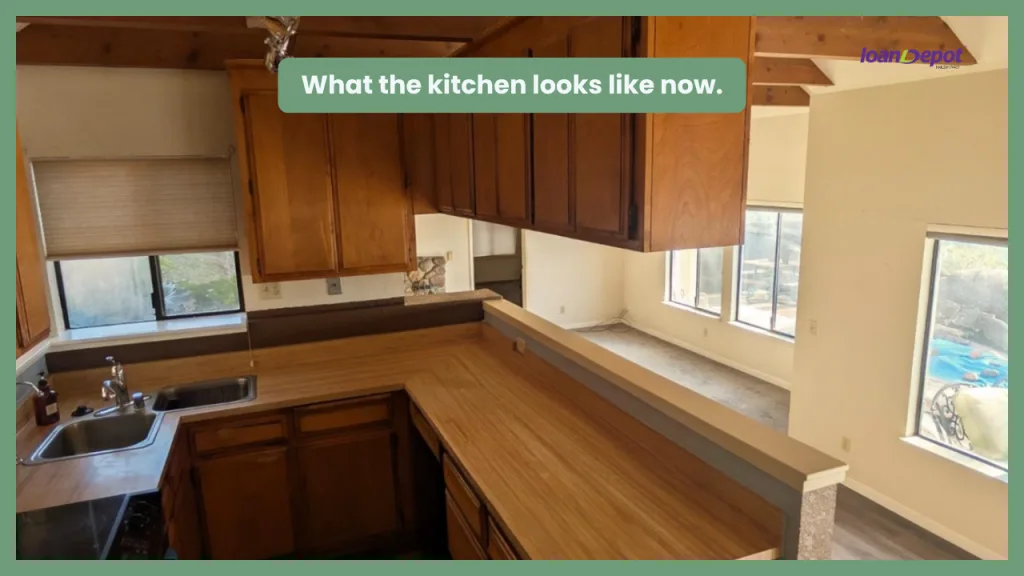
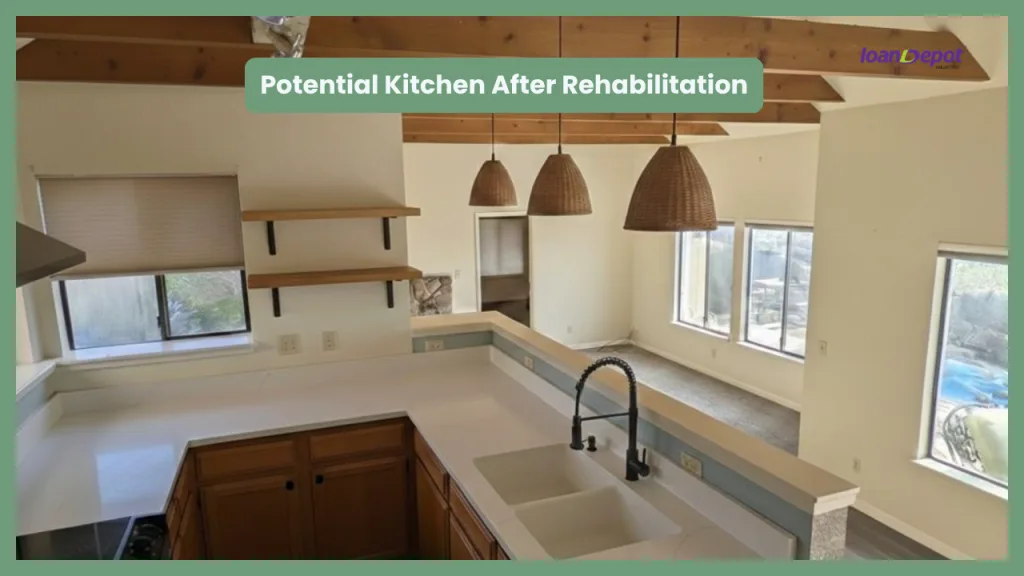
At the time this article was written, a home located at 3110 Iron Mine Road in Auburn, California was listed for approximately $499,000. The property offers 3 bedrooms, 2 bathrooms, approximately 1,410 square feet, and sits on roughly 2.4 acres.
The listing describes the property as a cosmetic fixer, which makes it an interesting candidate for a Limited FHA 203(k) renovation loan.
Potential Limited 203(k) Improvements
If I were helping a buyer evaluate this property, I would focus on improvements that are most likely to improve marketability and appeal to future buyers.
Potential renovations could include:
- Complete kitchen remodel
- Bathroom updates
- Interior paint
- Exterior paint
- Updated flooring throughout
- Lighting fixtures
- Modern hardware and finishes
- Landscaping improvements
- Minor deck and exterior improvements
- Appliance package
Example Renovation Budget
- Kitchen Remodel: $25,000
- Bathroom Updates: $12,000
- Flooring: $10,000
- Interior & Exterior Paint: $8,000
- Lighting & Fixtures: $4,000
- Appliances: $5,000
- Landscaping & Curb Appeal: $6,000
- Contingency & Miscellaneous Costs: $5,000
- Estimated Total Renovation Budget: $75,000
This falls within current FHA Limited 203(k) renovation limits.
Potential Value Scenario
- Purchase Price: $499,000
- Estimated Renovation Budget: $75,000
- Total Investment: $574,000
Based on renovated homes in the Auburn market, it is not unreasonable to believe a well-executed renovation could potentially support a value somewhere in the $575,000 to $650,000 range, depending on the final scope of work, quality of finishes, overall market conditions, and comparable sales available at the time of appraisal.
However, this is where many buyers make a mistake.
The appraiser does not simply add the renovation cost to the home's value.
The appraiser must determine whether the completed improvements are supported by comparable sales in the area.
In some neighborhoods, a $75,000 renovation might increase value by more than $75,000.
In other neighborhoods, the same renovation might add substantially less value.
That is why planning the right improvements is critical.
Important Rural Property Disclaimer
This property sits on approximately 2.4 acres and may have zoning or land use characteristics that allow agricultural activities.
For FHA financing, the property must primarily be residential in nature. If a property has agricultural zoning or farming rights, additional documentation may be required to demonstrate that the buyer does not intend to use the property primarily for income-producing agricultural purposes. A Letter of Explanation may be required and all final determinations are subject to lender and FHA underwriting guidelines.
Important Disclaimer
The renovation budget and potential value examples above are provided for educational purposes only and should not be considered an appraisal, value opinion, underwriting decision, or guarantee of future value. Actual renovation costs, property eligibility, After Repair Value (ARV), loan approval, and financing terms will vary based on contractor bids, appraisal results, market conditions, property condition, borrower qualifications, and underwriting review.
FHA 203(k) Loans and ADUs: One of the Biggest Changes to the Program
This may be one of the most exciting updates to FHA 203(k) financing in years.
For decades, buyers have used FHA 203(k) loans to renovate kitchens, bathrooms, roofs, flooring, and other improvements. Today, FHA has expanded the program to allow certain Accessory Dwelling Unit (ADU) projects through the Standard FHA 203(k) loan.
If you've ever dreamed of purchasing a home with a garage conversion, adding living space for family members, creating a rental unit, or building a long-term wealth strategy through real estate, this change could be a game changer.
What Is An ADU?
An Accessory Dwelling Unit, commonly called an ADU, is a secondary living unit located on the same property as a primary residence.
Examples include:
- Garage conversions
- Basement apartments
- Attached additions
- In-law quarters
- Guest suites with separate entrances
FHA defines an ADU as a separate living unit with its own entrance and living facilities that is subordinate to the primary residence.
What Can FHA 203(k) Finance?
Under current FHA guidance, the Standard 203(k) program may be used for:
- Adding an ADU that will be attached to an existing structure
- Converting existing space such as a garage or basement into an ADU
- Renovating an existing attached ADU
- Renovating an existing detached ADU on the property
This is a major shift because it gives buyers a way to finance both the purchase of a home and the creation of additional living space within a single mortgage.
Here's Why This Matters
Let's say you purchase a home in Auburn, Lincoln, Roseville, or Sacramento that has an oversized garage or unfinished space.
Instead of simply remodeling the kitchen, you might be able to create an ADU that provides:
- Housing for aging parents
- Space for adult children
- A home office
- A caregiver suite
- Potential rental income opportunities
Not only could you improve the functionality of the property, but you may also increase its market appeal and long-term value.
The Rental Income Opportunity
This is where things get really interesting.
FHA now allows certain borrowers to use a portion of projected ADU rental income when qualifying for a Standard FHA 203(k) loan when the ADU is being added to an existing structure. Current guidance allows up to 50% of the projected ADU rental income to be considered in some situations. Existing ADUs may allow up to 75% of estimated rental income for qualifying purposes depending on the circumstances.
That means the ADU may not only help create housing flexibility, it may also help some borrowers qualify for financing.
A Real World Example
Imagine a buyer purchases a $600,000 home in Sacramento with an oversized garage.
Through a Standard FHA 203(k), they invest $100,000 converting that garage into a legal ADU.
At completion, the property now offers:
- Primary Residence
- Separate ADU
- Additional living space
- Potential rental income
- Increased marketability
This is exactly the type of project FHA intended to support when it expanded the program.
Important ADU Considerations
Not every ADU project will qualify.
Local zoning requirements, permits, contractor approval, appraisal requirements, FHA guidelines, and lender overlays all apply.
In addition, the appraiser must support any value increase through comparable sales and market data. Just because an ADU costs $100,000 to build does not automatically mean the property's value increases by $100,000.
As we discussed earlier in this article, the scope of work must create market-supported value.
Why I Believe This Is One of the Most Powerful FHA Programs Available Today
For first-time buyers, move-up buyers, and families looking to create multi-generational housing, the FHA 203(k) ADU opportunity combines several powerful goals into one strategy:
- Purchase a home
- Renovate the property
- Create additional living space
- Potentially generate rental income
- Build long-term wealth through real estate
When properly planned and executed, an FHA 203(k) loan combined with an ADU strategy can transform an ordinary fixer-upper into an extraordinary opportunity.
Before You Start Designing Your ADU: Not Every Property Will Qualify
The addition of ADUs to the FHA 203(k) program is exciting, but it's important to understand that not every property is a good candidate for an ADU project.
One of the first questions I ask buyers is not, "What do you want to build?" It's, "Can the property actually support it?"
Several factors can impact whether an ADU project is feasible from a zoning, construction, appraisal, or lending standpoint.
1. The Lot May Not Have Enough Usable Space
Just because a property sits on a large lot doesn't automatically mean there is enough usable space for an ADU.
Factors such as setbacks, easements, drainage areas, slopes, septic fields, utility easements, and local building requirements can significantly reduce the area available for construction.
A property may have plenty of acreage on paper but very little buildable area in reality.
2. Utility Connections Can Be Expensive
One of the biggest surprises for buyers is the cost of utilities.
An ADU may require:
- Water connections
- Sewer connections
- Electrical service upgrades
- Gas line extensions
- Separate utility meters
If the connection points are located a long distance from the proposed ADU site, the cost of extending utilities can quickly add tens of thousands of dollars to the project.
In some cases, utility costs alone can make an otherwise attractive ADU project financially impractical.
3. Septic Systems May Need To Be Expanded
Properties located outside city limits often rely on private septic systems.
If the existing septic system was not designed to support the additional occupancy created by an ADU, upgrades may be required.
These improvements can become a significant project expense and should be investigated early in the planning process.
4. Local Zoning And Permit Requirements Matter
While California has become much more ADU-friendly, local building departments still have rules regarding:
- Setbacks
- Height restrictions
- Parking requirements
- Access requirements
- Fire safety requirements
- Design standards
The property must meet local requirements before permits can be issued.
5. The Appraiser Must Support The Value
This is one of the most overlooked challenges.
Just because an ADU costs $150,000 to build does not mean the property automatically becomes worth $150,000 more.
The appraiser must determine whether buyers in that market are willing to pay more for a home with an ADU and whether comparable sales support the increase in value.
If the comparable sales don't support the projected After Repair Value, the project may need to be redesigned, modified, or scaled back.
6. The Project Must Fit FHA 203(k) Guidelines
The FHA 203(k) program was designed to improve owner-occupied residential properties.
The project must comply with FHA guidelines, local building codes, contractor requirements, appraisal requirements, and lender overlays.
For Standard FHA 203(k) projects, a HUD-approved 203(k) Consultant is required to help document the project and ensure compliance with program requirements.
7. The Contractor Matters
One of the most common reasons renovation projects encounter delays is poor contractor planning.
The contractor must provide detailed bids, timelines, and specifications that can be reviewed by the lender, consultant, appraiser, and underwriter.
A poorly prepared proposal can create delays or even jeopardize the project.
The Bottom Line
An ADU can be an incredible wealth-building tool, create housing for family members, and improve the functionality of a property. However, successful ADU projects start with proper planning.
Before falling in love with an ADU idea, make sure the property, utilities, zoning, appraisal, and renovation budget all support the vision.
That's why one of the smartest first steps is having a conversation with an experienced FHA 203(k) lender before making an offer on a property.
Could 3110 Iron Mine Rd. in Auburn Support An ADU?
Based on the available information, the answer is: possibly yes.
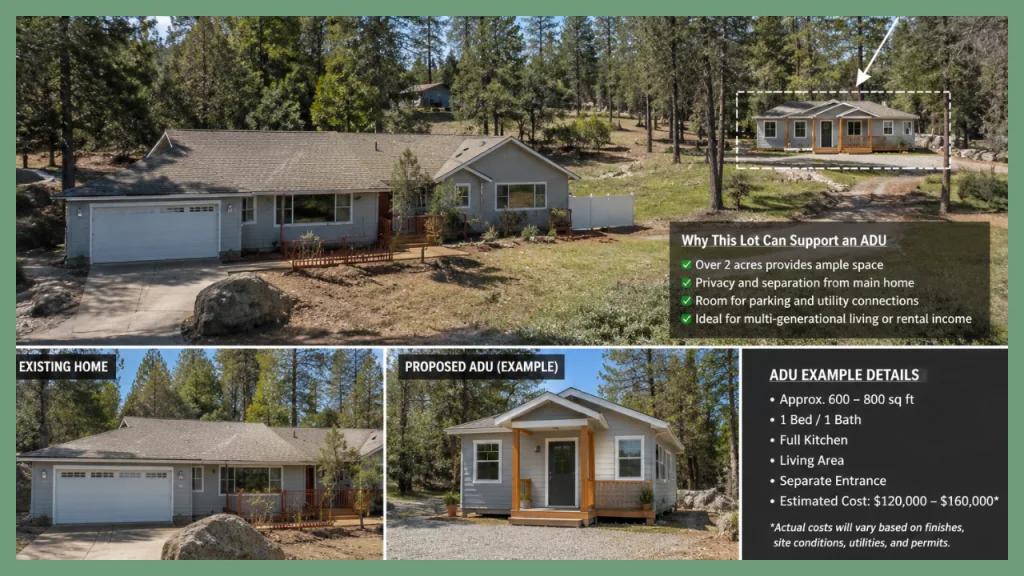
One of the reasons this Auburn property caught my attention is that it sits on approximately 2.4 acres. Unlike many suburban properties that may have limited yard space, this property appears to have enough land area that an ADU could be worth investigating.
However, acreage alone doesn't determine whether an ADU project is feasible.
Before moving forward, I would want to answer several important questions:
Is There A Suitable Building Site?
The first step is determining whether there is a practical location for the ADU.
Factors to evaluate include:
- Topography
- Existing structures
- Driveway access
- Setbacks
- Easements
- Drainage requirements
A 2.4-acre parcel may have plenty of space, but portions of the property could be unusable due to slopes, easements, or other site restrictions.
Are Utilities Available?
This is often the biggest cost variable.
If the proposed ADU location is far from existing utility connections, the cost to extend:
- Water
- Sewer or septic
- Electrical service
- Gas lines
could significantly increase the overall project budget.
Can The Existing Septic System Support An ADU?
If the property utilizes a private septic system, additional capacity may be required.
In some cases, the septic system can support the additional unit.
In other situations, upgrades may be required before permits can be issued.
Would The ADU Increase Market Value?
This is where things become interesting from an FHA 203(k) perspective.
The appraiser would ultimately determine whether the proposed ADU contributes additional value to the property based on comparable sales and market demand.
Given the size of the parcel and the growing demand for multi-generational housing in Placer County, an appropriately designed ADU may provide meaningful additional value. However, the final determination would depend on the plans, quality of construction, and comparable sales available at the time of appraisal.
My Initial Opinion
If I were helping a buyer evaluate this property, I would absolutely explore the ADU option.
The combination of approximately 2.4 acres, rural Auburn location, and the flexibility now available under the Standard FHA 203(k) program makes this the type of property where an ADU feasibility review could make sense.
The next step would be confirming zoning, utility availability, septic capacity, permit requirements, and obtaining preliminary contractor estimates before making assumptions about the project's feasibility or future value.
A Realistic Look at FHA 203(k) Loans
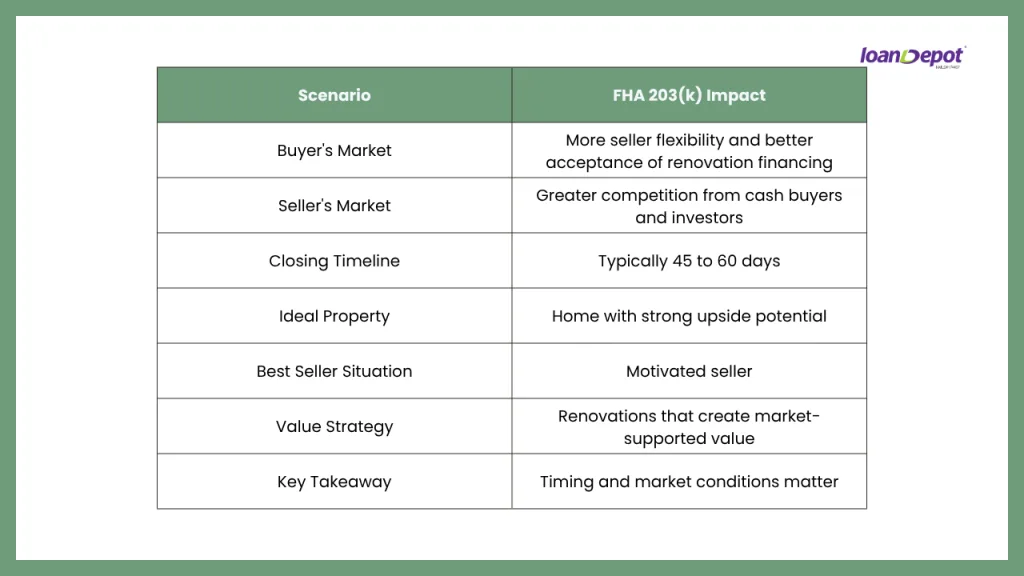
FHA 203(k) loans can be a great financing tool, but their success often depends on market conditions. In a buyer's market, sellers are typically more flexible, making it easier to navigate renovation financing requirements and longer closing timelines.
In a competitive seller's market, cash buyers and investors often have an advantage, especially on fixer-upper properties. The strongest FHA 203(k) opportunities are usually homes with significant potential, motivated sellers, and renovation plans that support future value.
Final Thoughts
An FHA 203(k) loan isn't just a mortgage program. It's an opportunity.
It's an opportunity to look beyond the perfectly remodeled homes that everyone else is competing for and see potential where others see work.
It's an opportunity to purchase a home that needs updates, create value through strategic improvements, and potentially build equity from day one.
Whether you're considering a cosmetic renovation, a major remodel, or exploring the possibility of adding an ADU, the key is having the right plan, the right team, and realistic expectations about the property's potential value after the work is completed.
As we've discussed throughout this guide, not every project is a good candidate for an FHA 203(k) loan. The property, scope of work, contractor, appraisal, and financing all need to work together. That's why planning ahead can save you time, money, and frustration.
The good news?
When structured properly, an FHA 203(k) loan can be one of the most powerful tools available for first-time homebuyers and homeowners looking to transform a property into something truly special.
Ready To Explore Your FHA 203(k) Options?
If you're considering a fixer-upper, wondering whether a property qualifies, or curious about adding an ADU through the FHA 203(k) program, I'd love to help.
During a free 30-minute discovery call, we'll discuss your goals, answer your questions, and determine whether an FHA 203(k) loan is the right strategy for your situation.
📅 Schedule Your Free 30-Minute Discovery Call: https://talkingwithamy.com
📞 Call or Text: (916) 705-2557
With more than 25 years of mortgage experience, I've helped buyers navigate everything from first-time home purchases to complex renovation financing. My goal is simple: make the mortgage process easy to understand and help you make confident decisions.
I look forward to helping you explore the possibilities.
Amy DeBusk
Branch Manager | Mortgage Advisor
NMLS #281056
❓FAQs About FHA 203(k) Loans in California
Most FHA 203(k) loans require a minimum credit score of 580. However, qualifying for the loan involves more than just your credit score. Lenders also review your income, debt-to-income ratio, employment history, assets, and overall financial profile. In some cases, borrowers with stronger compensating factors may have more financing options available. The best way to determine eligibility is to have your situation reviewed by an experienced FHA 203(k) lender.
One of the biggest advantages of an FHA 203(k) loan is the low down payment requirement. Eligible borrowers may be able to purchase a home and finance the renovation costs with as little as 3.5% down. The down payment is calculated based on the total acquisition cost of the property, including eligible renovation expenses, subject to FHA guidelines and appraisal requirements.
Most FHA 203(k) loans take approximately 45 to 60 days to close. The timeline depends on several factors, including contractor bids, renovation plans, appraisal completion, underwriting review, and how quickly required documentation is provided. While the process may take longer than a standard FHA loan, the ability to finance renovations into the mortgage often makes the additional time worthwhile.
Yes, in certain situations. Current FHA 203(k) guidelines allow eligible ADU projects under the Standard FHA 203(k) program. This may include converting a one-unit property into a one-unit property with an ADU, adding an attached ADU to an existing structure, or renovating an existing attached or detached ADU. Local zoning, permits, appraisal requirements, contractor approval, and FHA guidelines all apply.
Absolutely. In fact, purchasing a fixer-upper is one of the most common uses for an FHA 203(k) loan. The program was specifically designed to help buyers purchase homes that need repairs, renovations, or modernization. Rather than paying for repairs out of pocket after closing, eligible renovation costs can be financed into the mortgage.
Depending on whether you use a Limited 203(k) or Standard 203(k), eligible improvements may include kitchen remodels, bathroom updates, flooring, roofing, HVAC systems, plumbing, electrical upgrades, accessibility improvements, septic repairs, well repairs, room additions, structural repairs, basement conversions, ADU projects, and other approved improvements. All repairs must comply with FHA requirements and local building codes.
Generally, no. Most FHA 203(k) projects require qualified contractors. The contractor must meet lender requirements and provide detailed bids and project documentation. The program is designed to ensure renovations are completed properly, permits are obtained when required, and the property meets FHA standards upon completion. This is not typically considered a do-it-yourself renovation program.
Unlike a traditional appraisal, an FHA 203(k) appraisal evaluates what the property is expected to be worth after the renovations are completed. This future value is known as the After Repair Value (ARV) or After Improved Value. The appraiser reviews the contractor's plans, specifications, cost estimates, and
The biggest mistake is assuming that spending money automatically creates value. It doesn't. The renovations must make sense for the neighborhood, be supported by comparable sales, and improve the property's marketability. The most successful FHA 203(k) projects focus on creating market-supported value rather than simply maximizing renovation costs.
Historically, FHA 203(k) loans tend to work best in buyer's markets where sellers have fewer offers and are more willing to accept a longer closing timeline. In strong seller's markets, fixer-uppers often attract investors and cash buyers, making competition more difficult. However, the right property, motivated seller, and strong financing strategy can still make an FHA 203(k) loan a winning solution regardless of market conditions.
Yes. In fact, pre-approval is one of the smartest first steps you can take. A pre-approval helps you understand your budget, determine whether an FHA 203(k) loan is appropriate, and identify any issues before you start making offers. It also gives you confidence when evaluating properties and discussing renovation plans with contractors and real estate agents.
All Mortgage Made Easy articles · Book a Complimentary Discovery Call