
Keep the first mortgage when eligible.
A second-lien equity line may allow an eligible existing mortgage to remain in place. We’ll review the first loan and the program’s combined borrowing limits.
An equity line for investment properties
Put your rental property’s equity to work.
A DSCR home equity line of credit uses the property’s eligible rental income to help evaluate qualification. If you want access to equity without replacing an eligible existing first mortgage, let’s review the rents, payments, and options together.


Meet Amy
I’m Amy DeBusk. I specialize in DSCR loans and help real estate investors understand their financing options. With more than 25 years of mortgage experience, I know how much the details can change the answer.
We’ll look at your rental income, existing mortgage, available equity, credit, and what you want the funds to accomplish. Then we’ll explain the loan options, payment, and costs so you can choose a financing plan that makes sense for you.
Amy DeBusk
Branch Manager & Mortgage Advisor with loanDepot
NMLS #281056
Start with the property’s income
DSCR stands for debt service coverage ratio. Like a first-mortgage DSCR loan, this equity-line option looks at eligible rent compared with the property’s qualifying payment. Credit, equity, and property requirements also matter.
The rent the lending partner allows in its calculation.
We review the existing mortgage, proposed line’s qualifying payment, property taxes, insurance, and applicable HOA dues under the program’s rules.
We’ll confirm the required ratio and how the line payment is calculated before deciding whether the property qualifies. A line’s qualifying payment may differ from the payment you expect on an initial draw.
A second-lien equity line may allow an eligible existing mortgage to remain in place. We’ll review the first loan and the program’s combined borrowing limits.
Minimum FICO requirements for our DSCR HELOC options range from 700 to 720, depending on the lending partner and program.
We’ll explain the draw period, repayment terms, rate structure, fees, and any minimum-draw requirements for the actual line being considered.
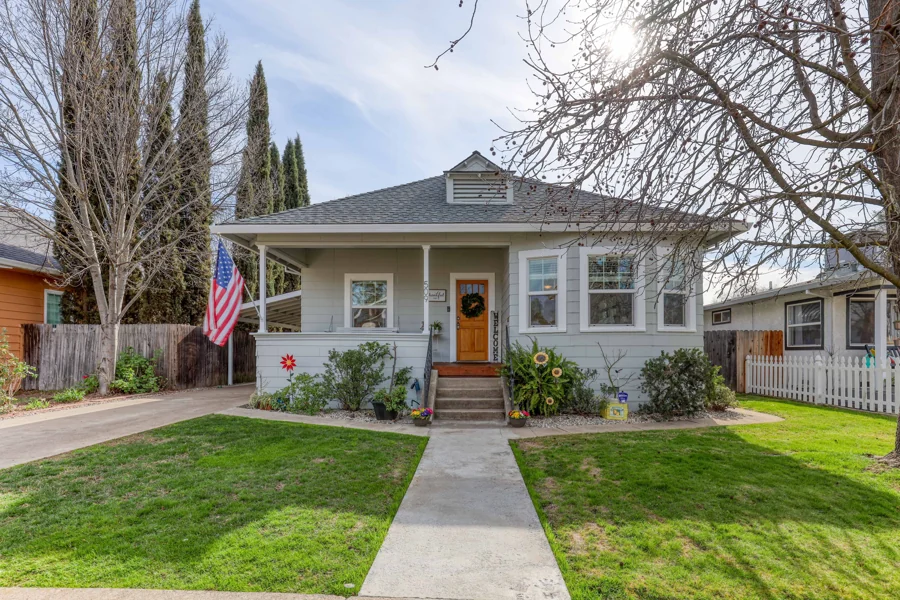
An investor we’re helping right now
We’ll call her Sally to protect her privacy. She is retired, lives on a fixed income, and owns one rental property. Her existing first mortgage has a very low interest rate, so replacing it with a cash-out refinance did not make sense for her goals.
We’re helping Sally review a different approach: a DSCR equity line on her current rental, paired with DSCR financing for another rental she is shopping for in the Roseville area.
For eligible DSCR programs, qualification focuses on the property’s rental income instead of traditional personal-income documentation. That gives us a way to evaluate the financing without making Sally’s fixed retirement income the basis for the entire strategy.
Her current rental
Review a separate equity line so she can explore using the equity she has built without replacing that first loan.
Her next purchase
Coordinate the equity line, available cash, and the financing needed for the next property.
How we qualify
Evaluate eligible rental income, the qualifying payments, equity, credit, and reserves for the proposed financing.
Explore Roseville homes and community information → · Learn about DSCR purchase loans →
A detail that can change which option fits
If your property is a single-family residence with an accessory dwelling unit, the DSCR HELOC option described here uses only the rent from the main house to qualify. The ADU rent is not included.
That matters if you need both rents to support the total payment. Collecting rent from the ADU does not mean that income can be used in this program’s qualifying calculation.
Main house
Rent considered for this illustration
IncludedADU
Additional rent collected
Excluded from qualifying rentThis shows the rent exclusion only. We still need to review acceptable rent documentation, the total qualifying payment, and the program’s other requirements.
A DSCR equity line may not be the best fit. If you’re self-employed, a bank-statement HELOC may provide another way to document eligible income. We’ll review your income, property, and occupancy to see whether that separate program fits.
Explore our Bank-Statement HELOC →Let’s compare the approach
| What we review | DSCR HELOC | Bank-Statement HELOC |
|---|---|---|
| Income approach | Eligible rental income compared with the property’s total qualifying payment. | Eligible bank statements used to evaluate self-employed income. |
| Main house plus ADU | The option described on this page excludes ADU rent. | We review eligible income and confirm the property and occupancy requirements separately. |
| Credit requirement | Minimum 700-720, depending on lending partner and program. | Uses its own credit guidelines. See our Bank-Statement HELOC page for details. |
| What still matters | Property eligibility, equity, credit, rent documentation, and the required coverage ratio. | Property eligibility, equity, credit, business history, bank statements, and other obligations. |
We’ll help you understand which approach is worth reviewing. An ADU does not automatically make the property or its income eligible for a different program.

Start with a few details
We’ll confirm the documentation needed for the program and help you work through the numbers.
Book your free 30-minute discovery callExplore rental-property purchase and refinance financing based on eligible property income.
DSCR rental-property loans →Learn about a separate equity-line option for eligible self-employed borrowers and properties.
Bank-Statement HELOC details →Find education and tools for your next investment-property decision.
Investor guides →It is a home equity line for an eligible investment property, with qualification focused on acceptable rental income compared with the property’s total qualifying housing payment. It is a different loan structure from a DSCR cash-out refinance, which replaces the first mortgage.
The minimum FICO requirement for our DSCR HELOC options ranges from 700 to 720, depending on the lending partner and program. We’ll review the actual credit report and the rest of your scenario before identifying an eligible option.
For the single-family home plus ADU option described on this page, only the main-house rent is used. ADU rent is excluded. This is a program-specific rule, so we review the exact lending option rather than assume all DSCR products use the same calculation.
Tell us early. If the main-house rent alone does not support the qualifying payment, this DSCR equity line may not fit. A bank-statement HELOC may be another option for an eligible self-employed borrower and property, but it has its own income, property, occupancy, and credit requirements.
An eligible second-lien HELOC can leave the first mortgage in place. We’ll check the existing financing, lien position, combined borrowing limits, and the proposed payment. A cash-out refinance is a different option that replaces the first loan.
For the DSCR options discussed here, qualification focuses on eligible property rents instead of traditional personal-income documentation. We still need the rent, property, credit, equity, and other documentation required by the lending partner.
It may be an option to review. As Sally’s ongoing scenario shows, a DSCR equity line may provide funds from a current rental while a separate DSCR mortgage finances an eligible next purchase. We need to review both loans, acceptable rents, payments, credit, equity, cash needed, and reserves before relying on that plan.
We review the existing mortgage, the new line’s qualifying payment, taxes, insurance, and applicable association dues under the program’s calculation. The lending partner determines how the line payment and required coverage ratio are evaluated. We do not qualify using rent and an incomplete principal-and-interest payment alone.
The answer depends on the property value, existing secured debt, the program’s borrowing limits, rental coverage, and other requirements. We’ll explain the actual line amount, draw and repayment periods, rate structure, fees, and required payments. Equity in the property is not the same as the amount available to borrow.
Book a complimentary discovery call and bring your property address, current mortgage statement, rents or leases, and a clear idea of how much you hope to borrow and why. Identify any ADU income separately. We’ll explain the documentation and next steps for the options worth reviewing.