
 01
Not enough homes to buy
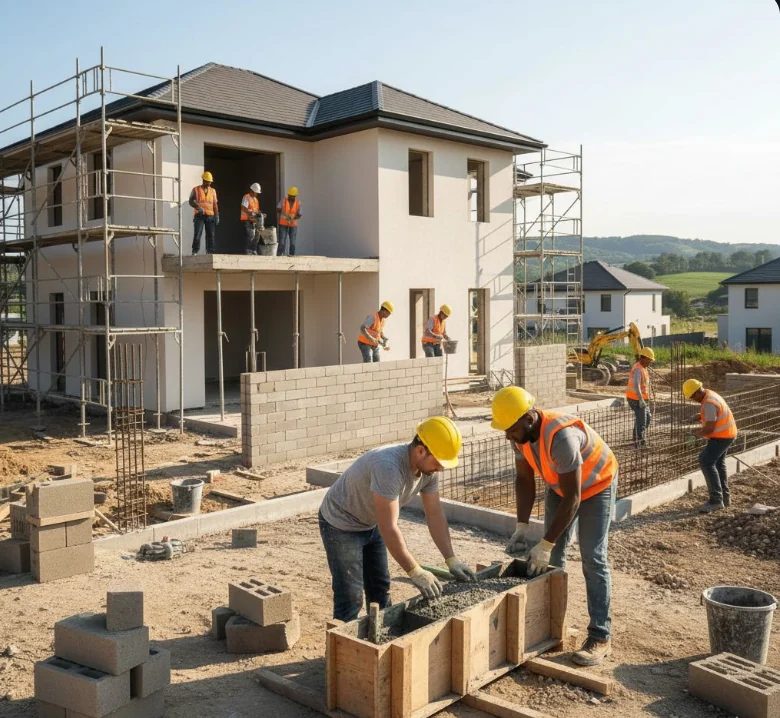
Years of underbuilding and fewer homeowners selling have left buyers with limited choices. The paper examines why we need more homes, especially homes first-time buyers can afford.
Why homes are in short supply →Research & policy · November 2026
America’s Housing Shortage and the First-Time Homebuyer Crisis
Understand why homes are in short supply and what the opportunity to own could mean for your future. Amy DeBusk explores how homeownership can build equity and long-term wealth, and how first-time buyers can turn that possibility into a plan.
62 pages · PDF · Revised November 14, 2026
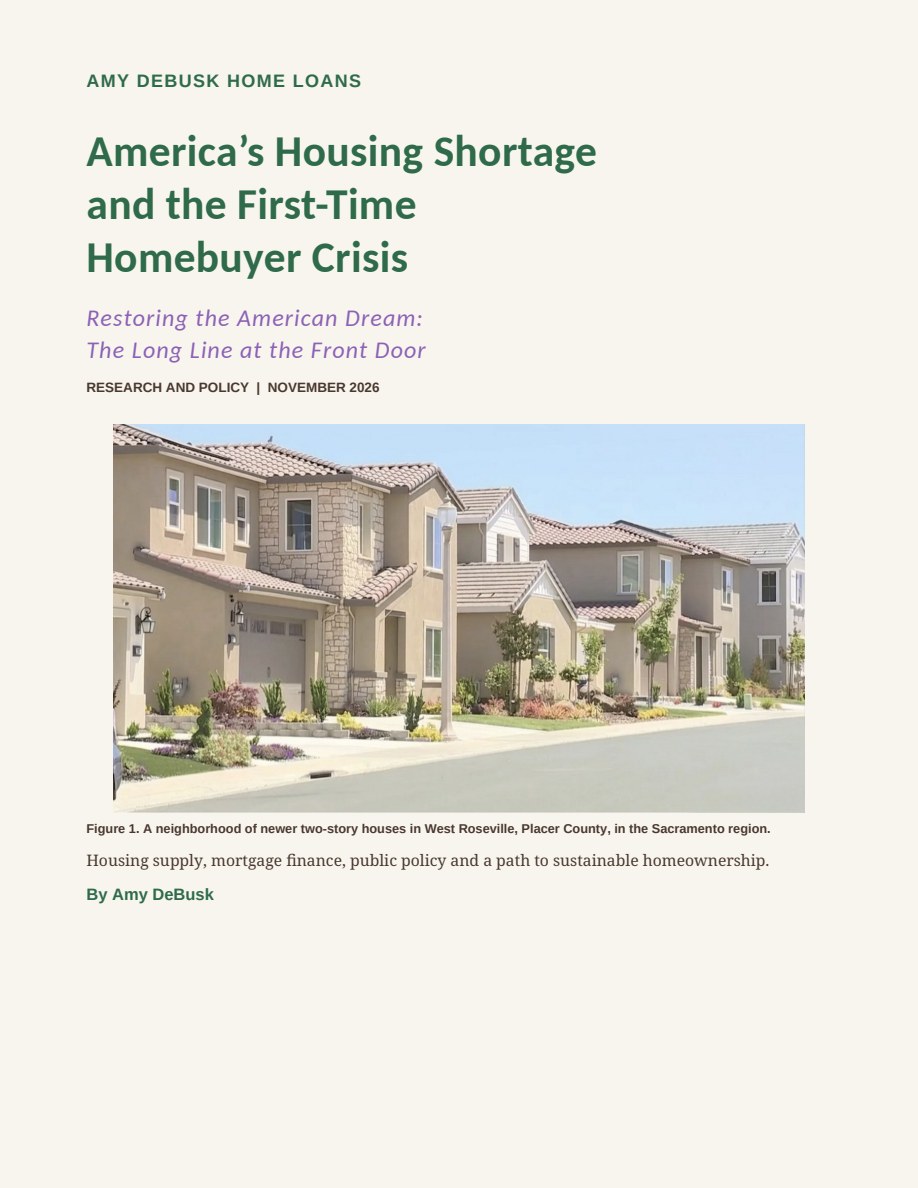
The complete report: Restoring the American Dream: The Long Line at the Front Door.

The big picture · Updated evidence
4.03 millionEstimated U.S. housing supply gap in 2025.
Source: Realtor.com, 2026 Housing Supply Gap Report · March 3, 2026.
The challenge is not just building more homes. It is helping families find one they can afford and keep.
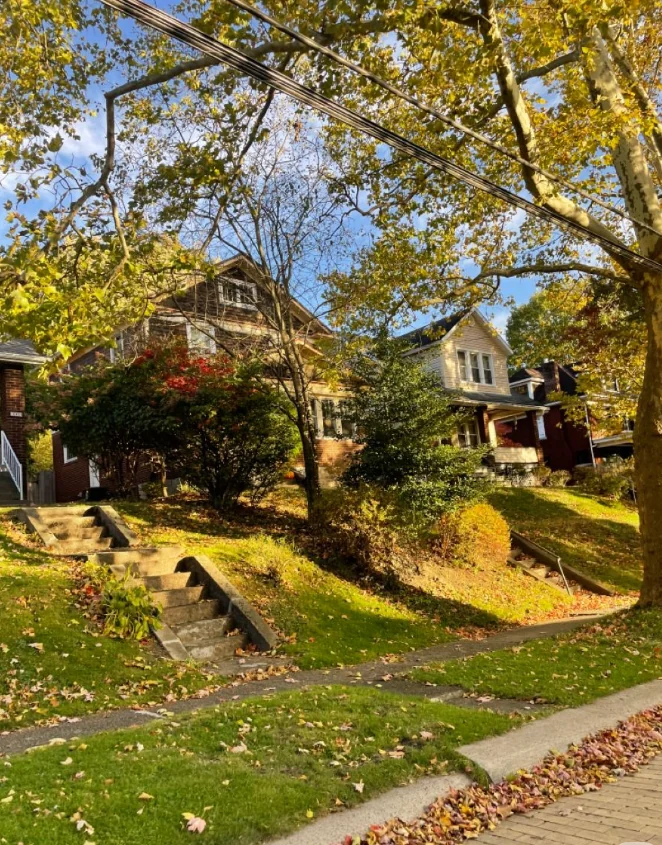
This national estimate includes people who might have formed their own households but are still living with parents, relatives, or roommates. Local conditions vary; a national shortage does not mean every neighborhood has too few listings. The neighborhood photograph is illustrative; it does not measure the shortage in that community.
The report cites Freddie Mac’s estimate of 3.7 million homes for Q3 2024. Realtor.com uses a different method, so the figures are not a measure of growth from 3.7 to 4.03 million. The original report and PDF retain their cited figures.
Freddie Mac · November 26, 2024 →
A path to a place of your own
Build more homes people can afford. Help first-time buyers get through the door. Make sure the costs leave room for life after move-in.
Explore the four topics ↓What the research explores
Finding a home. Paying for it. Feeling ready to buy. Managing the costs after move-in. These four topics connect the housing crisis to the decisions families face.
01Years of underbuilding and fewer homeowners selling have left buyers with limited choices. The paper examines why we need more homes, especially homes first-time buyers can afford.
Why homes are in short supply → 02
Saving the down payment is only part of the challenge. Home prices, mortgage costs, and assistance programs all affect whether a first-time buyer can make the purchase work.
What helps buyers afford a home → 03
Watching your parents lose their home can leave a lasting question: “What if that happens to me?” The paper explores how family experiences of foreclosure may shape the next generation’s trust in mortgages and confidence in buying.
How a parent’s loss can shape a buyer’s fears → 04
Owning a home means planning for more than the mortgage. Repairs, savings, and everyday expenses matter too. The paper looks at what helps families enjoy their home while staying financially secure.
Making room for life after buying →See the evidence
Who already owns a home? Why can assistance still fall short? How much does a rate change affect a payment? Each view answers a different part of the housing question.
How many households own the home they live in? Compare the United States, California, and Placer County using the same 2025 survey.
Owner-occupied homes divided by all occupied homes, multiplied by 100 and rounded to one decimal place. Vacant homes are not in the denominator.
These are survey estimates with sampling uncertainty. This website chart now uses 2025 one-year estimates. The original report’s page 12 retains its 2020-2024 five-year comparison; the two products should not be treated as a year-to-year trend.
When the program rules don’t match the home prices
A buyer can meet a program’s income limit and still earn too little to qualify for a suitable home in that area. Another buyer earns just over the limit, loses access to the benefit, and still struggles with the payment. This is the gap Amy repeatedly encounters in her work as a mortgage advisor.
HomeReady and Home Possible generally limit qualifying income to 80% of the area median income. Eligible buyers may receive better loan pricing and lower mortgage-insurance costs. Earn just above the cutoff, and you may lose that help while still struggling to afford a local home.
Too much incometo meet the program’s limit
Still not enoughto comfortably afford the home
HomeReady and Home Possible are first-mortgage products, not stand-alone down payment grants. Their income limits were updated in June 2026; the issue is whether the limits fit local buying costs, rather than whether they are never updated. Other loan options and first-time-buyer pricing waivers may still apply. Rates and savings depend on the actual loan. HomeReady rules · Home Possible rules · Fannie Mae’s 2026 update · Freddie Mac’s 2026 update

Where CalHFA MyHome can work
Explore our CalHFA assistance options →
MyHome can make a purchase possible when the monthly payment works but the buyer needs help with upfront cash. Its county income limits reach more working households: the 2026 limit is $245,000 in Placer and Sacramento counties. Dream For All uses separate limits.
Down payment assistance does not automatically cover the whole cost of closing. When a loan estimate includes a 2% borrower-paid origination charge, that fee sits alongside other loan costs, escrow and title charges, insurance, and prepaid items. The 2% is an example of lender pricing, not a mandatory CalHFA fee for every borrower.
When the seller agrees to cover eligible closing costs, MyHome can help with the down payment while the credit helps with the cost of getting the loan closed. This combination is one Amy uses to help buyers move forward. The buyer may still need funds for remaining expenses.
Seller credits cannot exceed eligible actual costs, replace the required down payment, or become cash back to the buyer. The seller has to agree, and the final amount must fit the loan’s rules.
MyHome assistance is based on the lower of the price or appraised value. It is an interest-bearing loan, not a grant. Principal and accrued interest become due under its terms, including sale, transfer, refinance, or payoff of the first mortgage. Other assistance programs also defer payments. Lender fees and available programs vary.
MyHome overview · Repayment terms · 2026 income limits · Allowable lender fees · FHA credit limits · Conventional credit limits
Explore HomeReady →Compare conventional loan options →Explore FHA loans →Explore CalHFA assistance →
 Placer County, California
The local example
Placer County staff said the former $100,000 assistance cap was not enough for many eligible households. Home prices, borrowing costs, insurance, and limited eligible homes still stood in the way.
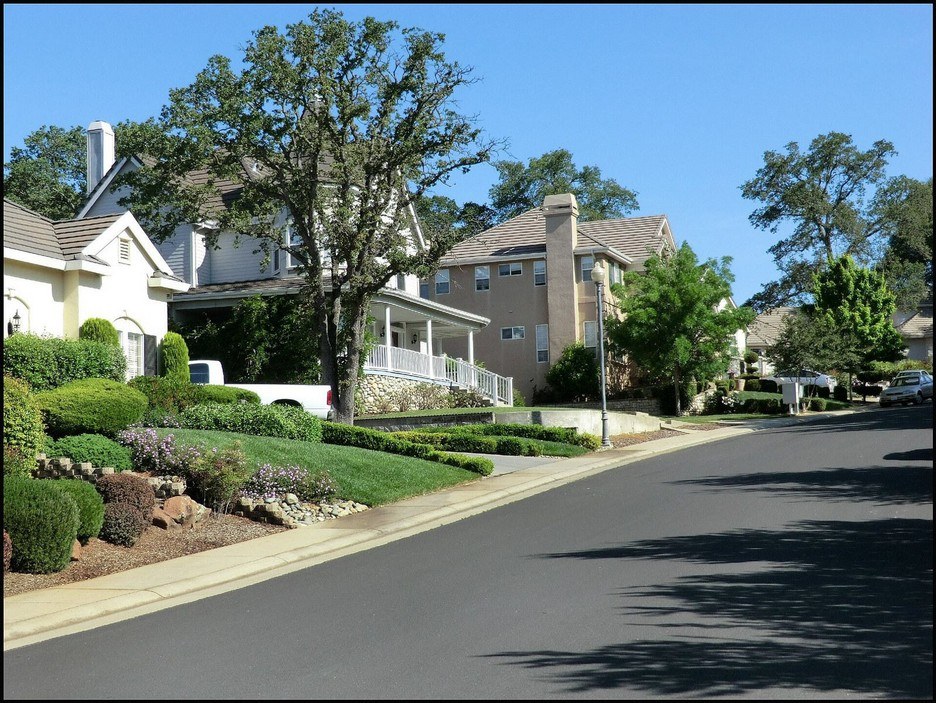
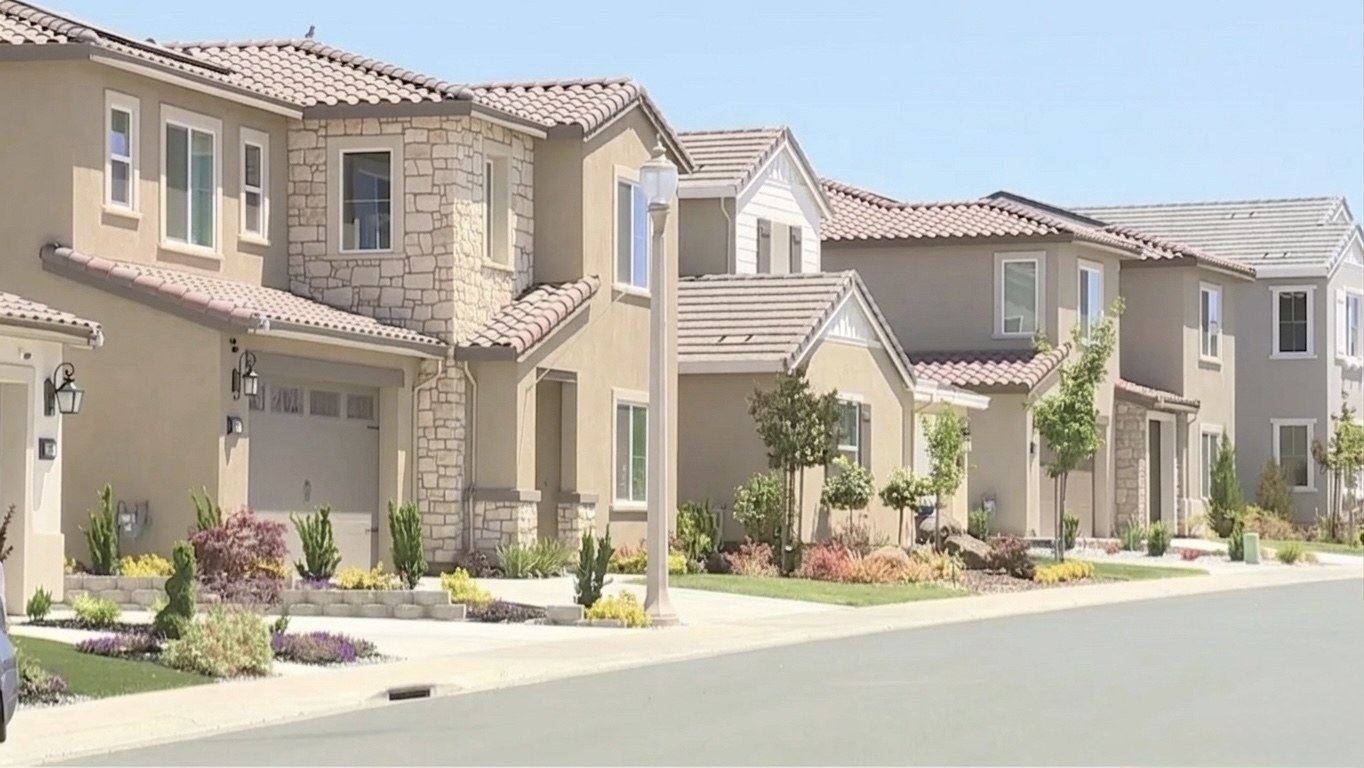
County snapshot, February 17, 2026. These are application and approval counts, not completed purchases or a rejection rate. Read the county’s findings. Neighborhood photograph is illustrative.
CalHFA’s reported households served in fiscal year 2025-26, from its September 17, 2026 board presentation.
California Dream For All
Explore our Dream For All guide →
Dream For All can provide substantial assistance, but meeting the rules does not guarantee funding. All borrowers must be first-time buyers, at least one must meet the first-generation requirement, and county income limits apply. The 2026 round used randomized voucher selection.
The program provides a shared-appreciation loan of up to 20% of the purchase price, capped at $150,000. The loan and a share of appreciation must be repaid under the program’s terms. It is not a free grant.

CalHFA reported 1,732 home purchases in FY 2024-25. The number varies by funding round and year; it is not a fixed 1,000-family annual allotment.
2024-25 annual results →The question every program should answer: After the assistance is applied, can an eligible buyer actually afford a suitable home in that community?
Read the research on assistance and affordability →Each bar includes the mortgage, property taxes, homeowners insurance, and PMI. The amount at the right is the full monthly total for this example.
$450,000 home$50,000 down (11.1%)$400,000 conventional loan · 30-year fixed
At 6.50%, the full payment is about $3,314/month. At 7.00%, it is about $3,447/month: a difference of $133/month.
| Rate | Principal & interest | Property taxes | Homeowners insurance | PMI | Full payment |
|---|---|---|---|---|---|
| 6.00% | $2,398.20 | $468.75 | $150.00 | $166.67 | $3,183.62 |
| 6.50% | $2,528.27 | $468.75 | $150.00 | $166.67 | $3,313.69 |
| 7.00% | $2,661.21 | $468.75 | $150.00 | $166.67 | $3,446.63 |
| 7.50% | $2,796.86 | $468.75 | $150.00 | $166.67 | $3,582.27 |
Illustrative inputs: annual property taxes at 1.25% of the $450,000 price ($5,625.00/year), homeowners insurance at $1,800/year, and borrower-paid PMI at 0.50% of the original loan annually. PMI is included because this conventional example has less than 20% down. The PMI amount is an assumption, not an insurer quote.
Taxes, insurance, and PMI are held constant here to isolate the effect of changing the mortgage rate; actual costs depend on the property, coverage, credit, and loan terms. HOA dues are assumed to be $0; add them where applicable. Repairs and utilities belong in the household budget separately. FHA uses a different mortgage-insurance structure.

“With America short more than four million homes, why aren’t more first-time buyers asking, ‘What would it take for me to qualify?’
In a world chasing wealth, homeownership whispers stability. A place of your own. Equity built over time. The possibility of lasting wealth. That opportunity deserves a closer look.”
The complete research
America’s Housing Shortage and the First-Time Homebuyer Crisis
Restoring the American Dream: The Long Line at the Front Door
Read all 12 chapters online, or download the complete report to save, print, and share.
Download the Full Report ↓The complete online edition
Begin with Chapter 1 or go straight to the topic that interests you. Every section has its own address, source links, and a path to continue reading.
Start here · Chapter 1Begin the report with the people seeking a home and the generations shaping demand. Read Chapter 1 →
The online edition groups several PDF pages into each chapter. Select a page to open its place in the web edition. Pages 1 and 2 correspond to the cover and contents on the research home page. The revised PDF adds Chapter 7 pages 37A-37C while retaining all original page numbers.
 Chapter 01
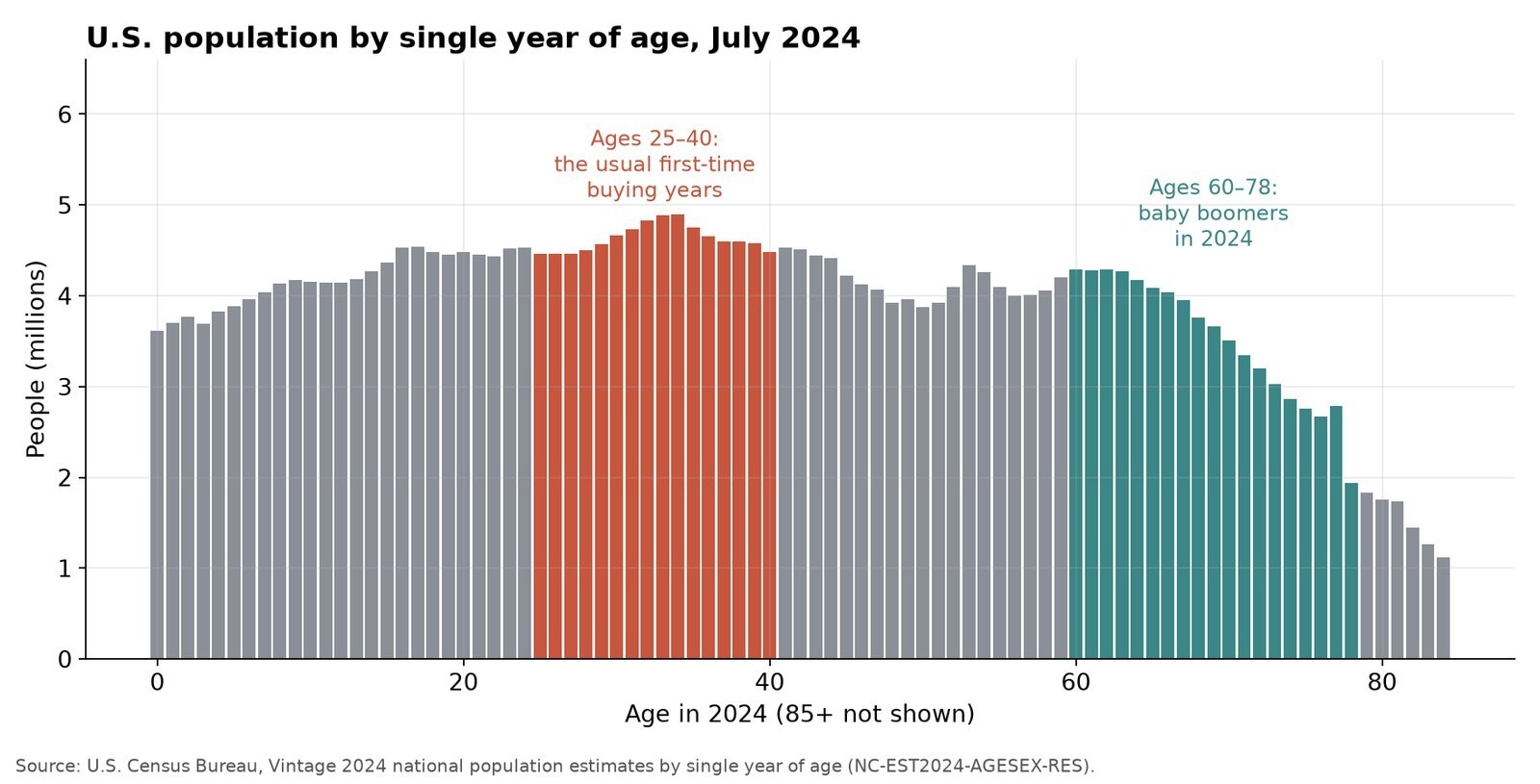
Why so many first-time buyers are still waiting for a home of their own.
Read chapter →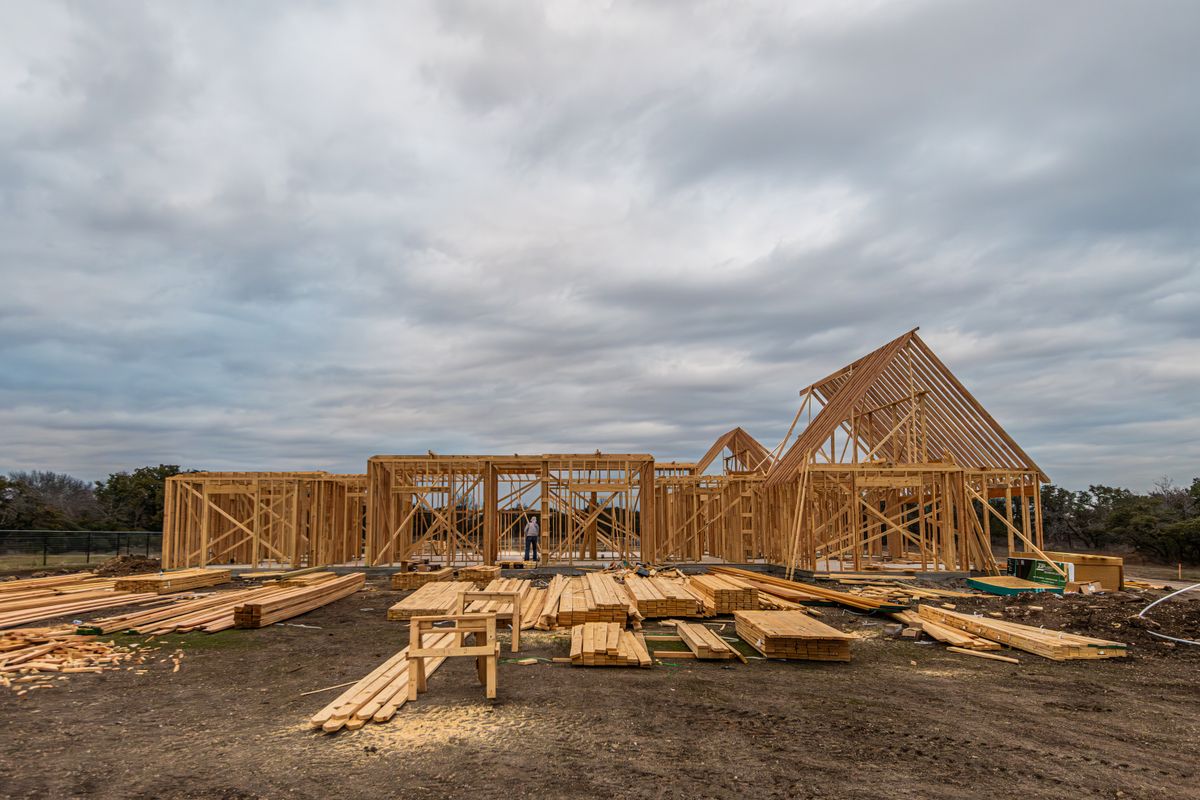 Chapter 02
Follow the construction recovery, the shortage of attainable ownership options, and the local delivery pipeline.
Read chapter → Chapter 03
Explore mortgage lock-in, aging in place, institutional ownership, and the limits of proposed mobility reforms.
Read chapter →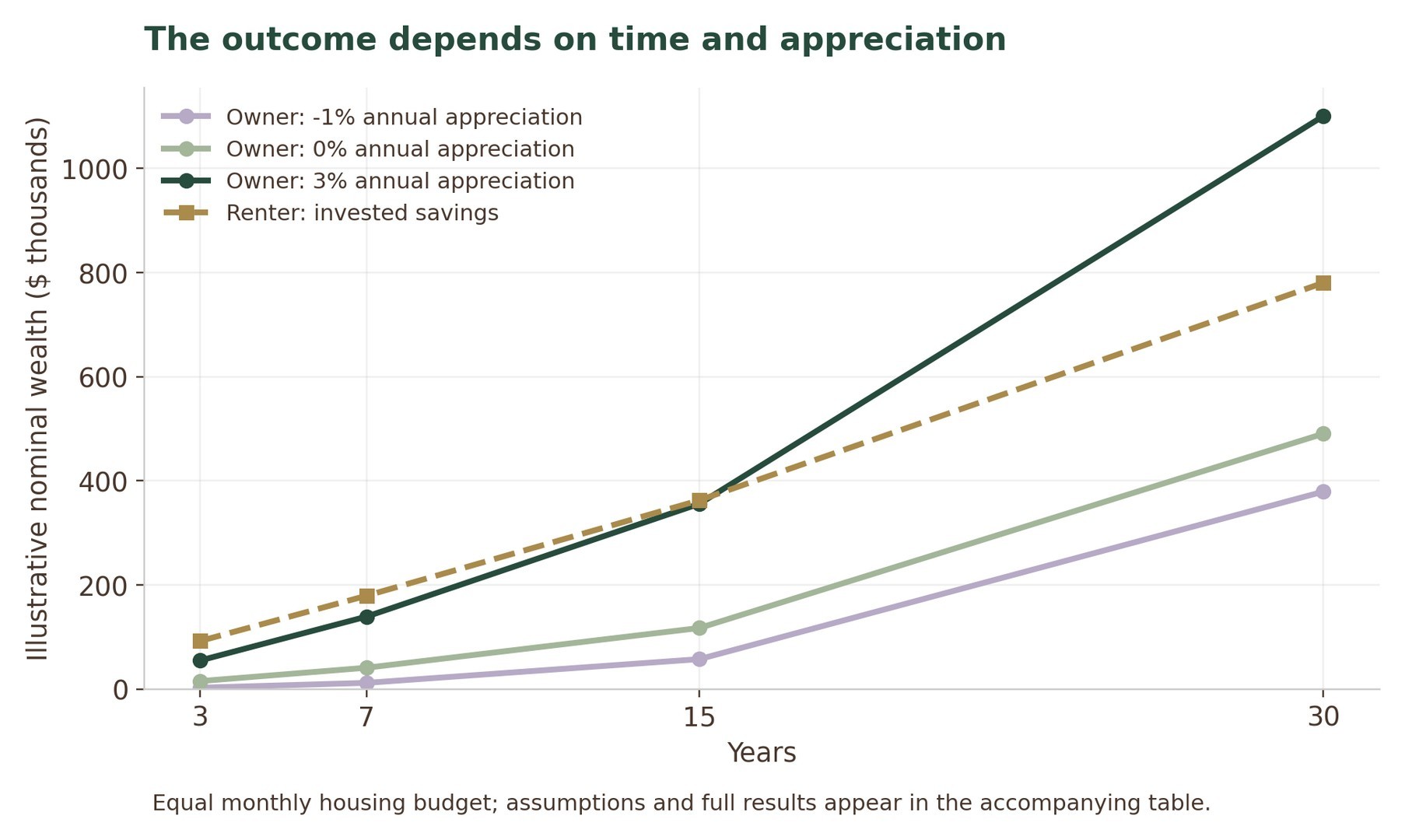 Chapter 04
Read the tradeoffs behind equity, leverage, transaction costs, and the decision to rent or buy.
Read chapter → Chapter 05
Connect mortgage costs to the expenses, reserves, and choices that shape everyday life.
Read chapter →Chapter 06See why the right subsidy, eligible inventory, and financeable payment have to meet in the same transaction.
Read chapter →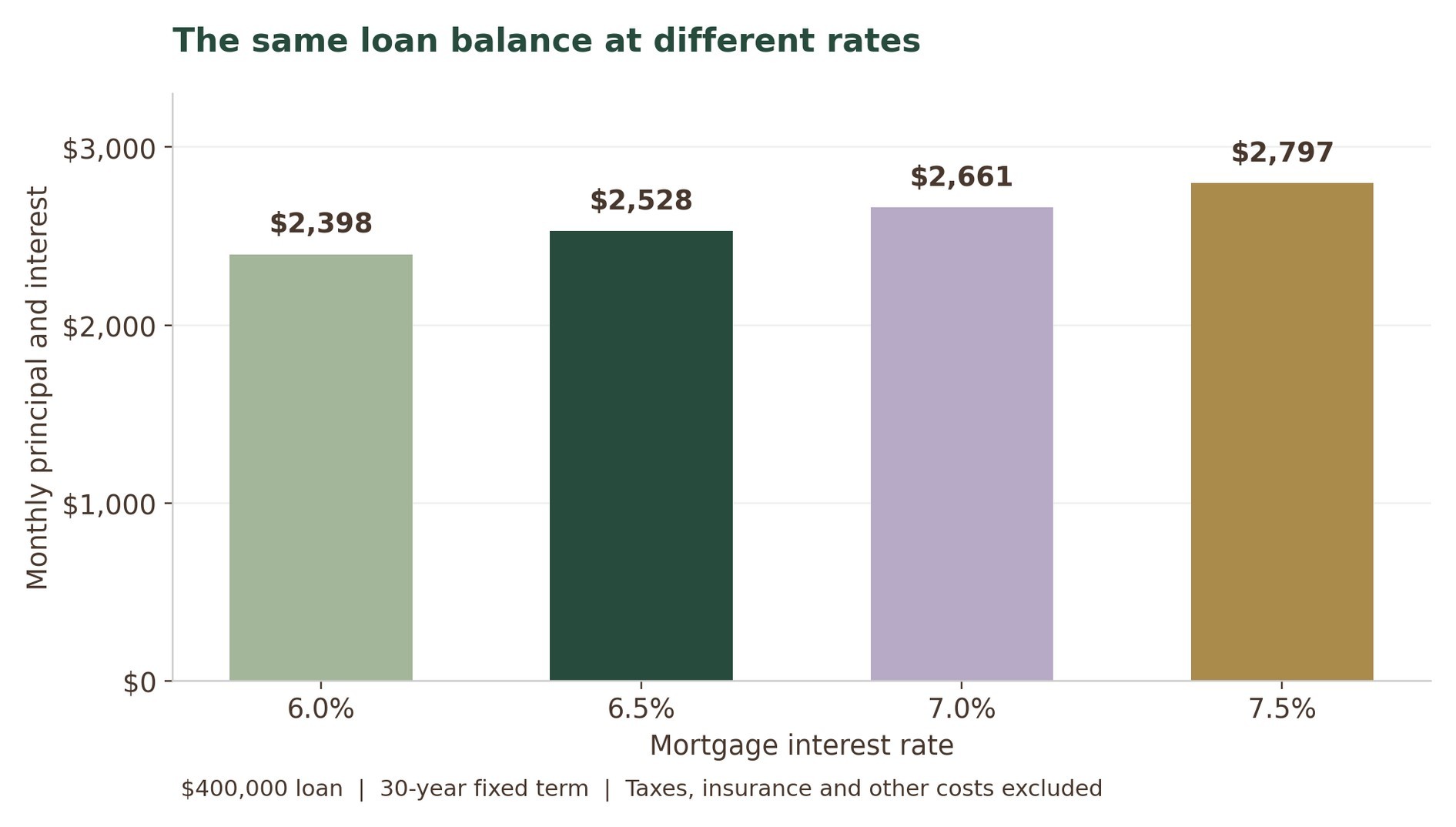 Chapter 07
Examine pricing waivers, insurance, income thresholds, and the cost of the complete loan.
Read chapter → Chapter 08
Separate what economic-data revisions show from what they cannot establish about borrower costs.
Read chapter →Chapter 09Consider family resources, mortgage distress, and the experiences that influence ownership decisions.
Read chapter → Chapter 10
Read the opportunities and shared obligations that come with combining family income and resources.
Read chapter →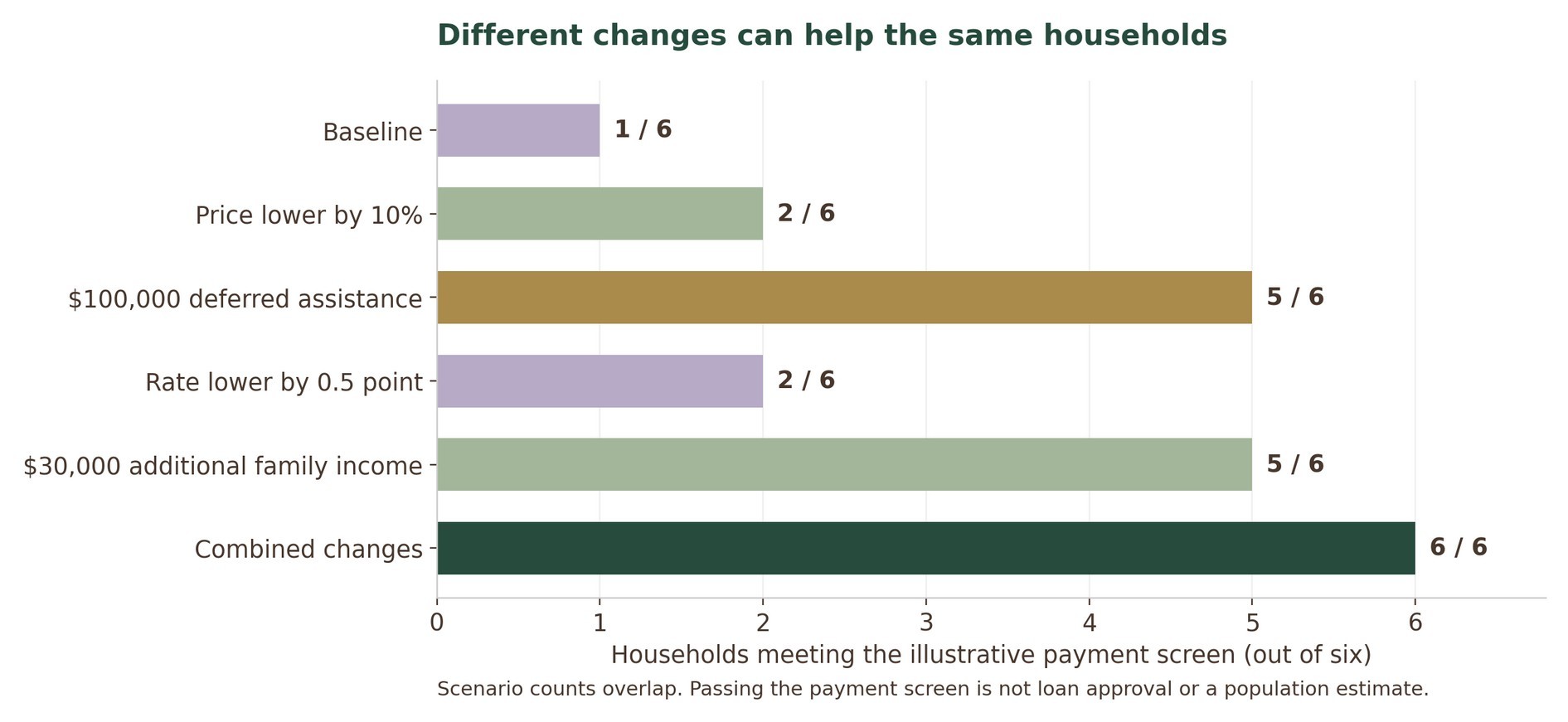 Chapter 11
Work through six illustrative households, overlapping policy changes, and financial stress tests.
Read chapter → Chapter 12
Explore proposals for attainable supply, assistance, pricing, mobility, education, and public accountability.
Read chapter →Connect the research to your next step
Explore the practical tools alongside the research. Your own spending plan, timeline, and goals belong at the center of the decision.
Your questions, answered
The numbers tell part of the story. These are the questions that help you decide what they mean for you.
No. The 4.03 million figure is Realtor.com’s estimate of the national housing supply gap in 2025, not a forecast for any particular home. Local inventory, jobs, mortgage rates, and buyer budgets all matter. The opportunity is worth understanding, but the purchase still needs to fit your finances and timeline. Explore the housing shortage.
As you repay mortgage principal, you build equity in the home. If its value rises, that can add equity too. Your result also depends on interest, maintenance, taxes, insurance, and the costs of buying and selling. Compare the full picture over the years you expect to own. See the rent-versus-buy example.
That experience deserves a real conversation. Start by identifying what worries you: losing income, a payment increase, falling prices, or not having savings for repairs. Then look at the loan terms, the full payment, your reserves, and a realistic plan if life changes. You can explore your options without committing to buy. Read about family experiences and homebuying fears.
No. Some eligible buyers can use conventional financing with as little as 3% down, while FHA financing can allow 3.5% down. With down payment assistance such as CalHFA MyHome, eligible buyers may cover part or all of the required down payment and bring less of their own money than the down payment amount. Closing costs, prepaid expenses, and any remaining funds still need to be accounted for; assistance, seller credits, and program rules determine your actual cash to close. MyHome is a repayable loan with deferred payments. Compare the cash needed upfront and the full monthly payment together. Explore conventional loans and FHA loans.
Include principal and interest, property taxes, homeowners insurance, and any mortgage insurance. Add HOA dues or other required assessments where applicable, even if they are paid separately. Keep room in your spending plan for repairs, utilities, and savings too. See the full-payment chart and build your home budget.
Being above a program’s income limit does not mean you cannot get a mortgage. Compare other conventional options, FHA, and any CalHFA program whose county income limit you meet. Some other first-time-buyer pricing benefits may also apply. The right comparison uses actual rates, mortgage insurance, fees, and your full payment. Start with HomeReady, conventional loan options, and CalHFA assistance.
It depends on the program. CalHFA MyHome is an interest-bearing loan with deferred payments; repayment is due under its terms, including sale or refinance. Dream For All requires repayment of the assistance plus a share of appreciation under its rules. Other programs may offer grants or forgivable loans. Read the terms for the specific help you are considering. Compare CalHFA assistance and Dream For All.
A seller can agree to a credit toward eligible closing costs. FHA generally allows interested-party contributions up to 6% of the sales price. For the low-down-payment conventional primary-home loans discussed here, the limit is generally 3% of the lower of price or appraised value when loan-to-value exceeds 90%. Credits cannot exceed eligible actual costs or replace the required down payment. See how MyHome and seller credits can work together.
Buying together can help some families combine income or resources, but it also creates shared obligations. Before committing, decide who will live there, who owns what share, who pays each expense, and what happens if someone wants to leave or cannot pay. Loan and assistance rules differ, including rules for borrowers who will not occupy the home. Explore buying a home with family.
Start with a conversation about your income, savings, debts, credit, goals, and a payment you could live with comfortably. Amy can help you identify options and the next steps toward a lender’s review. The free 30-minute discovery call is a starting point, not a loan approval or a commitment to buy. Book your free 30-minute discovery call.