Roseville, CA · NMLS 281056 · Licensed CA, TN, TX (916) 705-2557 adebusk@loandepot.com

Clarity before commitment

Mortgage Rates &
Closing Costs Explained

Affordable costs. Personal guidance.
We find loan options that fit your life.

Whether you are buying a home or refinancing, our team researches eligible loan options and pricing for you. We explain the available rates, what each choice costs upfront, and the full monthly payment. Together, we build a loan plan around your finances, your goals, and the cash you want to keep on hand.

A couple sitting together on the front steps of a home
A clear plan for the home and the life you want.

Start with a straight answer

Our standard processing
and underwriting charges.

For our standard in-house pricing, these are the processing and underwriting fees. Together, they total $1,975.

These fees cover processing and underwriting your loan. Below, we explain the other costs you may have, including appraisal, title and escrow, and prepaid items. We will give you an itemized estimate for your loan so you know what to expect.

Processing
$950
Underwriting
$1,025
These two fees combined
$1,975

We walk you through every line of your estimate.

For a purchase or a refinance

Three buckets.
A clearer picture of your upfront costs.

We separate the one-time charges for arranging and closing your loan from the money collected for taxes, insurance, and interest. Here is how we explain those costs to our clients.

Sage and cream illustration of mortgage papers, a welcoming home, and savings for taxes and insurance
01

Lender & loan-related fees

These cover making your loan and the outside services needed to complete it.

  • Processing and underwriting
  • Credit reporting and required verifications
  • Appraisal, when required
  • Any applicable origination charges or discount points
  • Any upfront mortgage insurance or loan-program fee that applies

Credit reports and appraisals are paid to outside providers. Some services may be paid before closing; we will show what has already been paid.

02

Title, escrow & closing services

These cover the work needed to close and record your transaction.

  • Title search and applicable title insurance
  • Escrow or settlement services
  • County recording charges
  • Notary or signing fees
  • Any applicable transfer taxes or property-related transaction fees

Title and escrow fees vary by company, loan type, and services needed, generally following a sliding scale based on the purchase price and/or loan amount. Recording fees depend on the county where the property is located and the documents being recorded. We obtain a quote for your transaction and explain each charge.

03

Prepaid items & impound deposits

This money pays certain expenses in advance or sets funds aside for upcoming bills.

  • Homeowners insurance premiums due
  • Property taxes due or prorated at closing
  • Initial tax and insurance deposits for an impound account, when required or selected
  • Prepaid mortgage interest collected at funding

The amount depends on your closing date, tax and insurance bills, and whether your loan includes an impound account.

Buckets 01 & 02

Hard costs: the one-time charges.

We use “hard costs” to describe the fees for arranging the loan and closing the transaction. That includes lender fees, required outside services, and title, escrow, recording, and notary charges.

Bucket 03

Soft costs: prepaids and money set aside.

Homeowners insurance and property taxes are costs of owning a home, even if you pay cash. With a mortgage, you may also fund an impound account and pay prepaid interest. Those two items are tied to the loan; a cash buyer would not have mortgage interest or a lender-managed impound account.

Buying a home

Purchase closing costs.
What to plan for before you get the keys.

Your purchase budget includes your down payment, the closing costs in the three buckets above, and any applicable adjustments. We will show what is due upfront and what remains to be paid at closing. Explore our first-time homebuyer resources →

A smiling couple holding the keys to a home

Start with the one-time fees.

Plan for lender and loan-related charges, including any required appraisal, plus title, escrow, county recording, and notary fees. Some services, such as the appraisal, may be paid before closing.

Title and escrow fees vary by company and loan type, generally using a sliding scale based on your purchase price and/or loan amount. Recording fees depend on the county you are buying in and the documents recorded. Your contract helps determine which costs you and the seller each pay. We will obtain a quote for your purchase.

Then add your prepaid items.

Your closing may include homeowners insurance, property-tax payments or prorations, initial impound deposits, and prepaid mortgage interest collected at funding.

An impound account, also called an escrow account, holds money for future tax and insurance bills. Prepaid interest generally covers the days from loan disbursement through the end of that month. We will explain the amounts and dates on your estimate.

Sage envelope with a house key beside closing documents and a cream cottage

A seller credit can help with your closing costs.

Many of our purchase clients receive a negotiated seller credit to cover some or all of their eligible closing costs, including eligible prepaid items. This can reduce the cash you need to bring to closing.

We can work with you and your real estate agent to plan the request. The seller must agree, and the credit must fit your loan program’s limits and actual eligible costs. It cannot replace your required down payment.

Keep more of your savings

The seller may be able to cover all your eligible closing costs.

A negotiated seller credit can pay lender fees, title and escrow charges, recording fees, eligible prepaid items, and discount points. When the credit covers your eligible costs within the program limits, you may not need to pay those costs yourself. We work with you and your real estate agent to plan the request before you make an offer.

Seller-credit limits we review for your purchase
Loan optionHow much can the seller contribute?
ConventionalFor a primary or second home: up to 3% when loan-to-value is above 90%; 6% at 75.01%-90%; 9% at 75% or less. Investment properties: 2%. These percentages use the lower of the purchase price or appraised value.
FHAUp to 6% of the purchase price toward eligible closing costs, prepaid items, and discount points.
VANormal closing costs can be seller-paid separately from the 4% concession limit. Additional concessions, including approved debt payoff, are limited to 4% of the home’s VA reasonable value.
Bank-statement loans & DSCR loansUp to 6% on eligible programs. Non-QM limits depend on the lender, occupancy, and loan-to-value; some programs allow less. We confirm the specific limit for your loan before you negotiate.

Costs covered. Down payment separate.

A closing-cost credit cannot exceed your eligible costs or go toward your required down payment. Unused credit is not extra cash for you to keep. The seller must agree, and we confirm which expenses your program permits.

For example, a $500,000 purchase with a 3% limit allows up to $15,000. If your eligible costs total $12,000, the credit toward those costs is limited to $12,000.

A VA benefit that can help with debt.

On an eligible VA purchase, the seller can also pay approved credit balances or judgments at closing as part of the permitted concessions. Paying an approved debt may reduce monthly obligations and help a Veteran qualify. We review the debt, document the payoff, and include it within the 4% concession limit. This is separate from a credit for closing costs.

We help you put the credit to work. We explain the allowable amount, coordinate with your real estate agent, and show how the agreed credit changes your cash to close.

Your purchase cash to closeDown payment + closing costs and prepaids + applicable adjustments − deposit already paid − eligible seller credits and other credits or assistance

We will account for charges already paid so you can see what remains due at closing.

Refinancing your home

Refinance closing costs.
What changes when you replace your loan.

The same three cost buckets apply to a refinance. We will review your new loan costs, your existing mortgage payoff, and the tax and insurance amounts needed for your closing. Explore your refinance options or start with our equity planner.

A young couple relaxing with their golden dog on a cream couch in a bright living room

Review the new loan’s one-time costs.

These can include processing and underwriting, credit reporting, an appraisal when required, and title, escrow, recording, and notary services.

Title and escrow charges vary by company, loan type, new loan amount, and services needed. Recording fees depend on the county where your home is located and the documents recorded. We request a quote for your refinance and walk through those costs with you.

Account for taxes, insurance, and interest.

We will check your existing tax and insurance payments, any new impound deposit, and prepaid interest for the new loan. We will also explain any interest included in your existing loan payoff.

If your old loan has an impound balance, we will explain how and when those funds will be returned or applied. This helps you plan around the timing of the old and new accounts.

Your refinance cash to closeExisting mortgage payoff + new closing costs and prepaids + applicable adjustments − new loan proceeds − eligible credits

We will account for charges already paid and show whether money is due from you or returned to you at closing.

How we price your interest rate

Your rate starts with your loan.
Then we look at your details.

We review loan products that fit your needs, then check their current pricing using your mortgage credit score, down payment or equity, loan amount, property, and intended use of the home. We do this work for you and explain which eligible options fit your goals.

Your mortgage credit score

We check how your mortgage credit-score range affects the eligible loans and pricing available through our lending resources. The qualifying score for your application may differ from the score shown in a consumer app. We explain what it means for your options. Understand mortgage credit scores →

Your down payment or equity

We compare the loan amount with the property’s value. This is called loan-to-value, or LTV. On a purchase, 10% down generally means 90% LTV; 20% down means 80% LTV. On a refinance, we look at the equity remaining after the new loan.

The transaction and property

Purchasing, refinancing without taking cash out, and taking cash out can price differently. A condo, multi-unit property, or larger loan may also have different pricing. The market and the length of your rate lock matter too.

Where are the credit-score price breaks?

Credit scores are often grouped into ranges for pricing. Crossing into another range may change your available options. We check the actual lender and product pricing for your loan, along with your down payment, occupancy, and other details.

Mortgage credit-score ranges we review
Mortgage scoreHow we review pricing
800+We check for additional lender-specific pricing.
780-799Part of Fannie Mae’s highest published score band: 780+.
760-779This credit-score range helps determine your available rate and loan costs.
740-759This credit-score range helps determine your available rate and loan costs.
720-739This credit-score range helps determine your available rate and loan costs.
700-719This credit-score range helps determine your available rate and loan costs.
680-699This credit-score range helps determine your available rate and loan costs.
660-679This credit-score range helps determine your available rate and loan costs.
640-659This credit-score range helps determine your available rate and loan costs.
620-639We review eligible lender and program options.
600-619We review eligible lender and program options.
580-599We review eligible lender and program options.

These are score ranges to discuss with us, not a rate quote or a promise of approval. Fannie Mae groups scores of 639 and below together; the 620, 600, and 580 checkpoints help us compare lender and program options. FHA and other loan products have separate pricing.

What about 620, 600, and 580?

These are useful lower-score checkpoints when we compare lender options, particularly for FHA. They are not a universal FHA price grid. Each lender sets its available pricing and may have its own minimum score.

620

620-639

We check eligible conventional and FHA options and compare their actual rates, fees, and mortgage insurance.

600

600-619

We review the lenders and programs available for your complete application. Available pricing may differ from offers at 620 or above.

580

580-599

FHA permits maximum financing at 580 or higher, which can mean 3.5% down on an eligible purchase. Lender approval and pricing still depend on the application. Learn about FHA →

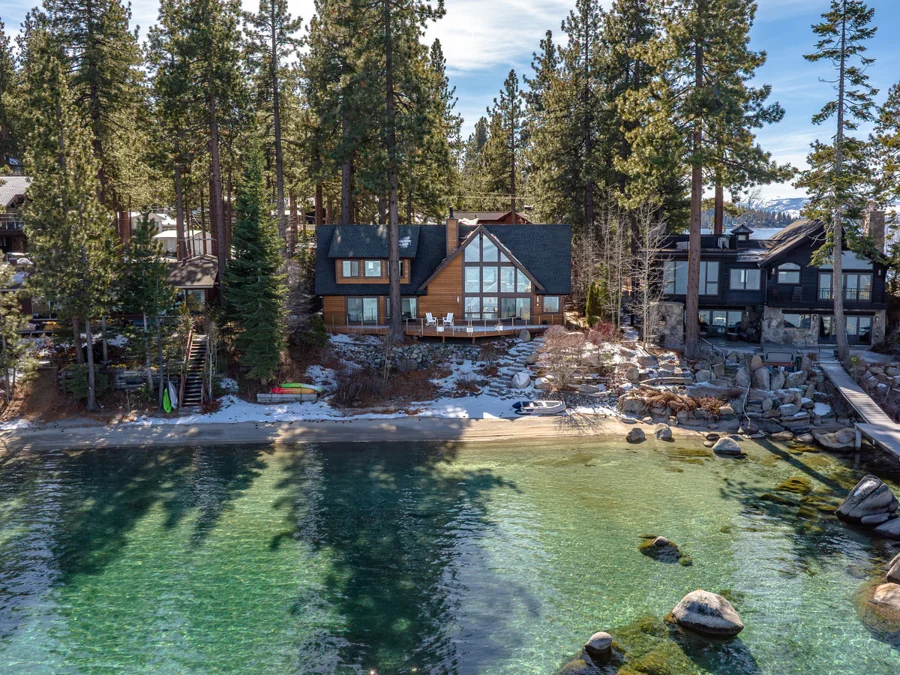
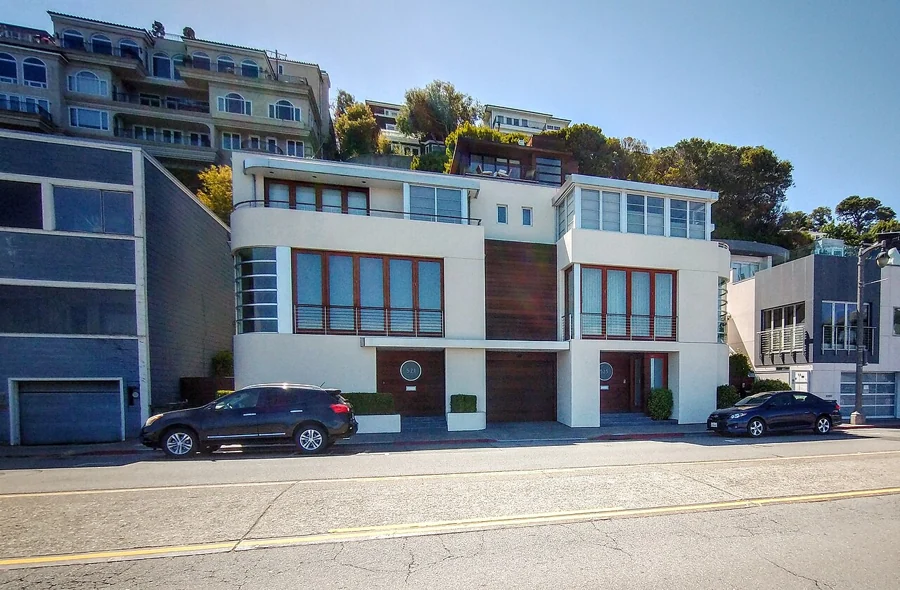
Will you live there, vacation there, or rent it out?

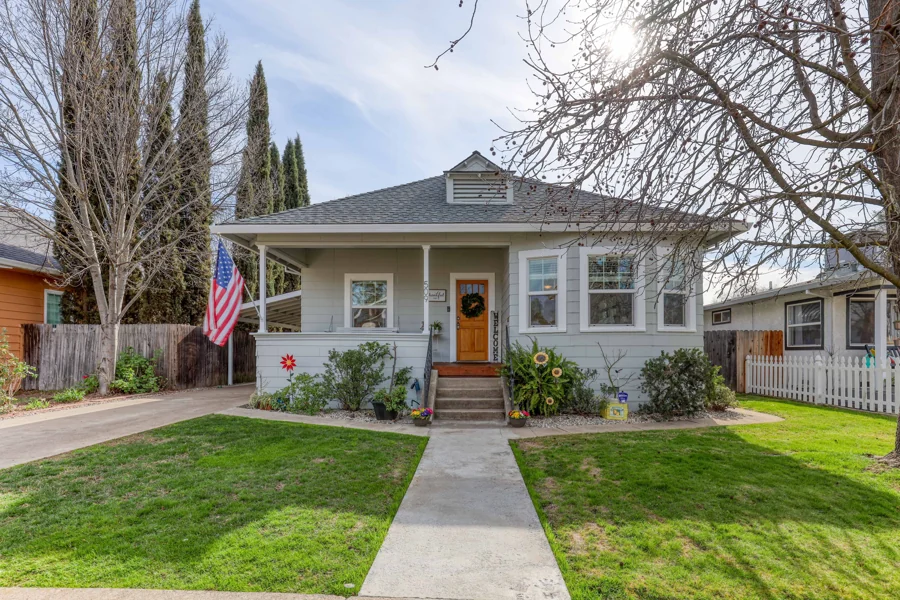
The full front of a real Roseville home at 509 Grove Street, showing the porch, entry, walkway, and lawn

Primary residence

The home you will live in as your main residence, also called owner-occupied. We price the loan using its primary-residence requirements. Explore living in Roseville →

Tell us how you plan to use the home so we can price it correctly. We will explain the eligible choices and compare the rate, fees, mortgage insurance, and full payment together. Considering another location? Explore our California, Tennessee, and Texas home-loan guides, or find a community we serve.

One loan scenario. A range of rate choices.

Each available rate has
a cost or credit attached.

Once we enter your loan details, we receive a list of available rates and the cost or credit associated with each one. This is called a rate sheet. For the same lender, loan scenario, and lock period, we can compare three types of choices:

Illustration of upfront points and a lower rate01 · Pay more upfront

A lower rate with discount points

The lower the rate you choose from that list, the higher its upfront cost generally is. That cost is called discount points. You pay more at closing to receive a lower interest rate and a lower monthly principal-and-interest payment on the same loan amount and term.

Illustration of balancing costs near zero points02 · Near zero points

The rate closest to zero points

We identify the available rate whose pricing is closest to zero discount points. It sits between the lower-rate options that cost more and any higher-rate options offering a credit. An exact zero-point option may not be available. Your other closing costs still apply.

Illustration of a credit toward closing costs03 · Receive a credit

A higher rate with a lender credit

On some loan products, you can choose a higher available rate and receive a lender credit toward eligible closing costs. This reduces the money needed at closing, while increasing the monthly principal-and-interest payment compared with a lower rate on the same loan.

We compare the rate and its price together.For each choice, we show you the interest rate, the dollar amount of points or lender credit, the full monthly payment, and the cash needed at closing.

One discount point equals 1% of the loan amount. It does not mean your interest rate drops by one percentage point. The cost or credit attached to each rate depends on the lender, product, market, and lock period.

We will walk through the available choices with you so you can decide how much to pay upfront and what monthly payment fits your household.

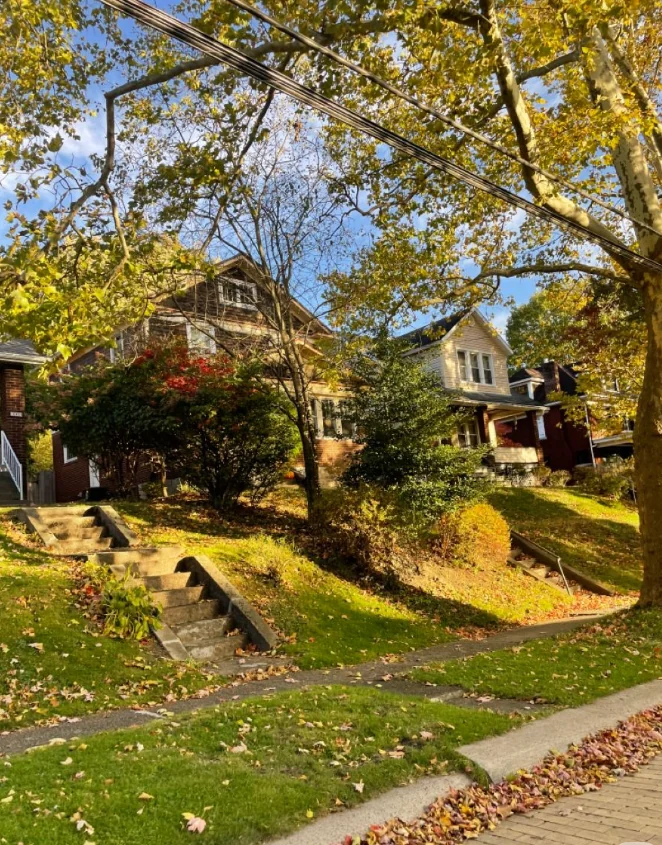
Homes and front gardens beneath golden autumn trees

Your everyday spending plan matters too

The mortgage is part
of the cost of owning.

We help you look at the full monthly picture: principal and interest, property taxes, homeowners insurance, mortgage insurance when required, and HOA dues. We also talk about leaving room in your household plan for utilities, maintenance, repairs, and savings.

We separate your down payment from loan fees and explain how credits or financed costs affect your cash to close. You can see how each available choice changes both the money needed upfront and your loan balance.

Build your homeownership spending plan →

See the whole monthly picture

What belongs in your housing payment plan?

Principal & interestYour loan payment
Property taxesYour local tax bill
Homeowners insuranceCoverage for your home
Mortgage insuranceWhen your loan requires it
HOA duesWhen your property has them

Some items may be paid separately from your mortgage. Include them in your household plan, along with maintenance, repairs, utilities, and savings. Explore an estimated home payment with our calculator →

Explore another part of homeownership

Tax benefits of owning a home.

See how buying a home may affect your income taxes. Our calculator helps you explore potential savings using your household’s income and homebuying details.

Explore Your Potential Income Tax Savings →

Your goals. Our banking resources.

We shop loan options for you.
You have a team by your side.

Choose a mortgage advisor you trust, someone who understands your financial needs, can shop your loan for you, and explains which loan product, interest rate, and pricing fit your goals. You deserve clear answers and an experienced professional by your side.

That is what our team is here to do. We take the time to understand your finances, your comfortable payment, and your plans. Then we use our lending team at loanDepot and our network of 75+ approved outside lending partners to research eligible options and competitive pricing for you.

More places to find the right fit.

We can keep your loan in-house at loanDepot or explore eligible options with our approved outside lenders. If one program does not fit your income, property, or financing needs, we have other resources to consider.

Trust the expert. Understand your loan.

Let us do the research and walk you through our recommendations. We explain why a loan product fits, how its rate and pricing work, and what you would pay upfront and each month. You have one consistent team: Amy, our loan partner, and our processor, with the same person in each role. Ask us questions. We want you to feel comfortable with your loan and confident in the people helping you.

Learn how our mortgage banking resources work for you →

Interest rate vs. APR

Two numbers.
Two different jobs.

Your interest rate and APR are not the same. Your interest rate helps calculate your payment. We use APR as one part of explaining your borrowing costs.

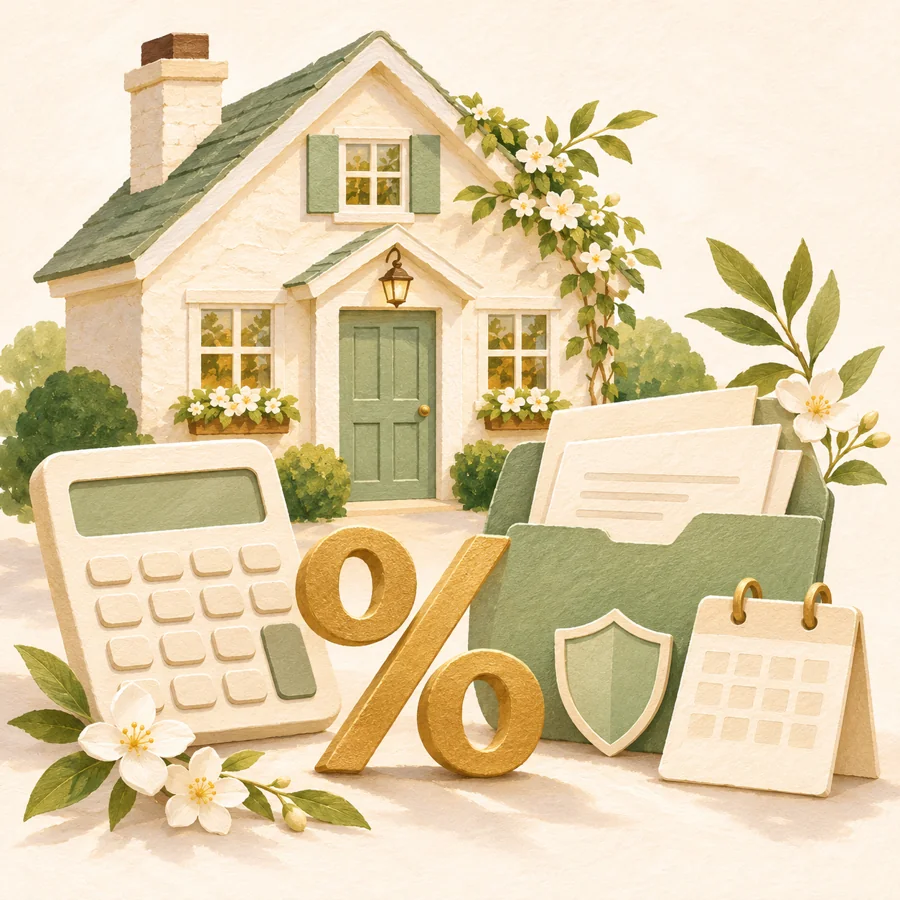
Sage and cream house, calculator, percent symbol, and loan documents

Your payment calculation

Interest rate

Your interest rate, loan amount, and term are used to calculate the principal-and-interest portion of your mortgage payment.

Your full payment may also include property taxes, homeowners insurance, and mortgage insurance.

Another view of borrowing costs

Annual percentage rate

APR expresses your interest rate and certain loan costs as an annual percentage over the loan’s term. It is not the rate used to calculate your payment.

It does not include every cost of owning a home.

Why comparisons can be tricky

Different loan types can tell different stories.

APR is not always a clear, easy way to compare an FHA loan, a conventional loan, and an adjustable-rate mortgage. Here are two reasons:

FHA loans

Mortgage insurance adds to APR.

Upfront mortgage insurance and applicable ongoing mortgage insurance are included in APR. Those real costs can make it noticeably higher than the interest rate you pay.

Explore FHA loans →

Adjustable-rate mortgages

Future rates are an assumption.

ARM calculations use assumptions about future adjustments. APR cannot predict future rates or show the maximum rate or payment your loan could reach. We explain when the rate can change and its adjustment limits.

Fixed upfront charges have a greater effect on APR when the loan amount is smaller. We review APR alongside the actual rate, itemized fees, mortgage insurance, full payment, and cash to close.

Rate locks

Know your dates.

A rate lock protects the agreed rate for its stated period when the loan meets the lock conditions. We will review whether your rate is locked, when it expires, what an extension could cost, and what happens if your loan details change.

If the market improves after you lock.

We offer a float-down option on eligible loans after your rate is locked and your loan has final underwriting approval. If market pricing improves by more than 1.50 points in the cost of your locked rate, we can move you to the next lower available rate at the same rate-pricing cost as your original lock. This threshold measures a change in pricing cost, not a 1.50-percentage-point drop in your interest rate.

We will review the float-down requirements and available pricing with you before making the change.

Your questions, answered

Let’s make the numbers clearer.

What do our $950 processing and $1,025 underwriting fees cover?

Our processing fee is $950 and our underwriting fee is $1,025, for a combined $1,975 under our standard in-house pricing. Processing covers the work of organizing and preparing your loan file; underwriting covers reviewing the application and supporting documents for loan approval. Your estimate will separately identify other costs, such as credit reporting, an appraisal, title and escrow services, prepaid items, and any points or additional program charges. If we use an approved outside lender or specialized program, we will explain that program’s fees before you choose.

How do I read my closing-cost estimate?

Your estimate itemizes the expected charges for your loan and closing, along with prepaid expenses and any money needed to start an impound account. Our three buckets are simply an analogy to make those expenses easier to understand; they are not the official headings on your Loan Estimate. We walk through the charges with you: lender and loan-related fees such as processing, underwriting, appraisal, credit reporting, and any points; title, escrow, recording, and notary charges; then taxes, homeowners insurance, prepaid interest, and any impound deposits. Your total closing costs and your cash to close are different amounts. On a purchase, cash to close also accounts for your down payment, deposit already paid, eligible credits or assistance, and other adjustments. On a refinance, we account for your existing loan payoff, new loan proceeds, credits, and adjustments. We identify anything already paid and explain what remains due. These are estimated amounts; we review updated figures and your Closing Disclosure with you before closing.


What do hard costs and soft costs mean?

We use hard costs to describe the one-time charges for arranging your loan and closing the transaction. They include lender charges, required outside services, and title, escrow, recording, and notary fees. Soft costs are prepaid expenses and money set aside for bills, such as property taxes, homeowners insurance, prepaid interest, and initial impound deposits. An impound deposit remains money reserved for your tax and insurance bills. Both categories affect cash needed at closing, but separating them helps you understand what pays for services and what funds upcoming expenses.

Why do title, escrow, and county recording fees vary?

These costs depend on the title or escrow company, the type of loan and transaction, and the county where the property is located. Title and escrow fees generally follow the provider’s rate schedule, often using a sliding scale based on the purchase price and/or loan amount. The coverage and services needed also affect the total. County recording fees follow the county’s requirements and depend on the documents being recorded and any applicable charges or exemptions. A purchase and a refinance can have different costs. We obtain a quote for your transaction, explain each charge, and review who pays it under your purchase contract when applicable.

Why is prepaid interest collected at funding?

Prepaid interest generally pays the daily interest on your new mortgage from disbursement through the end of that month. The amount depends on your loan balance, interest rate, and the number of days covered. It is part of your prepaid items, rather than our processing or underwriting fee. We explain the dates and amount on your estimate. On a refinance, we also review interest included in the payoff of your existing mortgage so you can understand the charges for the old and new loans.

Would I still pay prepaid items if I bought with cash?

You would still have property taxes and homeowners insurance expenses as a cash buyer. A cash purchase can also involve tax prorations and other transaction costs. You would not have prepaid mortgage interest or a lender-managed impound account because there is no mortgage. When we explain your loan estimate, we separate the ongoing costs of owning the property from the costs created by financing it. This makes it easier to understand why taxes and insurance appear at closing even though they are not fees our team keeps.

Can I choose to pay taxes and insurance without an impound account?

On an eligible conventional purchase loan with at least 10% down, you can request an impound waiver and pay your property taxes and homeowners insurance directly. We confirm the lender and program requirements and explain any pricing difference or waiver fee before you choose. If you use an impound account, an initial deposit may be collected at closing and monthly amounts are set aside for future bills. Without impounds, those bills still need to be paid on time, so your household plan should reserve money for them. Some loans require impounds.

Can the seller pay some or all of my purchase closing costs?

Yes. A seller can agree to pay some or all of your eligible closing costs and prepaid items when the amount fits your loan program’s limits. This can include lender fees, title and escrow, recording fees, eligible prepaids, and points. The credit toward costs cannot exceed those eligible expenses or pay your required down payment, and unused credit is not extra cash for you to keep. We work with you and your real estate agent to plan the request, confirm the rules, and show the credit on your estimate.

How much seller credit is allowed for each loan type?

For a conventional primary or second home, the limit is generally 3% above 90% loan-to-value, 6% at 75.01%-90%, or 9% at 75% or less, using the lower of price or appraised value. Conventional investment properties have a 2% limit. FHA permits up to 6% of the purchase price. VA treats normal closing costs separately from its 4% concession limit. Eligible bank-statement and DSCR programs may allow up to 6%, but lender rules vary. We confirm your loan’s limit before you negotiate.

Can a VA seller contribution pay off debts to help me qualify?

Yes, approved credit balances or judgments can be paid by the seller at closing under VA’s seller-concession rules. An approved payoff may reduce your monthly obligations and help you qualify. Those concessions must stay within 4% of the home’s VA reasonable value. Normal seller-paid closing costs are separate from that limit. We review your debts and loan requirements, coordinate the documented payoff, and explain the effect on your qualification. This is not cash paid to you or a contribution toward a required down payment.

How will I know how much cash I need to close?

We prepare an itemized estimate using your loan, property, and expected closing date. On a purchase, we account for your down payment, all three cost buckets, adjustments, your deposit, and eligible seller credits or assistance. On a refinance, we account for the existing mortgage payoff, new loan proceeds, closing costs, prepaids, and applicable credits. We also identify charges you have already paid. Your Loan Estimate shows estimated cash to close, and your Closing Disclosure provides the final details for us to review with you.

Can I finance the closing costs on a refinance?

On many refinances, we can include eligible closing costs in the new loan to reduce what you pay out of pocket. In some cases, the appraisal may be your only upfront payment, if an appraisal is required. We review your home’s value, available equity, loan limits, and program requirements to determine what can be included, including eligible prepaid items and impound deposits. Financed costs increase your loan balance and accrue interest. We show the new balance, full payment, and any remaining cash needed so you can decide what fits your household.

Can you shop my loan with other lenders, or keep it in-house at loanDepot?

Yes. As mortgage bankers, we can keep your loan in-house with our lending team at loanDepot or shop eligible options through our network of 75+ approved outside lending partners. We do the lender research and pricing review for you, starting with your financial needs and goals. We compare available rates, points or lender credits, fees, mortgage insurance, the full payment, and the closing timeline. If loanDepot’s guidelines do not fit your situation, an approved outside lender may offer another option. We bring the relevant choices to you, explain the differences, and help you decide with confidence.

How do we determine the mortgage rates available for your loan?

We enter your loan product, qualifying mortgage credit score, down payment or equity, loan amount, property type, occupancy, transaction purpose, and lock period into the available pricing. A primary residence, vacation home, and investment property can have different pricing. Conventional, FHA, VA, jumbo, and bank-statement loans also have different requirements. We then receive a list of available rates with their associated costs or credits. We explain the eligible choices and compare the full payment, fees, and cash to close using current pricing for your scenario.

Why do mortgage rates and the cost of each rate change daily?

Lenders update mortgage pricing as market conditions change, sometimes more than once a day. For an eligible scenario, each available rate has a cost or credit that can move with the market; the available rates can change too. Your product, mortgage credit score, down payment or equity, property, occupancy, loan amount, and lock period affect the choices. We review your details and research current eligible pricing for you through loanDepot and approved partners suited to your needs. We explain the rate, points or credit, payment, cash to close, and lock status together. A general online rate is not a personalized quote.

How does your team use my credit score when reviewing loan options?

We check how your qualifying mortgage score affects the eligible programs and current pricing available through our lending resources. Some lenders or products offer an additional adjustment at 800 or above. Fannie Mae’s published conventional grid groups 780 and above together, and 639 and below together. The 620, 600, and 580 checkpoints help us review lower-score options, including FHA. We handle that research for you and explain whether a different score range could change your available loan choices, upfront costs, or payment.

How do we compare discount points, near-zero-point rates, and lender credits?

For the same lender, loan scenario, and lock period, we receive a list of available rates and the price attached to each. Lower rates generally require more upfront discount points. We identify the rate closest to zero points, which may carry a small cost or credit. Some products also offer a higher rate with a lender credit toward eligible closing costs. We show the dollar cost or credit, full monthly payment, and cash needed for each choice. One point equals 1% of the loan amount; it does not mean a one-percentage-point reduction in the interest rate.

Does choosing zero points eliminate closing costs?

Zero points refers to the pricing associated with your interest rate. Our processing and underwriting fees, required outside services, title and escrow charges, and prepaid items can still apply. An exact zero-point rate may not appear on the rate sheet, so we identify the closest available option and show its actual cost or credit. On an eligible purchase, a negotiated seller credit may cover some or all eligible costs. On an eligible refinance, some costs may be financed. We will explain how those choices affect your cash to close.

How does your team explain APR and the rate used for my payment?

Your interest rate and APR are different. The interest rate, loan amount, and term are used to calculate the principal-and-interest payment. APR expresses interest and certain loan costs as an annual percentage over the loan term. FHA mortgage insurance can raise APR above the note rate. ARM calculations use assumptions about future adjustments and do not show the maximum possible rate or payment. We compare APR alongside the actual rate, itemized costs, mortgage insurance, full payment, and cash to close, and explain ARM adjustment limits.

How does our float-down option work after a rate is locked?

Our float-down option is available on eligible loans after your rate is locked and your loan has final underwriting approval. If market pricing improves by more than 1.50 points in the cost of your locked rate, we can move you to the next lower available rate at the same rate-pricing cost as your original lock. That threshold measures improvement in pricing cost, rather than a 1.50-percentage-point decline in your interest rate. We review the program requirements and available pricing with you before making a change.

Amy DeBusk smiling in a light neutral blazer

Bring your questions

Let us do your number
crunching for you!

We treat your money with the same care we give our own. We carefully weigh upfront costs against potential savings and look at how each loan fits your monthly spending plan and long-term goals.

Tell us about your plans, the payment you feel comfortable with, and the cash you want to keep available. We will research eligible loan options, compare rates and pricing, and walk you through the full monthly payment and cash needed at closing.

Book Your Free 30-Minute Discovery Call
Sources and page details

Standard fees confirmed by Amy DeBusk on November 15, 2026. This page explains pricing; it does not publish a personalized interest rate. Photographs include Amy’s supplied images and licensed Pexels photography: RDNE Stock project, under the Pexels License. Closing-cost, seller-credit, refinance, and interest-rate/APR illustrations created for this page. The young couple with a dog is an AI-created lifestyle image, not a client photograph. Occupancy cards use real property photographs: Roseville home photograph: The Goolsby Group, 509 Grove Street; Lake Tahoe lakefront-home photograph: source listing, 88 Skyland Court; and Alfred Twu / Wikimedia Commons (CC0 1.0). Display crops; illustrative property examples.