

If you're a homeowner in Roseville, Rocklin, Lincoln, Sacramento, or anywhere throughout Placer County, you've likely built significant equity in your home over the past several years.
The question many homeowners are asking today isn't:
"Should I refinance?"
It's:
"How can I improve my financial situation, create more flexibility, or accomplish my goals without giving up my low mortgage rate?"
For some homeowners, the goal is remodeling a kitchen, updating a home, or building an ADU. Others want to consolidate debt, help aging parents, purchase a business, prepare for retirement, or simply create more financial flexibility.
Homeowners considering major improvements may also want to explore renovation-specific financing options available for larger projects.
We're seeing more homeowners choose to make the most of the home they already own rather than sell and move.
The good news is that replacing your entire first mortgage isn't always necessary.
In many cases, homeowners can access equity while preserving the low interest rate they worked hard to obtain.
In this guide, we'll explore several home equity strategies available in 2026, including:
- HELOANs (Fixed Rate Second Mortgages)
- HELOCs (Home Equity Lines of Credit)
- Bank Statement HELOCs for Self-Employed Borrowers
- Fixed Rate Reverse Mortgage Second Mortgages
- Reverse HELOC Programs for Eligible Homeowners
- Strategies for Remodeling, ADUs, Debt Consolidation, Business Expansion, and Retirement Planning
Understanding these options can help you make an informed decision before tapping into your home's equity.
Why More Homeowners Are Staying Put in 2026
Over the past few years, many homeowners secured mortgage rates in the 2%, 3%, and low 4% range.
As a result, we're seeing a growing trend across Sacramento and Placer County.
Instead of selling, many homeowners are choosing to:
- Remodel and update their current home
- Build an ADU for aging parents or adult children
- Consolidate high-interest debt
- Access equity for business opportunities
- Create retirement flexibility
- Improve the functionality of their home for the next stage of life
For many families, making strategic use of existing home equity can be more cost-effective than selling, moving, and replacing a low-rate first mortgage.
Let's look at the most common home equity solutions available today.
How Homeowners Are Making the Most of Their Home Equity in 2026
If you're a homeowner in Roseville, Rocklin, Lincoln, Sacramento, or anywhere in Placer County, you've likely built significant equity over the past several years.
Many homeowners are now asking the same question:
"How can I use my home's equity to improve my financial situation without giving up my low mortgage rate?"
For some families, the goal is remodeling a kitchen or adding an ADU. Others want to consolidate debt, help aging parents, start a business, or prepare for retirement.
The good news is that selling your home or refinancing your entire first mortgage may not be your only options.
In this guide, we'll explore several strategies homeowners are using in 2026, including:
- HELOANs (Fixed-Rate Second Mortgages)
- HELOCs (Home Equity Lines of Credit)
- Bank Statement HELOCs for Self-Employed Borrowers
- Reverse Mortgage Second Mortgages
- Reverse HELOC Programs
- Equity Strategies for Remodeling, ADUs, and Family Housing Solutions
Understanding these options can help you make a more informed decision before accessing your home's equity.
Why More Homeowners Are Staying Put in 2026
Over the past several years, homeowners across Roseville, Rocklin, Lincoln, Sacramento, and Placer County have experienced significant appreciation in their home values while also locking in historically low mortgage interest rates.
As a result, many homeowners are facing a different decision than they would have just a few years ago.
Instead of asking: "Should I sell my home?"
Many are asking: "How can I make my current home work better for the next chapter of my life?"
We're seeing homeowners choose to stay put for a variety of reasons.
Some want to remodel an outdated kitchen or bathroom. Others need more space for children returning home from college, aging parents moving closer to family, or growing households. Many are exploring ADUs, home additions, or converting unused space to better meet their family's changing needs.
At the same time, many homeowners are sitting on mortgage rates in the 2%, 3%, and low 4% range. Replacing those loans with today's interest rates may not always make financial sense.
That's why we're seeing more homeowners look for creative ways to access their equity while preserving the low mortgage rate they already have.
Recent clients we've worked with have used their home equity to:
- Remodel and modernize their homes
- Build additional living space for family members
- Consolidate higher-interest debt
- Buy out business partners
- Create retirement flexibility
- Pay for medical expenses
- Fund home improvement projects
- Preserve wealth while improving their quality of life
In many cases, homeowners are discovering that the home they already own may offer more opportunities than they realized.
The key is understanding which strategy best aligns with your goals.
Many homeowners first built their equity by following a long-term homeownership plan and making strategic financing decisions from the beginning.
Let's start by looking at the two most common home equity options available today: a HELOAN and a HELOC.
Real Story: How a Roseville Couple Transformed Their Home Without Refinancing Their First Mortgage
One of the most common questions I hear from homeowners is:
"How can we improve our home without giving up the great mortgage rate we already have?"
Recently, I worked with a couple in Roseville who were facing that exact situation.
They loved their home and had no desire to move. They had built substantial equity over the years and only owed approximately $250,000 on their first mortgage, which carried a very attractive fixed interest rate of 4.50%.
Like many homeowners, they had a wish list of improvements they wanted to tackle:
- New flooring throughout the home
- Updated countertops
- Bathroom renovations
- New exterior siding
At the same time, they were carrying an $18,000 personal loan with a much higher monthly payment.
Instead of refinancing their entire first mortgage, we explored a Fixed Rate HELOAN.
The solution allowed them to access $120,000 from their home's equity in one lump sum.
They used a portion of the funds to pay off the personal loan and invested the remaining funds into a complete home renovation.
One of the most interesting parts of this strategy was the impact on their monthly finances.
Although they added a new fixed-rate second mortgage, eliminating the personal loan significantly reduced their existing debt obligations.
As a result, their total monthly debt increased by only about $800 per month, while gaining access to $120,000 for home improvements and increasing the enjoyment and value of their property.
For this family, the HELOAN helped them:
- Preserve their 4.50% first mortgage
- Eliminate higher-interest consumer debt
- Access a lump sum for renovations
- Improve the functionality and appearance of their home
- Increase the value of their property
- Avoid the expense and hassle of moving
This is a great example of how a Fixed Rate HELOAN can be used strategically to improve both a homeowner's financial position and their quality of life.
All loans subject to approval. Individual results vary based on credit, income, property value, and loan qualifications.
What Is a HE-Loan? (Fixed Rate Second Mortgage)
A HE-Loan, or Home Equity Loan, is a fixed rate second mortgage that allows you to borrow against the equity you have built in your home without refinancing your primary mortgage.
Instead of accessing funds over time, you receive the full loan amount upfront as a lump sum at closing. The loan is then repaid over a set term with a fixed interest rate, which means your monthly payment stays consistent from start to finish.
At Amy DeBusk Home Loans in Roseville, CA, we offer flexible term options to match your financial goals:
- 20-year fixed rate HE-Loans
- 30-year fixed rate HE-Loans
This structure makes HE-Loans especially appealing for homeowners who want long term stability and a clear repayment plan. It's a similar structure to traditional fixed mortgage options that many buyers are already familiar with.
Key Features of a HELOAN
A HE-Loan is designed for predictability and structure, making it a straightforward borrowing option:
- Fixed interest rate that never changes over the life of the loan
- Stable monthly payments that are easy to budget for
- Full loan amount disbursed at closing
- Defined repayment schedule with a clear payoff date
- Closed-end loan, meaning you cannot draw additional funds once issued
Because the rate is locked in, you are protected from market fluctuations, which is a major advantage during periods of rising interest rates.
When a HE-Loan Makes the Most Sense
A HE-Loan works best in situations where your financial need is specific and planned in advance. It is ideal for homeowners who value consistency over flexibility.
Common use cases include:
- You know exactly how much funding you need for a project or expense
- You are consolidating high-interest debt into a lower, fixed rate payment
- You are financing a major home renovation with a defined budget
- You want predictable payments without worrying about rate increases
- You prefer a structured loan with a clear beginning and end
Unlike a HELOC, which functions more like a credit line with variable rates, a HE-Loan provides certainty. You know your rate, your payment, and your payoff timeline from day one.
Important Trade-Off
Fixed rate second mortgages typically come with higher interest rates compared to HELOCs.
That difference exists for a reason.
With a HE-Loan, you are locking in a rate for the entire life of the loan. Your payment will not change, even if market rates rise in the future.
With a HELOC, rates are usually lower at the start, but they are variable. That means your payment can increase over time as interest rates adjust.
So the real trade-off is simple:
- Lower starting rate with uncertainty
- Higher fixed rate with long term stability
For many homeowners, the predictability of a fixed payment brings a level of financial control that a variable rate simply cannot offer.
In uncertain rate environments, that consistency is not just a feature. It becomes a strategic advantage.
What Is a HELOC? (Home Equity Line of Credit)
A HELOC, or Home Equity Line of Credit, is a revolving credit line secured by the equity in your home. This type of flexibility is one reason many homeowners compare it to other loan types depending on their goals.
Instead of receiving a lump sum upfront, you are approved for a maximum credit limit and can borrow from it as needed over time. This makes a HELOC more flexible than a traditional loan, especially when your expenses are ongoing or unpredictable.
How a HELOC Works
A HELOC is structured in two distinct phases:
Draw Period (typically 5 to 10 years)
During this phase, you can access funds as needed up to your approved limit.
- borrow only what you need, when you need it
- many options offer interest-only payments
- as you repay, those funds become available to use again
Repayment Period
Once the draw period ends, the line closes and repayment begins.
- no additional borrowing allowed
- payments include both principal and interest
- monthly payments typically increase
This transition is important to plan for, since your payment can rise significantly once repayment begins.
Key Features of a HELOC
A HELOC is designed for flexibility and ongoing access to funds:
- flexible access to cash over time
- you only pay interest on the amount you actually use
- revolving credit line that replenishes as you repay
- lower initial payment options during the draw period
- variable interest rate tied to market conditions
Because of its structure, a HELOC can feel similar to a credit card, but with much lower rates and your home as collateral.
Important Trade-Off
HELOC rates are variable, which means they can change over time based on market conditions.
This directly affects your monthly payment:
- your interest rate can increase or decrease
- your monthly payment can rise over time
While HELOCs often start with lower rates compared to fixed rate options, there is less predictability long term.
For homeowners who value flexibility and short term access to funds, this can be a strong advantage.
For those who prefer stability and fixed payments, it may feel like added risk.
Understanding that balance is key when deciding if a HELOC is the right fit for your financial strategy.
Best Use Cases for a HELOC
A HELOC is ideal when your financial needs are ongoing, flexible, or not fully defined upfront.
A HELOC works best when:
- you want access to funds over time instead of a lump sum
- you are managing ongoing or unpredictable expenses
- you are completing renovations in phases
- you want a financial safety net for emergencies
- you are comfortable with interest rates that can change
Because you only borrow what you use, a HELOC can help you manage cash flow more efficiently compared to taking a full loan upfront. For some homeowners, combining equity with available assistance programs can also improve overall affordability.
Some homeowners compare a HELOC against a cash-out refinance before deciding which strategy creates the most long-term value.
HE-Loan vs HELOC: The Real Difference
This is not about which option is better. It comes down to how you balance stability and flexibility.
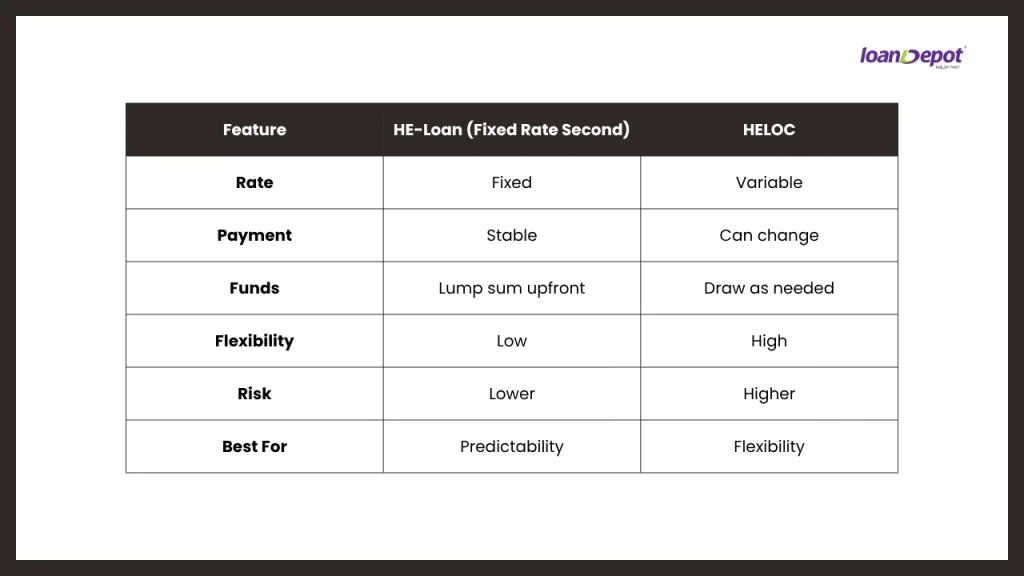
A simple way to look at it:
- If you want stable payments and a clear payoff plan, a HE-Loan fits best.
- If you want ongoing access to funds and more control over timing, a HELOC may be the better option.
Real Story: How One Business Owner Used Home Equity to Create Opportunity
One of the things I love most about my job is helping clients find solutions they didn't realize were available.
Recently, I worked with a self-employed business owner in Marysville, California who wanted to buy out his business partner and take full ownership of the company he had helped build.
Like many entrepreneurs, his tax returns didn't tell the full story. While his business was producing strong cash flow, traditional mortgage qualification methods weren't the best fit for his situation.
The good news was that he had built significant equity in his home.
His property was worth approximately $900,000, and he owed about $300,000 on a first mortgage with an interest rate of just 3.625%.
Naturally, he didn't want to refinance and lose that excellent rate.
Instead, we explored a Bank Statement HELOC.
Using 12 months of business bank statements, we reviewed and calculated the qualifying deposits from his business to document his income and demonstrate his ability to repay the loan.
The result?
He was approved for a $200,000 Home Equity Line of Credit.
He used a portion of the funds to buy out his business partner and become the sole owner of the company. Even better, he still had available funds remaining on his line of credit for future opportunities.
One of the advantages of a HELOC is flexibility. Unlike a traditional lump-sum loan, borrowers only pay interest on the amount they actually use. Any unused portion of the line remains available for future needs, whether that's business expansion, investments, home improvements, or unexpected expenses.
For this borrower, a Bank Statement HELOC allowed him to:
• Preserve his low 3.625% first mortgage
• Access $200,000 in available equity
• Buy out his business partner
• Maintain financial flexibility for future growth
• Qualify using bank statements instead of tax returns
This is a great example of how home equity can be used as a strategic financial tool when structured correctly.
What Is a Bank Statement HELOC?
A Bank Statement HELOC is a home equity line of credit designed for self-employed borrowers, business owners, entrepreneurs, and certain real estate investors who may not qualify using traditional tax return income.
Many self-employed homeowners have strong cash flow, strong businesses, and significant equity in their homes. However, their tax returns may not always reflect their true earning ability because of business deductions, write-offs, and the way self-employed income is reported.
That is where a Bank Statement HELOC can be a powerful option.
Instead of relying only on tax returns, a Bank Statement HELOC may allow qualifying borrowers to use bank statement deposits to help document income. In many cases, the lender reviews 12 months of personal or business bank statements and calculates qualifying income based on eligible deposits.
This can be especially helpful for homeowners who want to access equity while keeping their existing first mortgage in place.
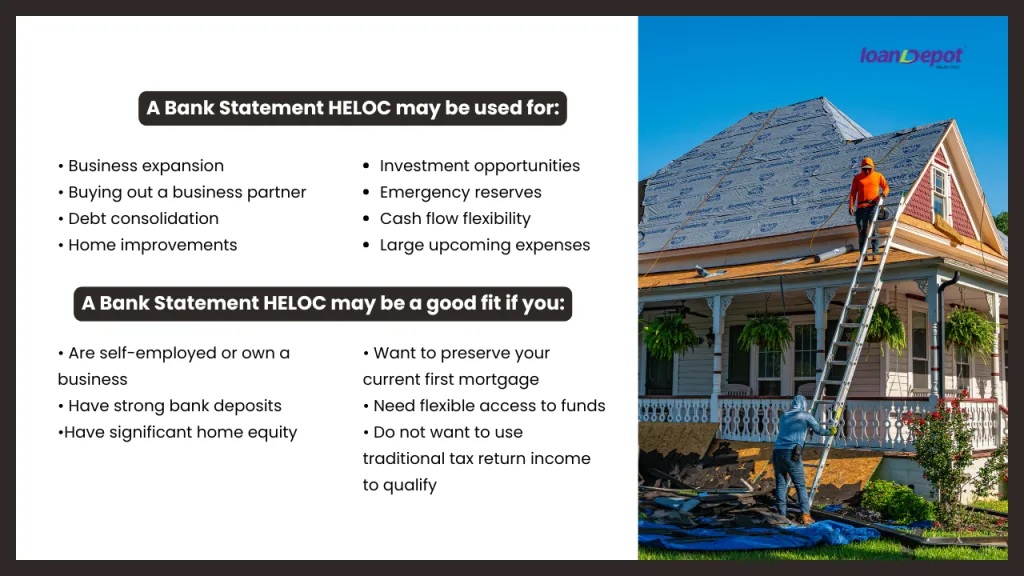
One of the biggest advantages of a HELOC is flexibility. A borrower is approved for a line of credit and can draw funds as needed. Interest is typically charged only on the amount actually used, not the unused portion of the credit line.
For self-employed homeowners, this can create access to capital without refinancing the entire first mortgage or relying on tax returns that may not show the full strength of the business.
Real Story: How a Retired Couple Accessed Equity Without Giving Up Their 2.625% Mortgage
One of the biggest concerns I hear from homeowners today is:
"We need access to some of our equity, but we don't want to lose our low interest rate."
Recently, I worked with a retired couple who found themselves in that exact situation.
Like many homeowners who purchased or refinanced several years ago, they had secured an incredibly low 2.625% fixed interest rate on their first mortgage. Over time, they had also built substantial equity in their home.
The challenge was that they wanted additional funds to help cover medical expenses, travel, and some lifestyle goals they had been putting off during retirement.
At first, they assumed their only option was a cash-out refinance.
The problem?
Refinancing would have meant replacing their entire first mortgage and giving up the 2.625% interest rate they worked so hard to obtain.
Instead, we explored a different strategy.
By utilizing a Fixed Rate Reverse Mortgage Second, they were able to access a portion of their home's equity while keeping their existing first mortgage completely intact.
This allowed them to:
- Preserve their 2.625% first mortgage
- Access cash from their home's equity
- Improve their retirement flexibility
- Address medical and lifestyle expenses
- Avoid replacing their low-rate first mortgage
For many retirees, this can be an attractive solution because the goal is not necessarily to maximize monthly cash flow, but rather to create financial flexibility while protecting favorable financing already in place.
What Is a Fixed Rate Reverse Mortgage Second?
A Fixed Rate Reverse Mortgage Second is designed for eligible homeowners who are generally age 62 or older and have sufficient equity in their property.
Unlike a traditional refinance, the loan is structured as a second mortgage, allowing homeowners to preserve their existing first mortgage while accessing a portion of their equity.
For homeowners who secured historically low interest rates several years ago, this can be a valuable alternative to replacing their entire mortgage with a new loan.
As always, every homeowner's situation is unique. The right solution depends on factors such as age, equity position, financial goals, existing mortgage terms, and long-term plans.
However, for this retired couple, the strategy provided exactly what they were looking for:
Access to equity without sacrificing a great mortgage rate.
New for 2026: What Is a Reverse HELOC?
One of the newest home equity solutions available to eligible homeowners is the Reverse HELOC.
This program was introduced in 2026 and is designed to provide qualified homeowners age 62 and older with flexible access to their home equity through a line of credit structure.
Unlike a traditional HELOC, which typically requires monthly payments and income qualification, a Reverse HELOC is designed specifically for retirees who want access to equity while maintaining financial flexibility.
How Does a Reverse HELOC Work?
A Reverse HELOC provides an approved line of credit that homeowners can access as needed during the draw period.
One of the biggest advantages is that borrowers only draw the funds they need, when they need them.
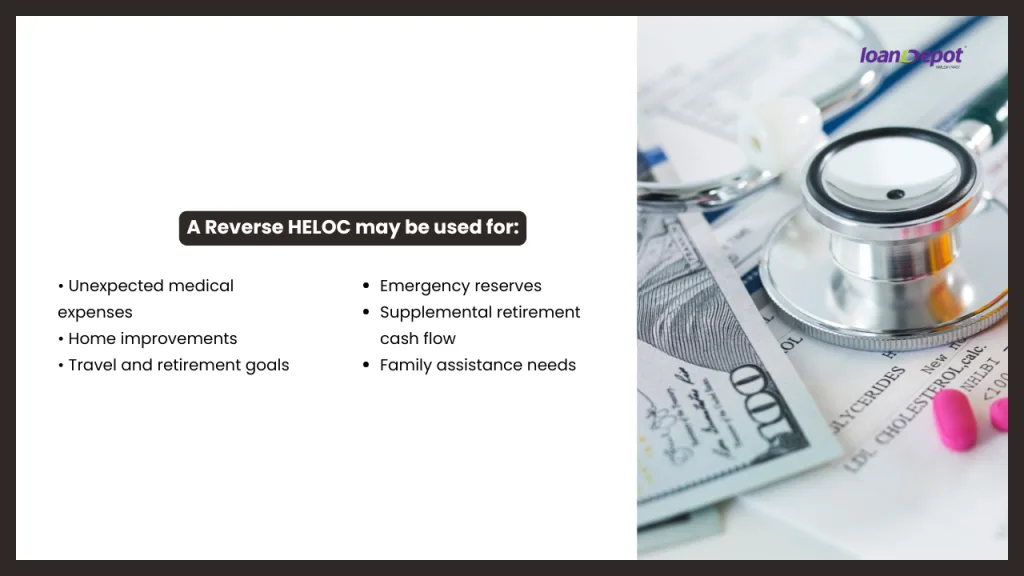
The current program offers a 10-year draw period, allowing homeowners ongoing access to available funds throughout that timeframe.
A Flexible Alternative for Retirees
Many retirees have substantial equity tied up in their homes but do not want to sell their property or disrupt an existing low-interest first mortgage.
A Reverse HELOC can provide flexibility while preserving homeownership and allowing homeowners to continue living in the property they love.
Important Eligibility Requirements
There are a few important rules homeowners should understand.
Both the:
• Fixed Rate Reverse Mortgage Second
and
• Reverse HELOC
must be placed behind a traditional forward mortgage or owned free and clear property.
These products cannot be placed behind an existing reverse mortgage.
In other words, homeowners who already have a reverse mortgage on their property would generally not be eligible for these programs.
However, homeowners who have a traditional first mortgage, or who own their home free and clear, may have additional options available.
Is a Reverse HELOC Right for You?
Every homeowner's situation is different.
Factors such as age, available equity, existing mortgage balance, financial goals, and long-term plans all play a role in determining whether a Reverse HELOC is the right solution.
For homeowners looking to preserve a low first mortgage rate while gaining flexible access to their home's equity, a Reverse HELOC may be worth exploring.
As with any mortgage product, eligibility requirements and program guidelines apply and are subject to change.
The Biggest Mistake Homeowners Make
Most homeowners never explore their options.
They go straight to one solution: a cash-out refinance
At first glance, it seems simple. But it can come with long-term consequences that are often overlooked.
That decision can mean:
- losing a low interest rate on your existing first mortgage
- resetting your loan term and paying more interest over time
- applying a higher rate to your entire loan balance, not just the cash you need
In a current market quote from a lender environment, that can be a costly move.
Why Comparison Matters
This is why we always take a step back and compare all available options:
- HE-Loan
- HELOC
- Cash-out refinance
Each option solves a different problem, and choosing the wrong one can cost you significantly over time.
At Amy DeBusk Home Loans in Roseville, CA, we break down the true cost of each scenario, not just the monthly payment, but the total impact over the life of the loan.
What Should You Be Asking?
Before choosing any option, the right questions make all the difference.
You need to evaluate:
- what are you using the funds for, and is it a one-time or ongoing need
- are you paying off debt, and what are the current interest rates on that debt
- what is your current mortgage rate, and how does it compare to pricing you would actually be offered now
- how long have you had your loan, and how much interest have you already paid
- how long do you plan to stay in the home
- do you prefer stable, predictable payments or flexible access to funds
Rate movement can have a major impact on whether accessing equity through refinancing makes financial sense. These answers shape the strategy.
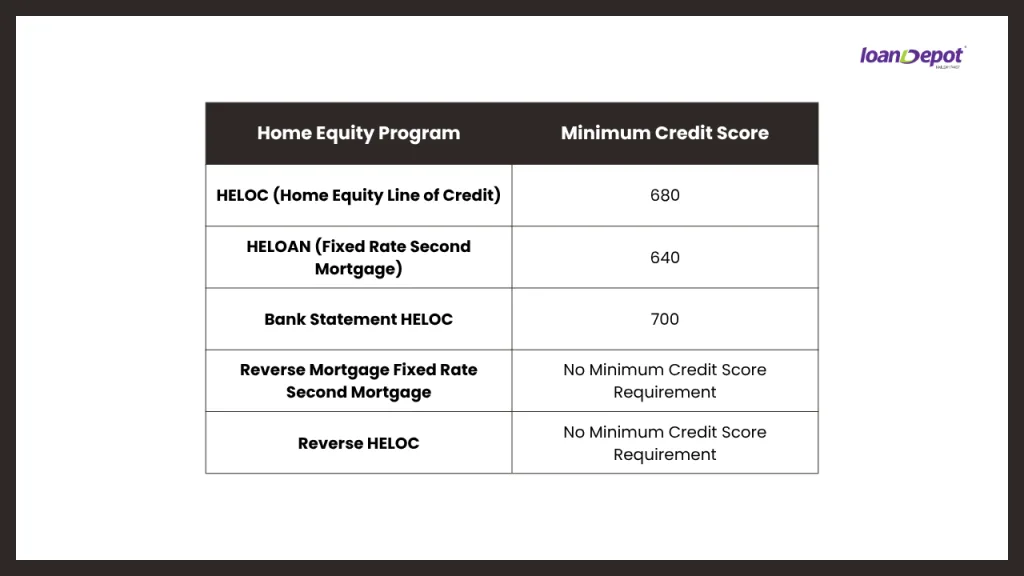
Minimum Credit Score Requirements for Home Equity Programs
One of the most common questions homeowners ask is: "What credit score do I need to qualify?"
Reverse Mortgage Programs: What Lenders Review
Although reverse mortgage programs generally do not require a minimum credit score, lenders still evaluate a borrower's willingness and ability to meet financial obligations.
Factors commonly reviewed include:
• Mortgage payment history
• Property tax payment history
• Homeowners insurance payment history
• Outstanding credit obligations
• Recent credit events such as bankruptcies, foreclosures, or collections
In many cases, a strong payment history is more important than a specific credit score.
Important Note
Minimum credit score requirements can vary by lender, loan program, loan amount, and individual borrower circumstances. Meeting the minimum credit score requirement does not guarantee approval.
For the most accurate assessment, speak with a home equity specialist who can review your complete financial profile and help determine which program may be the best fit for your goals.
Not sure where you stand? Schedule a free Home Equity Strategy Session and we'll help you explore your options.
All loans subject to approval. Program guidelines, credit requirements, and eligibility requirements may change without notice.
Why Most Lenders Don't Talk About This
This is the part many homeowners never hear.
Not all lenders offer HE-Loans or HELOCs
And there is a reason behind that.
These options are often less profitable compared to a cash-out refinance. As a result, they are not always presented or fully explained.
Instead, many borrowers are guided toward a single solution without seeing the full picture.
Follow the Incentive
A cash-out refinance can generate a lower payment because:
- it replaces your entire first mortgage
- it increases the total loan amount
- it often resets your loan term
That does not automatically make it the wrong choice. But it does mean it is not always the most cost-effective one for you.
What Actually Matters
The right question is not "what is available"
It is "what makes the most financial sense over time"
At Amy DeBusk Home Loans in Roseville, CA, the focus is different:
- what option creates the lowest total cost over time
- what aligns with your specific financial goals
- what supports long term stability, not just a short term payment
Local Insight: Roseville, Rocklin, Lincoln & Sacramento
In markets like Roseville, Rocklin, Lincoln, Sacramento, and Placer County, many homeowners have built significant equity over the past several years. Some use this equity to improve their home, while others use it to create additional income opportunities.
This creates opportunities to:
- fund home upgrades
- consolidate higher-interest debt
- invest in property improvements
For example:
- In Roseville and Rocklin, many homeowners use HELOCs for kitchen and bathroom remodels
- In Sacramento, HE Loans are often used for debt consolidation or large repairs
- In Placer County, both options are popular depending on whether projects are ongoing or one-time
Choosing the right loan structure matters just as much as the loan itself.
Which Option Is Right for You?
The right choice comes down to how you plan to use your home equity and what kind of payment structure fits your financial comfort level.
A HELOC may be the better fit if:
- You want ongoing access to funds instead of a one-time payout
- Your expenses will happen over time rather than all at once
- You're comfortable managing payments that may change with interest rates
A Home Equity Loan may be the better fit if:
- You know exactly how much you need upfront
- You prefer stable, fixed monthly payments
- You want the certainty of predictable costs over the life of the loan
Ultimately, it's about matching the loan to your situation. Flexibility can be powerful, but so can consistency, depending on your goals and how you plan to use the funds. Taking the time to evaluate your needs now can help you avoid surprises later and make the most of your home equity.
Thinking About Using Your Home Equity?
If you're in Roseville, Rocklin, Lincoln, or Sacramento, the right strategy can make a big difference in how you use your equity.
Book a FREE discovery call at: https://talkingwithamy.com
❓FAQs About HELOCs, HELOANs, Bank Statement HELOCs, and Reverse Mortgage Equity Solutions
A HELOC (Home Equity Line of Credit) functions much like a credit card secured by your home. You are approved for a line of credit and can draw funds as needed, typically paying interest only on the amount you use.
A HELOAN (Home Equity Loan), sometimes called a Fixed Rate Second Mortgage, provides a lump sum of cash upfront with a fixed interest rate and fixed monthly payment.
Homeowners often choose a HELOC when they want flexibility and ongoing access to funds, while a HELOAN may be a better fit for large one-time expenses such as debt consolidation, home renovations, or major purchases.
Yes. In many cases, homeowners can access equity through a HELOC, HELOAN, Bank Statement HELOC, Reverse Mortgage Fixed Rate Second, or Reverse HELOC without replacing their existing first mortgage.
This can be especially valuable for homeowners who currently have mortgage rates in the 2%, 3%, or low 4% range and do not want to refinance into today's interest rate environment.
Homeowners commonly use home equity for:
• Home renovations and remodeling
• Building an ADU
• Debt consolidation
• Business expansion
• Buying out a business partner
• Medical expenses
• College expenses
• Emergency reserves
• Retirement planning
• Major purchases
The funds may generally be used for almost any legal purpose, subject to lender guidelines.
A Bank Statement HELOC is designed for self-employed borrowers and business owners who may not qualify using traditional tax return income.
Instead of relying solely on tax returns, lenders may review 12 months of personal or business bank statements and calculate qualifying income based on eligible deposits.
This can be an excellent solution for entrepreneurs, independent contractors, and self-employed professionals who have strong cash flow but significant tax deductions.
While guidelines vary by lender, typical minimum credit score requirements may include:
• HELOAN: 640
• HELOC: 680
• Bank Statement HELOC: 700
Reverse Mortgage Fixed Rate Seconds and Reverse HELOC programs generally do not have a minimum credit score requirement. However, lenders still review overall credit history, mortgage payment history, property tax payments, and financial obligations.
All loans are subject to approval and program guidelines.
A Reverse Mortgage Fixed Rate Second Mortgage allows eligible homeowners age 62 and older to access a portion of their home's equity while keeping their existing first mortgage in place.
This can be particularly beneficial for homeowners who have a low first mortgage interest rate and do not want to refinance their entire loan.
The proceeds may be used for retirement planning, medical expenses, home improvements, travel, or other financial goals.
A Reverse HELOC is a newer home equity solution designed for eligible homeowners age 62 and older.
The program provides a line of credit that can be accessed as needed during the draw period, which is currently up to 10 years.
Unlike a traditional HELOC, the Reverse HELOC is specifically designed for retirees seeking flexibility and access to home equity without replacing their existing forward mortgage.
Both Reverse HELOCs and Reverse Mortgage Fixed Rate Seconds must be placed behind a traditional forward mortgage or a property owned free and clear. These programs cannot be placed behind an existing reverse mortgage.
The answer depends entirely on your goals.
A HELOC may be best if you want flexibility and ongoing access to funds.
A HELOAN may be ideal if you need a fixed lump sum with predictable payments.
A Bank Statement HELOC may be appropriate for self-employed borrowers who qualify using bank statements.
The best strategy depends on your age, credit profile, income, equity position, and long-term financial goals.
A personalized Home Equity Strategy Session can help determine which solution may be the best fit for your situation.
All loans subject to approval. Equal Housing Lender.
All Mortgage Made Easy articles · Book a Complimentary Discovery Call