

Why the Roseville & Sacramento Housing Market Hasn't Crashed And Why Inventory Still Feels So Tight
If you're a first-time homebuyer, a growing family searching for affordable housing, or someone simply wondering why finding the right home still feels so difficult despite higher interest rates, your frustrations are absolutely warranted.
Every week, I work closely with homebuyers throughout Roseville, Sacramento, and Placer County, helping them navigate the home loan process while also becoming one of their biggest cheerleaders during what can sometimes feel like an overwhelming journey to find the right home for their family.
One of the most common questions I hear right now is:
"If interest rates have been high for this long… why are there still so few homes for sale?"
As my mom always used to say:
"Knowledge is power."
That idea inspired me to write this article.
Because once you truly understand how we got here, the current housing market starts to make much more sense.
For decades, homeownership was considered one of the clearest paths to financial stability and generational wealth in America. Families worked hard, saved for down payments, purchased homes, and built equity that could later help fund retirement, college educations, future investments, or opportunities for the next generation.
But after the Great Recession, something fundamentally changed in the American housing market.
While millions of Americans were losing homes during the foreclosure crisis between 2008 and 2012, large institutional investors and Wall Street investment firms saw an opportunity to reshape the housing market entirely.
What followed became one of the largest transfers of single-family homes from everyday families to institutional investors in modern American history.
And many of those changes started right here in Sacramento.
Today, families throughout Roseville, Sacramento, and Placer County are still feeling the long-term effects through:
• Extremely limited housing inventory
• Increased competition for affordable homes
• Rising home prices despite higher interest rates
• Large investor ownership of residential properties
• Fewer entry-level homes available for first-time buyers
• Builders struggling to keep up with long-term housing demand
• Homeowners staying locked into historically low mortgage rates
• Continued population growth throughout desirable California communities
In this article, I want to help explain:
• How we got here
• Why the housing market hasn't crashed
• Why inventory remains so tight
• What happened after the foreclosure crisis
• How institutional investors changed the housing landscape
• And why many experts still believe homeownership remains one of the strongest long-term wealth-building tools available today
For readers who are new to the process, the First Time Home Buyer Guide walks through every major step of buying a home and can help you better understand what comes next as you move toward homeownership.
The U.S. Census Bureau publishes monthly data on new residential construction, which helps illustrate why homebuilding has struggled to keep pace with long-term housing demand.
My hope is that by the end of this article, you'll walk away with a much deeper understanding of today's housing market and feel more confident navigating your own homeownership journey moving forward.
Wall Street Saw Opportunity Where Families Saw Loss
While Sacramento families were struggling to recover from the foreclosure crisis, Wall Street saw something entirely different: opportunity.
As thousands of homeowners across Sacramento County lost properties during the Great Recession, major investment firms began aggressively targeting foreclosure heavy markets to buy homes in bulk at deeply discounted prices.
In April 2012, private equity giant Blackstone Group launched a company called Invitation Homes with a straightforward strategy: purchase foreclosed single family homes, renovate them, turn them into rentals, and generate long term income for investors.
What followed became one of the largest corporate home buying sprees in American history.
Between 2012 and 2016, Blackstone reportedly spent nearly $10 billion acquiring close to 50,000 single family homes nationwide. At the peak of its buying spree, the company was reportedly purchasing nearly $150 million worth of homes every single week.
Many of those homes were located in communities hit hardest by foreclosures, including Sacramento, Elk Grove, Rancho Cordova, and surrounding Northern California neighborhoods.
For local buyers trying to recover after the crash, the housing market changed dramatically. Families searching for homes suddenly found themselves competing against billion dollar corporations capable of making fast all cash offers on large numbers of properties at once.
What Is a REIT and Why Does It Matter?
In 2017, Invitation Homes officially became a publicly traded Real Estate Investment Trust, commonly known as a REIT.
According to the U.S. Securities and Exchange Commission (SEC), REITs are companies that own or finance income producing real estate and are generally required to distribute at least 90% of their taxable income to shareholders, making them a popular investment vehicle for both institutional and individual investors.
Traditionally, REITs focused on commercial properties like apartment complexes, office buildings, shopping centers, and hotels. But after the housing crash, Wall Street firms realized single family homes could also become large scale investment assets.
That shift changed the housing market in ways many families are still feeling today.
Unlike traditional homebuyers, REITs are built to hold properties long term. Their business model depends on collecting rent, increasing property values, and delivering steady returns to shareholders over time, not selling homes back to families.
Every house absorbed into a single family rental REIT is one less home available for local buyers trying to achieve homeownership.
For communities across Sacramento, Roseville, and Placer County, the long term effects have included:
- Fewer homes available for first time buyers
- Increased competition for entry level homes
- Rising home prices and rents
- More corporate ownership in residential neighborhoods
Many successful buyers start by understanding the entire process before they begin shopping. For many Americans, the dream of homeownership slowly moved further out of reach while Wall Street firms transformed thousands of family homes into long term investment portfolios.
Sacramento: The Most Affected Big City in California
This issue is not theoretical for families across Sacramento County and the surrounding region. The numbers show just how dramatically institutional investors reshaped our local housing market after the Great Recession.
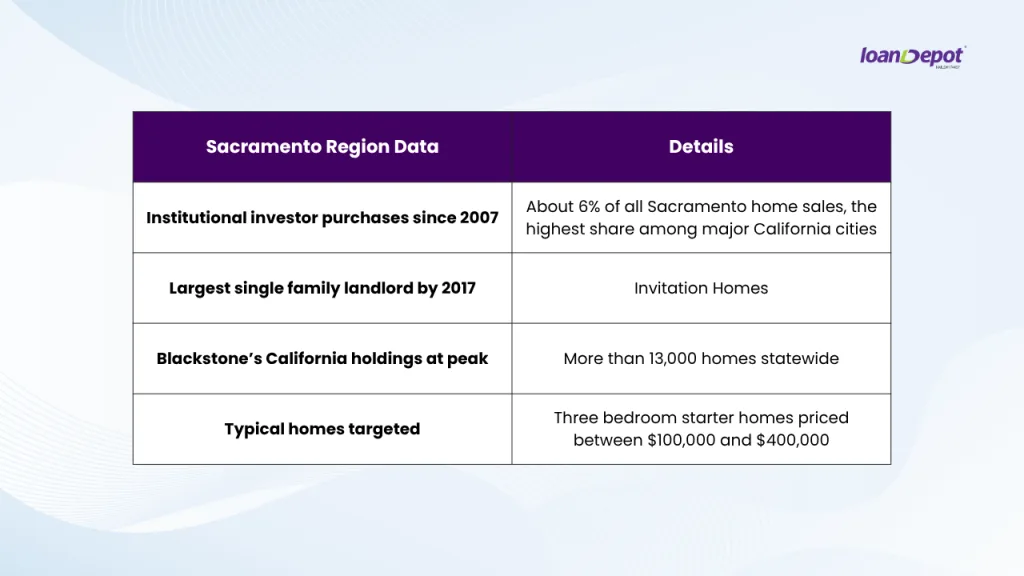
What makes this especially important is the type of homes institutional investors were targeting.
These were not luxury homes or high end investment properties. They were the exact starter homes that first time buyers, veterans, and working families across Roseville, Elk Grove, Citrus Heights, Rancho Cordova, Antelope, and Sacramento would normally compete for today.
For many local families, these homes represented the traditional path into homeownership: affordable neighborhoods, manageable mortgage payments, and the opportunity to begin building long term wealth. Instead, thousands of those homes were purchased in bulk by large investment firms and converted into long term rental properties.
The effects are still being felt across the region today through tighter inventory, rising prices, and increased competition for entry level homes.
The Five Reasons Sacramento & Roseville Have a Housing Shortage
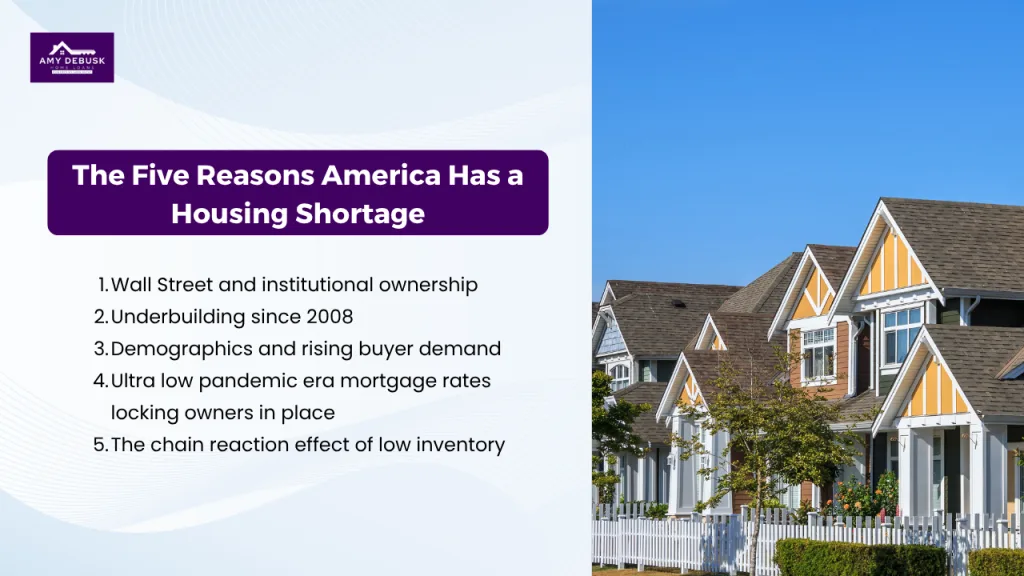
Most headlines oversimplify America's housing crisis. Some blame high interest rates. Others point to investors or a lack of new construction. But the reality is far more complex.
Across Sacramento, Roseville, Placer County, and much of the country, the housing shortage is being driven by several powerful forces all happening at the same time. Together, they have created a market where inventory remains historically low while affordability continues to worsen for everyday families.
1. Wall Street and Institutional Ownership
After the 2008 housing crash, large institutional investors and REITs purchased hundreds of thousands of single family homes across the country, including many throughout Sacramento County.
Instead of returning those homes to local buyers, many were converted into long term rental properties and absorbed into massive investment portfolios. The result was fewer starter homes available for families trying to buy their first home.
Sacramento became one of the hardest hit markets in California, with institutional investors purchasing a significant share of affordable homes that traditionally served first time buyers and working families.
2. America Has Not Built Enough Homes Since 2008
After the Great Recession, homebuilders dramatically slowed construction. Many builders went out of business, financing became tighter, and development activity dropped for years.
I remember there was a development starting near my home in Fair Oaks back in 2007. The builder had cleared away all of the beautiful Oak trees across a 30 acre partial. Then all of a sudden all building ceased. This open space stayed a pile of dirt until 2017! That happened across America. Builders ran out of money and could not complete their building projects.
In California, the problem was even worse because of:
- Restrictive zoning
- Lengthy permitting timelines
- Environmental regulations
- Rising construction costs
- High development and impact fees
The result is simple: population growth continued while housing supply failed to keep up.
3. Demographics Created Massive Buyer Demand
At the same time supply weakened, demand surged.
One major reason the housing market has remained surprisingly resilient is simple demographics. Millennials, the largest adult generation in America at roughly 72 to 74 million people, are still moving through their prime homebuying years. Because Millennials born in 1996 will not turn 36 years old until 2032, America is still in the middle of a massive 15-year wave of household formation and homeownership demand.
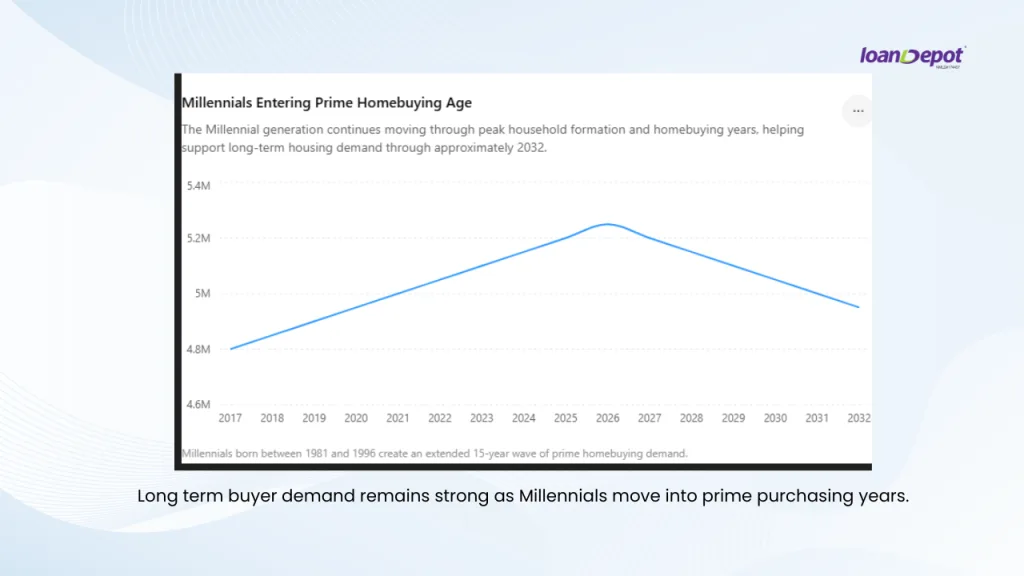
That imbalance between supply and demand pushed prices higher across nearly every major housing market, including Sacramento and surrounding communities.
4. Ultra Low Pandemic Mortgage Rates Locked Owners in Place
This may be the single biggest reason inventory remains frozen today.
Between 2020 and early 2022, millions of homeowners refinanced or purchased homes with mortgage rates between 2% and 4%. Today, rates are often above 6%.
That difference completely changes the math for homeowners considering a move. We call this the golden handcuffs of homeownership.
Families who would normally sell and move into larger homes are staying put because moving could double their monthly payment. Empty nesters who want to downsize are discovering that even a smaller home may cost more per month if they remortgaged at current pricing.
Some divorced couples are remaining under the same roof simply because neither person can afford today's housing costs independently.
These situations are playing out every day across Sacramento, Roseville, Elk Grove, and Placer County.
One local family I worked with has ten people living inside a four bedroom, 2,200 square foot home. The homeowner converted the dining room into a bedroom because moving into a larger home would require giving up a historically low mortgage rate and taking on a payment the family simply could not afford.
5. Low Inventory Creates a Chain Reaction
Housing inventory works like a ladder, and when movement stops at one level, it affects everyone below it.
When empty nesters do not sell, move up buyers cannot buy. When move up buyers stay put, starter homes never reach the market. When starter homes remain unavailable, renters lose opportunities to become homeowners.
Every delayed move creates another missing listing, and over time the entire housing system slows down.
That is why today's housing shortage is not being caused by just one issue. It is the combination of investor ownership, underbuilding, demographic demand, locked in mortgage rates, and the chain reaction caused by low inventory all happening at once.
Why Sacramento Home Prices Didn't Crash
When mortgage interest rates climbed from the 3% range to over 7%, many buyers naturally expected home prices to fall dramatically.
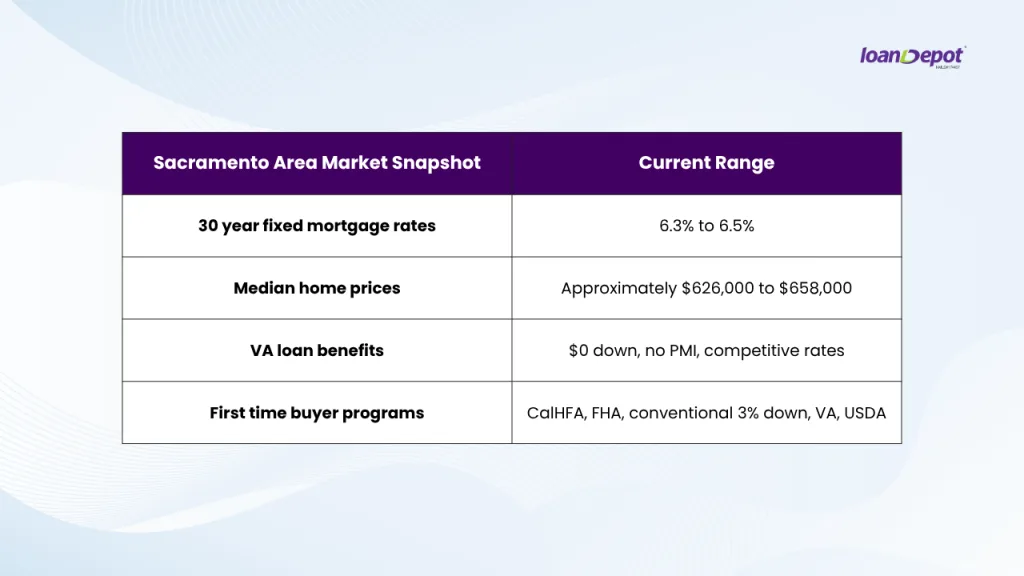
But throughout Sacramento, Roseville, and Placer County, home prices remained surprisingly resilient, with median home prices continuing to hover in the mid-$600,000 range in many communities.
So what happened?
The answer comes down to one major issue:
The inventory never recovered.
While higher interest rates absolutely reduced buyer demand, the number of homes available for sale also collapsed at the same time. Simply put, there still are not enough homes on the market to meet long-term demand.
Several major factors continue contributing to today's housing shortage:
• Large institutional investors still own thousands of single-family homes as long-term rentals
• Home builders have underbuilt housing for more than 15 years following the Great Recession
• Millions of homeowners are locked into historically low 2% to 4% mortgage rates and do not want to give them up
• Many move-up buyers cannot find suitable replacement homes, which limits inventory turnover
• Population growth and continued demand in desirable California communities continue putting pressure on supply
Even though affordability has become more challenging due to higher mortgage rates, limited inventory has prevented home prices from falling dramatically throughout much of the Sacramento region.
In many ways, today's market is not suffering from a lack of buyers.
It is suffering from a lack of homes.
Why President Trump's Recent Housing Actions Matter
There are now signs that Washington may finally be beginning to address some of the deeper structural causes behind America's housing shortage.
On January 20, 2026, President Trump signed an executive order titled:
"Stopping Wall Street from Competing with Main Street Homebuyers"
The order was designed to limit certain forms of government-backed financing for large institutional investors purchasing single-family homes.
Then, on March 12, 2026, the Senate passed the bipartisan:
21st Century ROAD to Housing Act
by an overwhelming 89-to-10 vote.
Key parts of the proposed legislation include:
• Measures targeting large institutional investors
• Incentives for new housing construction
• Zoning and permitting reform support
• Expanded first-time homebuyer assistance programs
• Efforts aimed at improving housing affordability and supply
The bill is currently awaiting a House vote.
While no single law will solve America's housing challenges overnight, many housing experts believe these efforts could slowly begin shifting more opportunities back toward local families, working Americans, and first-time homebuyers over time.
And honestly, for many buyers here in Roseville, Sacramento, and Placer County, that conversation is long overdue.
What This Means for Buyers in Roseville, Sacramento, and Placer County
If you've been sitting on the sidelines wondering whether homeownership will ever feel possible again, there are finally signs the market may slowly be starting to shift back toward everyday buyers.
Between slowing institutional investor activity, growing political focus on housing affordability, and increased national attention on first-time homebuyers, the next several years could look very different from the last decade.
There's also an important reality many buyers overlook about today's higher interest rate environment.
When mortgage rates eventually begin to decline, many homeowners who are currently locked into historically low mortgage rates may finally feel comfortable selling their homes again. That could release a much larger wave of inventory back into the market.
But it could also create something else: significantly more buyer competition.
Many buyers waiting on the sidelines for rates to fall may all rush back into the market at the same time, creating multiple offer situations and pushing home prices higher again in desirable communities throughout Roseville, Sacramento, and Placer County.
That's one reason many buyers today are exploring temporary rate buydown strategies to make monthly payments more affordable now while potentially positioning themselves to refinance later if rates improve.
One option becoming increasingly popular is the:
1-1 Temporary Buydown
With a 1-1 buydown, a buyer may be able to reduce their interest rate by 1% during the first year of the loan.
For example:
A buyer with a 6.50% interest rate could temporarily lower their payment to the equivalent of approximately 5.50% during the first 12 months.
For many homeowners, that can create savings of roughly:
$300 or more per month
during the first year of homeownership.
That extra monthly savings can help buyers:
• Ease into homeownership more comfortably
• Offset higher interest rates temporarily
• Preserve additional monthly cash flow
• Create breathing room during the first year in the home
Many buyers are also using seller credits to help pay for these temporary buydown programs, making them even more attractive in today's market.
In many ways, temporary buydowns may become the bridge that helps buyers secure a home now while waiting for future refinance opportunities if rates improve later.
Because while mortgage rates can change over time: the price you purchase a home at does not.
That distinction matters.
A lower purchase price today could create significant long-term financial advantages compared to waiting for lower rates while competing against a much larger pool of buyers later.
VA loans, in particular, continue offering strong long-term flexibility because eligible Veterans may refinance when it creates a clear financial benefit. Conventional homeowners may also have future refinance opportunities if rates decrease.
That's why many real estate and mortgage professionals still believe the same principle holds true today:
"You date the rate. You marry the house."
While no one can perfectly predict the future of the housing market, buyers who focus on long-term homeownership, payment strategy, and financial stability often place themselves in a much stronger position over time than buyers waiting for the "perfect" market that may never fully arrive.
The Hopeful Path Forward
Here is the most important thing every aspiring homeowner in Sacramento, Roseville, and Placer County should understand: the conversation around housing is finally beginning to shift back toward helping families, not just investors.
The policies being discussed today are aimed at creating more opportunities for everyday buyers, including:
- First time homebuyers
- Veterans using VA benefits
- Young families trying to buy starter homes
- Self employed borrowers navigating today's market
Homeownership still remains one of the strongest paths to long term financial stability in America. It allows families to build equity, create predictable housing costs, and establish wealth that can be passed down to future generations.
Many Veterans are surprised to learn that VA financing continues to offer some of the most flexible and affordable homeownership options available.
If you are thinking about buying, now is the time to prepare. Book your free 30 minute strategy call. Taking the first step to learn more is a powerful step into homeownership.
That does not necessarily mean rushing into a purchase tomorrow. It means understanding your options, improving your financial position, and creating a strategy before the market shifts again. For many buyers, that starts with understanding how credit impacts loan options and affordability.
When mortgage rates eventually decline, many homeowners who are currently staying put may finally decide to sell, creating more inventory and more competition at the same time. Buyers who are already pre-approved and financially prepared will be in the strongest position to act quickly.
There is also an important advantage many buyers forget: rates can change later.
VA loans offer refinancing flexibility for eligible borrowers, and conventional buyers can refinance in the future if rates improve. The home you buy today can stay with you long after the current rate environment changes.
A Final Word
Sacramento knows firsthand what happens when housing becomes disconnected from the families who live here.
Our region experienced some of the deepest impacts of the foreclosure crisis, institutional investor activity, and housing shortages in the country. But Sacramento has also proven resilient.
Today, there is growing national attention on restoring affordability, increasing inventory, and creating more opportunities for working families to achieve homeownership again.
The market is not easy right now. But it is also not hopeless. Recently we had a couple who were first time home buyers purchase a home in Citrus Heights for $410,000 and receive a $10,000 seller credit! We get to witness these success stories every month
For buyers who stay informed, prepare early, and understand their financing options, the next chapter of Sacramento's housing market could create opportunities that have not existed in years.
If you're thinking about buying a home in Sacramento, Roseville, or Placer County, let's talk. A quick conversation can help you understand your options, build a plan, and see what's possible in today's market.
Book your free Discovery Call today and let's get started.
Amy DeBusk
NMLS #281056
Branch Manager, loanDepot
2999 Douglas Blvd, Suite 180, Rm. 111
Roseville, CA 95661
❓FAQS about Housing Market Shortage
As a mortgage advisor helping buyers throughout Sacramento, Roseville, and Placer County, this is one of the most common questions I hear. The simple answer is that inventory never fully recovered after the housing crisis. Many homeowners are holding onto mortgage rates between 2% and 4%, making it difficult to justify selling and purchasing another home at current pricing.
At the same time, new construction has not kept pace with population growth, and institutional investors continue to own thousands of homes as rental properties. The result is a housing shortage that continues to support home prices.
Yes. Following the foreclosure crisis, large institutional investors purchased thousands of homes throughout Sacramento County and surrounding areas. Many of those homes were converted into long-term rentals instead of returning to the owner-occupied housing market. While investors are only one piece of the puzzle, their activity contributed to reducing the supply of homes available to local families looking to purchase a home and build wealth through homeownership.
A 1-1 buydown is one of my favorite affordability strategies for today's buyers. It temporarily lowers your interest rate by 1% during the first year of your mortgage. For example, if your permanent interest rate is 6.50%, your payment would be calculated at 5.50% during the first 12 months.
For many buyers, this can save approximately $300 per month or more during the first year of homeownership, making the transition much more comfortable. It can also help bridge the gap while waiting to see whether mortgage rates improve in the future.
Many homeowners are waiting for lower rates before selling their homes. If rates decline, we could see a significant increase in housing inventory as those homeowners finally decide to move. However, lower rates may also bring many buyers back into the market at the same time, increasing competition and potentially pushing prices higher.
This is why I often remind clients that while nobody can predict future rates, today's home price can be locked in forever. Mortgage rates can be ref
inanced later, but the purchase price of your home cannot.
The best thing you can do is create a personalized game plan. Every buyer's situation is different. I recommend focusing on improving your credit profile, building your savings, exploring down payment assistance programs, and getting pre-approved before you start shopping.
Many buyers are surprised to learn they are much closer to homeownership than they thought. That's why I created my Home Readiness Quiz and educational resources to help buyers understand exactly where they stand and what steps will move them closer to their goal.
Because supply remains extremely limited. While higher mortgage rates reduced buyer demand, they also reduced the number of homeowners willing to sell. In many Sacramento-area neighborhoods, there simply are not enough homes available to meet demand.
As a result, prices have remained surprisingly resilient. While we've seen some market adjustments, the severe inventory shortage has prevented the type of widespread price declines many people expected.
A Real Estate Investment Trust (REIT) is a company that owns income-producing real estate. Some REITs and institutional investment firms own large portfolios of single-family homes. When these properties are held as rental investments rather than sold to owner-occupants, it can reduce the number of homes available for local buyers.
This issue has become part of the broader national conversation about housing affordability and housing supply.
Every buyer's situation is unique, but waiting for lower rates is not always the best strategy. If rates fall, more buyers may enter the market, creating additional competition and potentially driving prices higher.
Many of my clients are taking advantage of seller-paid closing costs and temporary rate buydowns today. By purchasing now, they secure today's home price and position themselves to refinance later if rates improve.
As I often tell my clients:
"You date the rate, but you marry the house."
The right home can provide stability, security, and the opportunity to build long-term wealth, regardless of where interest rates happen to be today.
All Mortgage Made Easy articles · Book a Complimentary Discovery Call