

A Step-by-Step Guide for Move-Up Buyers Ready for Their Next Chapter
Buying your dream home is not simply about buying a larger or more expensive property. It is about creating a home and a lifestyle that reflects who you are now, what matters most to you, and how you want to live in the years ahead.
Your dream home may be a beautiful estate in a gated community. It may be a horse property with acreage, a home near the river, a custom-built property in the foothills, or an older home with character that you slowly transform into something uniquely yours.
For some buyers, the challenge is finding the right property. For others, the biggest questions are financial:
Can we buy before selling our current home?
Should we keep our home as a rental?
Can we use our equity for the down payment?
Would a bridge loan, jumbo loan, HELOC, renovation loan, or custom construction loan make sense?
The answers depend on your vision, your spending plan, your income, your equity, your timing, and the lifestyle you are working to create.
This guide will walk you through the process step by step.
Step 1: Get Clear on the Life You Want to Create

Before you start shopping for houses, begin by thinking about the life you want your next home to support.
A dream home is deeply personal.
You may know without a doubt that you want property, mountain views, animals, a barn, and room to breathe. You may want to live near restaurants, shopping, and family, but still have a large backyard, pool, outdoor kitchen, and space to entertain.
You may want:
- Acreage or horse property
- A pool and outdoor living area
- A home office or separate studio
- A workshop, RV garage, or additional storage
- Room for children, grandchildren, or aging parents
- A guest house, granny unit, or ADU
- A gated property with privacy
- Lake, mountain, river, or city views
- A walkable neighborhood close to dining and shopping
- A custom floor plan designed around your lifestyle
- A move-in-ready luxury home
- A home with strong bones that you can remodel over time
Ask yourself:
What does an ideal day in my new home look like?
How do I want to spend my mornings, evenings, and weekends?
Do I want privacy, activity, community, convenience, or a combination of these?
Do I want a home that is already finished, or would I enjoy creating it myself?
How close do I want to be to family, work, airports, shopping, medical care, recreation, or favorite destinations?
Is this my forever home, my retirement home, or the next chapter?
These questions help you move beyond square footage and countertops and get to the heart of what you are truly looking for.
Resource: Download the Dream Home Vision Planner
What Does a Dream Home Look Like in Greater Sacramento?

What Does Your Dream Home Look Like?
After helping families buy homes throughout Northern California for more than 25 years, I've learned something that has always fascinated me.
People rarely remember the square footage of the house they almost bought.
They don't remember the paint color in the kitchen.
And years later… most don't even remember their interest rate! 😊
What they do remember is how a home made them feel.
They remember the excitement of walking through the front door for the very first time.
They remember watching their children run through the backyard.
They remember holiday dinners around the dining room table.
They remember sipping coffee on the back patio as the sun came up.
They remember the feeling of finally being home.
That's why I encourage my clients to dream a little before they ever start shopping.
Because your dream home isn't defined by the number of bedrooms or the price tag.
It's defined by the life you want to create.
Every Dream Home Tells a Different Story
One of the things I love most about serving the greater Sacramento region is that there isn't just one version of a dream home.
For some families, it's an elegant custom estate behind the gates of Serrano in El Dorado Hills, where beautiful golf course homes, rolling hills, and resort-style amenities create an incredible lifestyle. Today, many homes range from approximately $1 million to over $4 million.
Others picture Los Lagos in Granite Bay, known for estate-sized lots, mature landscaping, and some of the area's most spectacular custom homes. Many properties range from approximately $1.5 million to over $5 million.
Some buyers are drawn to the timeless charm of The Ridge or Rollingwood Estates in Fair Oaks, where mature oak trees, larger lots, and custom homes create neighborhoods full of character. Homes generally range from approximately $800,000 to $2 million or more, depending on the property.
Maybe your dream is waking up near American River Canyon North in Folsom, where many homes enjoy beautiful views, established neighborhoods, easy access to trails, and proximity to Folsom Lake. Homes often range from approximately $900,000 to over $2 million.
Others fall in love with established East Roseville neighborhoods like Stoneridge, where beautifully maintained homes, mature landscaping, and convenient access to shopping, restaurants, and parks make everyday life incredibly enjoyable. Homes in these neighborhoods typically range from the high $700,000s to approximately $1.5 million.
Or maybe your dream doesn't involve a subdivision at all.
Maybe it's five peaceful acres in Cool, a horse property in Auburn, or a home in Auburn Lake Trails, where mornings begin with coffee on the porch, horses grazing nearby, room for a shop, gardens, and wide-open skies. Depending on the acreage and improvements, these properties commonly range from approximately $700,000 to well over $2 million.
I've also had clients whose dream wasn't buying a luxury estate.
It was creating one.
One of my longtime clients purchased a five-acre hobby farm in Cool for about $600,000. Over the next eleven years they transformed it into something magical. They added a beautiful pool, installed a gated entrance, improved the barn and horse facilities, enhanced the exterior buildings, and built a granny unit that now provides rental income. Today the property is worth approximately $1.3 million, but more importantly, it reflects the life they dreamed about living.
And that brings me to something I've learned over the years.
Sometimes your dream home isn't the one that's already perfect.
Sometimes it's the one you have the vision to create.
Whether that's a luxury home in Granite Bay, a riverfront retreat in Fair Oaks, a custom home in El Dorado Hills, or five acres with horses in Cool, the right home is the one that supports the life you want to live.
That's the real definition of a dream home.
Amy's Story: Sometimes Your Dream Home Is the One You Can Envision
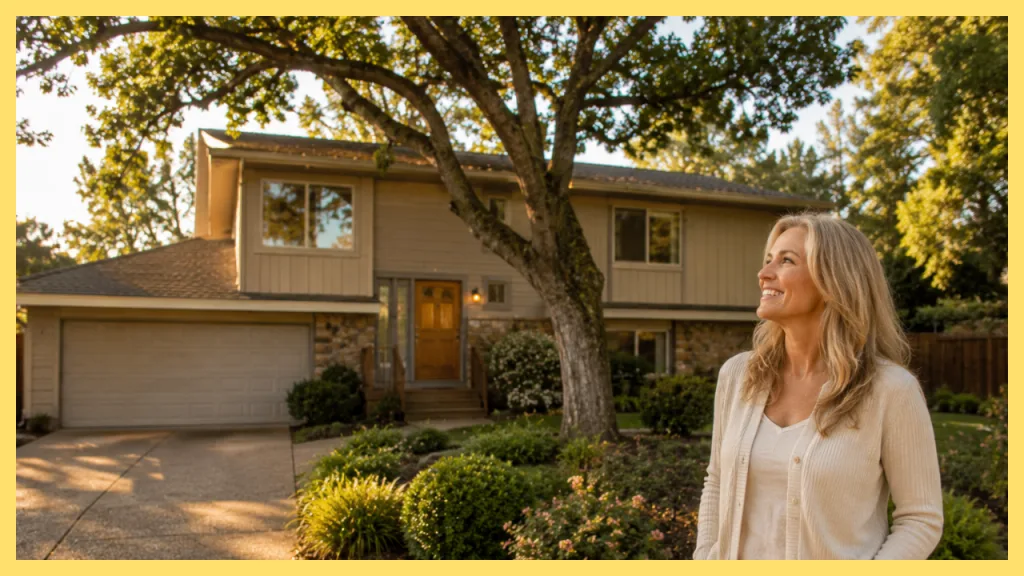
When I was searching for my forever home, I narrowed my decision down to two very different properties.
One was a beautifully remodeled home in American River Canyon. It was polished, updated, and move-in ready.
The other was a 1979 semi-custom split-level home in Rollingwood Estates in Fair Oaks. It needed a tremendous amount of work.
The American River Canyon home looked like the easier choice on paper, but it never felt like home to me. It was not close to the places I loved, including my favorite grocery stores, and I realized I was not excited about moving into a home where someone else had already made every design decision.
The moment I walked into the Fair Oaks home, I felt a connection.
I could see what it could become.
No one was going to change my mind, even though I had no idea how many years of projects, remodeling, decisions, contractors, surprises, and work were ahead of me.
We have remodeled nearly every inch, and we are still working on it. It has absolutely become my dream home.
Your dream home is not always the one that is already perfect. Sometimes it is the one that inspires your vision.
Step 2: Build Your Home Transition Strategy Early

Once you understand what you want, the next step is determining how to get there.
This is where meeting with me early in the process becomes important.
Many buyers wait until they find a home before discussing financing. By that point, some of their best options may be harder to use.
The best time to plan your move is often months before you intend to buy or sell.
During a Dream Home Strategy Session, we can explore questions such as:
Are you buying your new home before selling your current one?
Are you selling first and then purchasing?
Are you trying to coordinate both transactions at the same time?
Could your current home become a rental property?
Would renting it support your long-term wealth strategy, or would selling it create a stronger financial position?
Do you need equity from your current home for the down payment?
Would a bridge loan, HELOC, home equity loan, or cash-out refinance help?
Are you likely to need jumbo financing?
Would an interest-only loan help preserve monthly cash flow?
Would a renovation loan or custom construction loan create a better outcome?
Buying first can be a luxury because it gives you time, flexibility, and negotiating strength. It can also be the more expensive way to move if you are financing two homes, using short-term equity financing, or carrying overlapping housing expenses.
For a buyer with substantial income, large reserves, or a significant down payment, buying first may be easy.
For another buyer, selling first or coordinating the two transactions may be the smarter path.
There is no universal answer. The right strategy depends on your complete financial picture.
Step 3: Understand What Your Current Home Can Do for You

For many move-up buyers, their current home is the key to making the dream home possible.
Before deciding whether to sell, rent, or borrow against it, we need accurate information.
If You Plan to Sell
You will need a market analysis from a qualified real estate agent to estimate:
- Current market value
- Expected selling costs
- Remaining mortgage balance
- Estimated net proceeds
- Likely timing
- Repairs or improvements that may be needed before listing
This helps us understand how much cash may be available for your next purchase.
If You Plan to Keep the Home as a Rental
You will need a rental analysis to estimate:
- Expected monthly rent
- Mortgage payment
- Property taxes and insurance
- Property management expenses
- Maintenance and vacancy reserves
- Expected monthly cash flow
- How the rental income may be treated for mortgage qualification
Keeping your current home can be a powerful wealth-building strategy, but the numbers need to work.
A home that produces income and appreciates over time may become an important part of your long-term plan. A home that creates a monthly loss, requires excessive management, or consumes too much of your reserves may not support the lifestyle you want.
If You Plan to Use the Equity
We can evaluate:
- Bridge financing
- A HELOC
- A fixed home equity loan
- A cash-out refinance
- Buy Before You Sell options
- Selling and using the proceeds after closing
Your equity should be used intentionally. The goal is not simply to pull out the maximum amount available. The goal is to choose the strategy that supports your next move while protecting your financial stability.
Schedule a Dream Home Strategy Session
During the session, we can review your equity, projected sale proceeds, rental potential, income, spending plan, and available financing options before you begin shopping.
Step 4: Create a Spending Plan That Supports Your Lifestyle
A dream home should improve your life, not make you feel financially trapped.
Instead of focusing only on the maximum loan amount you can qualify for, we should identify a monthly payment and cash requirement that feel comfortable within your complete spending plan.

Your planning should include:
- Monthly mortgage payment
- Property taxes
- Homeowners insurance
- HOA dues
- Mello-Roos or special assessments
- Utilities
- Pool, landscaping, acreage, or property maintenance
- Repairs and improvements
- Travel
- Retirement savings
- College or family goals
- Future investment plans
- Emergency reserves
- Furnishings and moving expenses
- The cost of carrying two homes, if applicable
The best dream home is not necessarily the highest price you can qualify for.
It is the home you can enjoy while continuing to live, travel, save, invest, and feel financially secure.
Step 5: Decide Whether to Buy First, Sell First, or Move Simultaneously

There are three main ways to transition from your current home to your dream home.
Buy First, Then Sell
This gives you the freedom to:
- Wait for the right property
- Avoid making an offer contingent on selling
- Move at your own pace
- Prepare your current home for sale after moving out
- Reduce the pressure of coordinating two closings
However, it may require:
- Qualifying with both housing payments
- Using a bridge loan or home equity product
- Carrying overlapping payments
- Maintaining larger cash reserves
- Accepting additional financing costs
Sell First, Then Buy
This may provide:
- Certainty about your net proceeds
- A stronger down payment
- Less financial risk
- Fewer overlapping expenses
But it may also require:
- Temporary housing
- A rent-back agreement
- Storage
- Moving twice
- Feeling pressured to find the next home quickly
Buy and Sell Simultaneously
This can reduce overlapping expenses, but requires:
- Careful coordination
- Strong communication between both real estate agents and the lender
- Realistic timelines
- Backup plans
- A clear understanding of contingencies
The best choice depends on your available cash, income, equity, tolerance for risk, timing, and local market conditions.
Step 6: Choose the Financing Strategy That Fits the Dream
Financing should be selected based on the property, your resources, your long-term goals, and how you plan to transition from one home to the next.
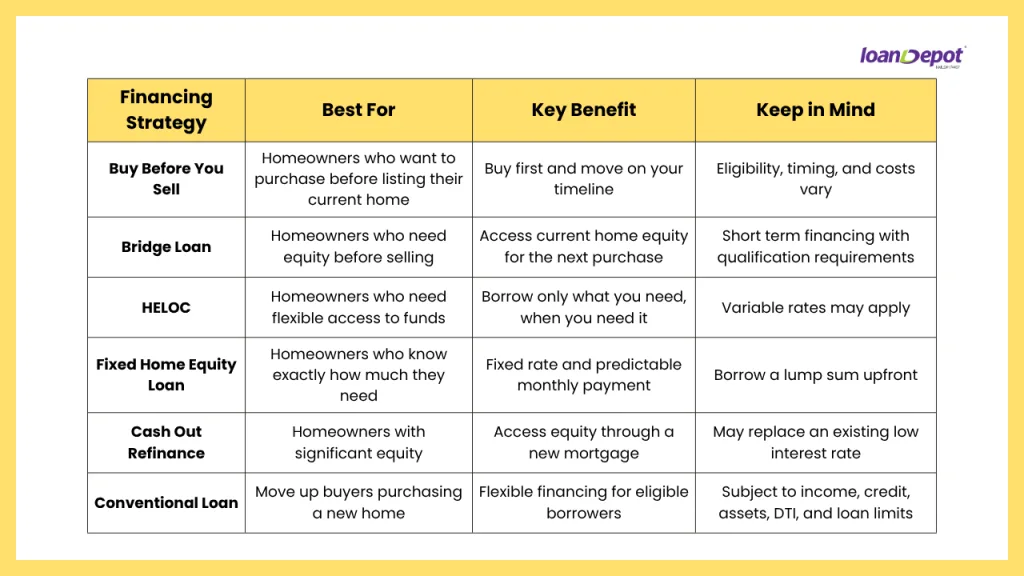
Buy Before You Sell
A Buy Before You Sell program may allow an eligible homeowner to purchase the next home before selling the current one.
This can provide flexibility and make your offer more competitive, but costs, qualification requirements, and timing should be carefully reviewed.
Bridge Loans
A bridge loan can provide temporary access to equity in your current home so it can be used toward the purchase of your next property.
Bridge loans are often useful when the buyer needs the equity before the current home sells.
HELOC
A home equity line of credit can provide flexible access to funds for:
- A down payment
- Closing costs
- Moving expenses
- Repairs or improvements
- Carrying costs during the transition
Because it is a revolving line, you generally pay interest only on the amount used, subject to the terms of the program.
Fixed Home Equity Loan
A fixed home equity loan may provide a lump sum with a fixed rate and predictable payment.
This can be useful when the amount needed is known and the borrower values payment stability.
Cash-Out Refinance
A cash-out refinance may allow a homeowner to replace the current mortgage and access equity.
This requires careful analysis, especially when the existing first mortgage has a low interest rate.
Conventional Financing
Conventional loans may be appropriate for move-up buyers purchasing within conforming or high-balance loan limits.
Qualification generally considers income, credit, assets, debt-to-income ratio, occupancy, and property type.
Jumbo Loans: Financing a Higher-Priced Dream Home
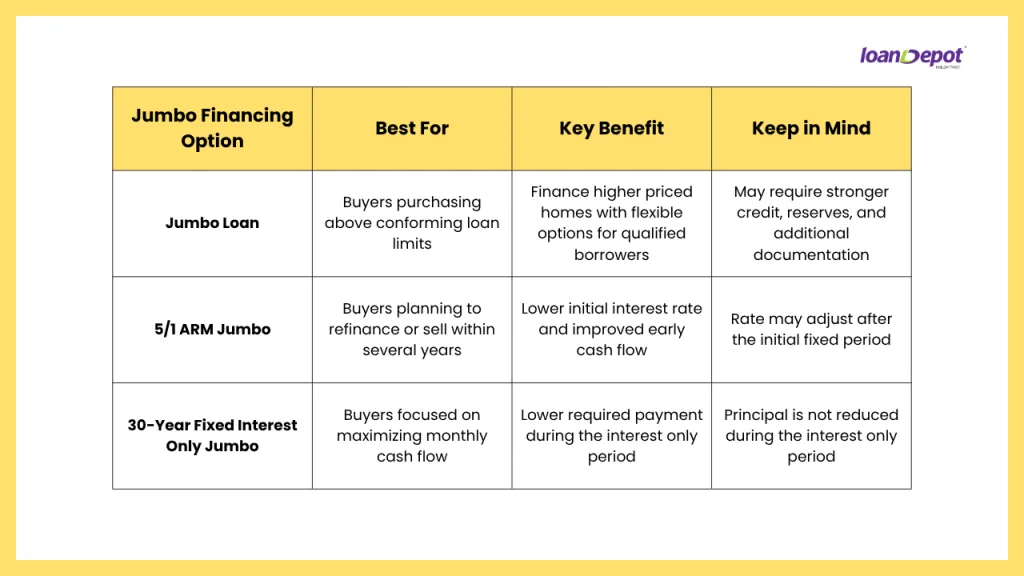
A jumbo loan is generally needed when the loan amount exceeds the high-balance conforming loan limit for the county where the property is located.
Jumbo loans follow a different set of underwriting rules than standard conforming loans.
They may require:
- Larger reserves
- Stronger credit
- More detailed income documentation
- Lower debt-to-income ratios
- Larger down payments
Our jumbo programs may allow a minimum down payment of approximately 10% for eligible borrowers and properties.
However, the pricing sweet spot is often around 25% down, where qualified borrowers may receive access to more competitive rates and terms.
5/1 ARM Jumbo Financing
Our 5/1 ARM can offer an extremely competitive initial interest rate.
This may be appropriate for borrowers who:
- Do not expect to keep the same loan long term
- Plan to refinance in the future
- Anticipate selling within several years
- Want to preserve cash flow during the initial years
The adjustment terms, caps, and long-term risks must be fully understood before choosing an adjustable-rate mortgage.
30-Year Fixed Interest-Only Jumbo Financing
We also offer a 30-year fixed-rate interest-only jumbo loan for eligible borrowers.
Interest-only financing can be used strategically to lower the required monthly payment during the interest-only period and preserve cash flow for investments, business needs, reserves, or other priorities.
The borrower is not reducing the principal balance while making only the required interest payment, so it is important to have a clear long-term plan.
South Lake Tahoe Dream Home Story
I recently helped a client purchase his dream vacation home in South Lake Tahoe, California, for approximately $1,025,000.
He chose an interest-only jumbo loan, which reduced his monthly payment by approximately $1,500 compared with a traditional principal-and-interest payment.
For him, the lower payment created greater flexibility and made the vacation home more comfortable within his overall financial plan.
The long-term strategy is to refinance into a principal-and-interest loan when the timing and market conditions align with his goals.
This is a perfect example of why financing should be strategic.
The right loan is not always determined by the lowest advertised rate. It is the structure that best supports the buyer's current cash flow, assets, goals, and long-term plan.
Step 7: Decide Whether the Right Home Is Finished, Fixable, or Still Waiting to Be Built
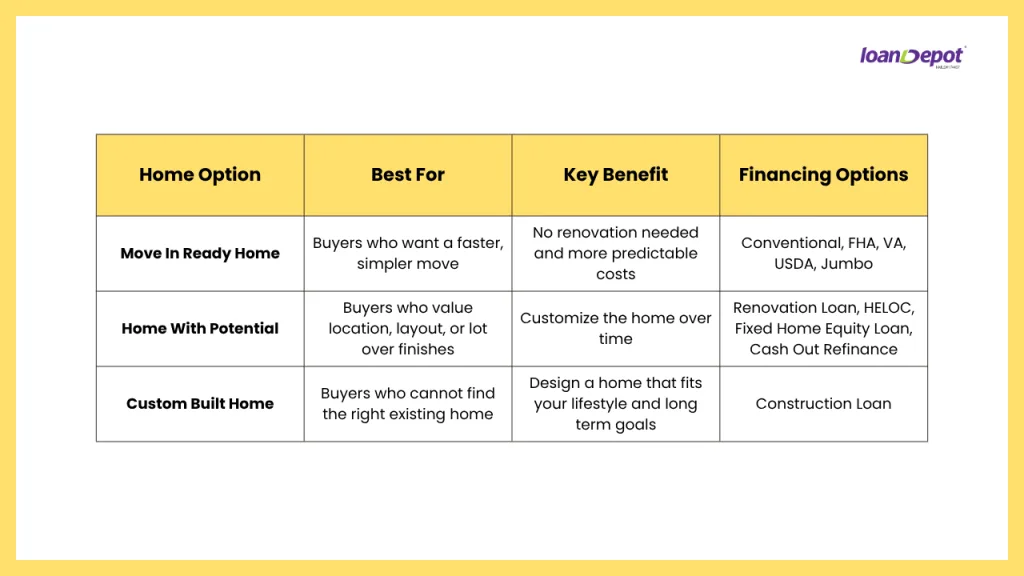
Your dream home may already exist.
It may need remodeling.
Or it may not have been built yet.
Buying a Move-In-Ready Home
- This may be ideal if you:
- Do not want to manage renovations
- Need to move quickly
- Prefer predictable costs
- Want to begin enjoying the property immediately
The tradeoff is that you are paying for improvements and design choices made by someone else.
Buying a Home With Potential
A home with the right location, lot, layout, or character may be more valuable to you than a perfectly remodeled home in the wrong place.
You may be able to improve it over time using:
- Cash
- A renovation loan
- A HELOC
- A fixed home equity loan
- A future cash-out refinance
- Construction or remodeling financing
This is the path I chose with my own Fair Oaks home.
Building a Custom Home
When the right home does not exist, building may be the answer.
Custom construction may allow you to design:
- The floor plan
- The number and location of bedrooms
- Multigenerational living areas
- Garages and workshops
- Outdoor living spaces
- Barns and equestrian facilities
- Energy-efficient features
- Home offices
- Accessibility features
- Views and orientation on the lot
Construction financing may help qualified buyers purchase land, fund construction, and transition into permanent financing.
Spec Homes: A Middle Ground Between Buying and Building
A spec home is a newly constructed home that a builder begins or completes without having a specific buyer under contract.
This can give a buyer many of the advantages of new construction without having to manage the entire custom-building process from the beginning.
In communities such as Cool and surrounding foothill areas, local builders may purchase land, build a home, and then offer the completed property for sale.
A spec home may appeal to buyers who want:
- A brand-new home
- Modern finishes
- A more efficient floor plan
- Larger lots or acreage
- Less waiting than a fully custom build
- Fewer construction decisions
The buyer may still have opportunities to select finishes if the purchase occurs early enough in the construction process.
If you're considering a newly built spec home, HUD also recommends comparing homes carefully, getting a professional home inspection, and understanding your financing options before closing. Learn more in HUD's Home Buying Guide.
Local Builder Spotlight
Done Right Builders & Remodeling
When discussing builders and remodeling professionals, I believe personal experience matters.
I hired Done Right Builders & Remodeling to work on the remodeling of my back deck, and I have been very pleased with their work.
They provide remodeling and construction services in several local communities and are a resource worth exploring for homeowners considering renovations, outdoor improvements, or construction projects.
As with any contractor or builder, buyers should independently verify licensing, insurance, references, scope of work, pricing, timelines, and contractual terms before hiring.
Step 8: Consider Whether Your Current Home Can Become the Dream Home
Moving is not always the only answer.
Sometimes the better strategy is transforming the home you already own.
You may love:
- Your neighborhood
- Your lot
- Your commute
- Your school district
- Your neighbors
- Your current mortgage rate
But the home itself no longer fits your lifestyle.
Possible improvements may include:
- Adding a bedroom or bathroom
- Creating a home office
- Building an ADU or guest house
- Expanding the kitchen
- Creating a multigenerational suite
- Adding a pool or outdoor kitchen
- Converting a garage
- Adding a workshop or detached garage
- Improving barns, stables, or exterior structures
- Completing a major whole-home remodel
Financing options may include:
- Renovation loans
- HELOCs
- Fixed home equity loans
- Cash-out refinances
- Construction financing
- Reverse mortgage products for eligible homeowners
A Client Story: Creating a Dream Property Over Time
A Dream Home Can Grow With You
One of my longtime clients purchased a five-acre hobby farm in Cool, California, in 2015 for approximately $600,000.
Their dream wasn't a luxury subdivision. It was wide-open space, room for their mules, beautiful views, and the opportunity to create something truly special.
We financed the purchase with a conventional loan and a 20% down payment, which was the right strategy for them at the time.
Over the next eleven years, they transformed the property into the home they had always imagined.
They added a beautiful pool, installed a gated entrance, improved the barn and horse facilities, enhanced the exterior structures, and created a charming granny unit that now provides rental income.
In 2020, when interest rates dropped, we refinanced them into a 2.625% fixed-rate mortgage, dramatically lowering their payment and giving them what many homeowners now call the "golden handcuffs," a wonderful mortgage rate that's difficult to leave behind.
Today, they are in their seventies.
Like many homeowners, their priorities have changed.
Their goal is no longer building equity as quickly as possible.
Their goal is comfortably enjoying the home they've spent years creating.

In July 2026, we helped them secure a fixed-rate reverse second mortgage, allowing them to access approximately $200,000 of their home's equity without adding another monthly mortgage payment.
They used a portion of those funds to pay off debt and are considering installing an elevator in the main home to make it easier to navigate as mobility becomes more challenging.
Because they were able to keep their low-rate first mortgage and strategically access a portion of their equity, they didn't have to give up the property they love.
They get to continue enjoying the horse property they've built, the rental income from their granny unit, and the lifestyle they worked so hard to create.
I love this story because it reminds us that financing isn't just about buying a home.
It's about adapting your mortgage strategy as your life changes.
Sometimes the goal is purchasing your first dream home.
Sometimes it's lowering your payment through a refinance.
And sometimes it's using the equity you've built over decades to help you stay comfortably in the home you never want to leave.
Today, that property has become everything they dreamed it could be.
Approximately eleven years later, it's now worth an estimated $1,300,000.
That's more than double what they originally paid.
It represents an average annual appreciation of roughly 7.3% per year, before considering the additional value created by the improvements they made to the property.
Dream homes (most of the time) aren't created overnight.
They're built through vision, patience, thoughtful improvements, wise financial decisions, and time.
Sometimes the greatest return isn't measured only by appreciation.
It's measured by the memories you create, the lifestyle you enjoy, and the freedom to continue living in the home you love.
Step 9: What If Your Dream Home Is in Another State?
Your dream home may not be in your current city or even your current state.
You may be relocating because of:
- A career opportunity
- Retirement
- Family
- A lower cost of living
- Better access to recreation
- A desire for more land
- A different climate
- A fresh start
- A lifestyle change
Relocation adds another layer of planning.
You may need to coordinate:
- Selling or renting your current home
- Buying remotely
- Employment and income changes
- Moving schedules
- Temporary housing
- Insurance requirements
- Property taxes
- Local market differences
- Remote inspections and closing
- Travel for home shopping
Your financing should be reviewed before making major employment changes or committing to a relocation timeline.
Step 10: Build the Right Team
A dream home purchase may involve more moving parts than a typical transaction.
Your team may include:
- Mortgage advisor
- Real estate agent
- Listing agent
- CPA
- Financial advisor
- Insurance professional
- Estate planning or trust attorney
- Builder
- General contractor
- Property inspector
- Property manager
- Appraiser
- Title and escrow professionals
The professionals should communicate early and understand the complete strategy.
This is especially important when you are buying and selling simultaneously, keeping the current home as a rental, purchasing a jumbo property, using equity financing, or building a custom home.
As you begin planning your next move, the Consumer Financial Protection Bureau also provides tools to help homebuyers compare loan options, prepare financially, and understand each step of the mortgage process.
Common Mistakes Move-Up Buyers Make
Waiting Until They Find a Home to Discuss Financing
Early planning creates more options.
Assuming They Must Sell Before Buying
Some buyers can purchase first, but the costs and qualifications must be carefully evaluated.
Looking Only at the Maximum Approval Amount
A qualification amount is not the same as a comfortable spending plan.
Underestimating Their Current Home's Equity
A professional market analysis and mortgage review may reveal more options than expected.
Keeping the Current Home Without Completing a Rental Analysis
Potential rent, expenses, vacancies, maintenance, and qualification rules should all be evaluated.
Focusing Only on the Interest Rate
Loan structure, cash flow, reserves, down payment, and long-term plans matter too.
Compromising on Location for a Beautifully Remodeled Home
Finishes can often be changed. Location cannot.
Assuming a Dream Home Must Be Move-In Ready
The best home may be a fixer, custom build, spec home, or property you improve gradually.
Forgetting the Cost of Maintaining the Dream
Pools, acreage, landscaping, barns, private roads, wells, septic systems, and larger homes all create additional expenses.
Dream Home Planning Resources
Clarify the lifestyle, location, features, and priorities that matter most to you.
- Neighborhood Report Card
Request market information for the communities you are considering.
- Current Home Market Analysis
Estimate your current home's market value and potential sale proceeds.
- Rental Property Analysis
Evaluate the rental potential of your current home if you are considering keeping it.
- Home Equity Review
Understand how much equity may be available and which strategies may help you access it.
- Dream Home Payment Analysis
Compare financing scenarios, down payments, loan structures, and estimated monthly payments.
Create a transition and financing plan before you begin shopping.
❓FAQs About Buying Your Dream Home
The minimum credit score depends on the financing program you choose.
Many of our jumbo loans, custom construction loans, bridge loans, and other specialty financing programs typically require a minimum credit score of around 680.
Some programs may be available with a 660 credit score when there are strong compensating factors, such as:
A larger down payment
Significant cash reserves
A low debt-to-income ratio
Stable income and employment
A strong overall financial profile
Every loan program has different underwriting guidelines, so we'll review your complete financial picture and recommend the financing strategy that best fits your goals.
The answer depends on the home you're purchasing, your loan amount, and the financing program.
Some conventional conforming and high-balance conforming loans may allow qualified buyers to purchase with as little as 5% down, depending on the program and loan amount.
For jumbo financing, minimum down payments typically start around 10% for qualified borrowers. However, buyers who are able to put 25% down often have access to some of the most competitive pricing and loan options.
One of the first things we'll do during your Dream Home Strategy Session is compare several down payment scenarios so you can decide what best supports your overall financial plan.
See the current FHFA Conforming and High-Balance Loan Limits by County.
This is one of the most common questions I receive.
Conforming loans fall within the standard loan limits established by the Federal Housing Finance Agency (FHFA).
In higher-cost counties, you may qualify for a high-balance conforming loan, which allows you to borrow more while still staying within conforming loan guidelines.
Once your loan amount exceeds your county's conforming or high-balance loan limit, you'll generally need jumbo financing.
Jumbo loans follow a different set of underwriting guidelines and may require:
Larger down payments
Higher credit scores
Additional cash reserves
More detailed income documentation
We'll help you compare all of your financing options to determine which loan structure makes the most sense for your purchase.
View the official 2026 FHFA Conforming Loan Limits by County.
That depends on your financial situation, available equity, income, reserves, and comfort level.
Some homeowners prefer to purchase first because it gives them more flexibility and allows them to move on their own timeline.
Others prefer to sell first so they know exactly how much money they'll have available for the next purchase.
We'll review both strategies and help you determine which approach best fits your situation.
For some homeowners, keeping their current home as a rental can be an excellent long-term wealth-building strategy.
For others, selling the home and using the equity toward the next purchase creates greater financial freedom.
We'll review:
Your home's current market value
Potential rental income
Estimated cash flow
Equity available
Your long-term investment goals
Together, we'll determine which option best supports the future you're creating.
It can be. You may have overlapping housing costs, bridge financing, home equity payments, or additional reserves. For some buyers, the convenience and negotiating strength are worth the additional cost.
Interest-only financing has benefits and risks. The required payment may be lower during the interest-only period, but the principal balance does not decrease when only the required interest payment is made. The loan should be selected as part of a clear long-term strategy. One must be prepared for the change that occurs after 10 years when the payment turns into a 20 year amortization payment. The increase in payment is significant!
Potential options may include a bridge loan, HELOC, fixed home equity loan, cash-out refinance, or using sale proceeds.
Absolutely.
If you can't find the perfect home, building may be the right solution.
Construction financing can help qualified buyers purchase land, build a custom home, or finance a construction-to-permanent loan.
Many buyers are surprised to learn that building can sometimes be a better long-term option than continuing to search for a home that checks every box.
Sometimes the perfect home isn't perfect yet.
If you find a home with an incredible location, beautiful views, or a great floor plan but it needs updating, remodeling may be the better investment.
Depending on your goals, financing options may include renovation loans, home equity solutions, or construction financing.
As I often tell my clients:
Sometimes your dream home isn't the one that's already perfect. Sometimes it's the one you have the vision to create.
That's completely normal.
Some people know exactly what they want.
Others simply know they're ready for a new chapter.
That's why I created the Dream Home Vision Planner.
It helps you think through your lifestyle, priorities, finances, and long-term goals before you ever start shopping for homes.
The clearer your vision becomes, the easier it is to recognize your dream home when you find it.
Earlier than you probably think.
One of the biggest mistakes move-up buyers make is waiting until they've already found a home.
Meeting early allows us to discuss your vision, evaluate your current home's equity, review financing options, compare different strategies, and build a personalized plan before you begin shopping.
The more prepared you are, the more confident you'll feel when the right home comes along.
Ready to Start Planning Your Dream Home?
Your dream home may already be built.
It may be waiting for you in Serrano, Granite Bay, Fair Oaks, Folsom, Roseville, Auburn, Cool, or somewhere you have not yet considered.
It may be a beautifully finished home, a custom build, a spec home, a property with acreage, or an older home that needs your vision.
The first step is not attending an open house.
The first step is creating a strategy.
During your complimentary Dream Home Strategy Session, we can discuss:
- Your vision
- Your current home
- Your equity
- Selling versus renting
- Buying before selling
- Your spending plan
- Conventional and jumbo financing
- Bridge and home equity options
- Renovation or construction financing
- Your timeline and next steps
Schedule Your Complimentary Dream Home Strategy Session
All Mortgage Made Easy articles · Book a Complimentary Discovery Call